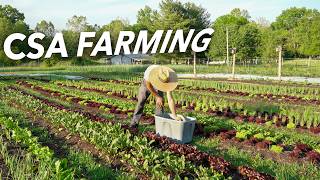
Contamination in Municipal Compost + Whales on Reciprocity (Yeah, Whales)
Audio Brief
Show transcript
This episode covers philosophical observations of the natural world alongside practical agronomic advice for market gardeners and home growers.
There are three key takeaways. First, animal behavior in the wild challenges our concepts of human exceptionalism. Second, municipal biosolid compost presents severe systemic contamination risks for growers. Third, precision in soil sampling methodology is crucial for accurate agricultural data.
Recent scientific observations of sperm whales demonstrate unrelated animals assisting in births. This participation suggests that social reciprocity and community care are innate biological traits, not exclusively human ones. Recognizing these behaviors fosters a more grounded and interconnected view of humanity within the broader global ecosystem.
The conversation then shifts to the complex realities of using municipal biosolid compost. Growers often try to utilize local carbon rich waste streams like sewage sludge and yard waste to improve sustainability. However, this ecological ideal frequently clashes with the reality of severe chemical contamination, including heavy metals, microplastics, and persistent herbicides.
This agricultural contamination is a downstream symptom of unchecked consumer habits and industrial chemical use. If forced to use municipal compost, growers are advised to let it age and decompose further under a tarp with adequate moisture to break down volatile contaminants. Ultimately, eliminating forever chemicals from agricultural inputs requires broader policy changes and industrial regulation rather than just on farm solutions.
Finally, the episode provides practical guidance on soil testing methodology. The physical tools used to gather soil samples directly impact the accuracy of laboratory results. Using a standard shovel makes it difficult to keep the core sample untainted by surface grass clippings or organic matter, which can severely skew test results.
Farmers managing larger spaces should invest in a dedicated, single piece soil probe. This tool ensures that organic matter from the surface horizon does not corrupt the deeper soil profile being tested. Utilizing proper mechanical tools saves considerable time and prevents false data regarding overall soil health.
Balancing ecological ideals with practical methodology remains essential for both sustainable agriculture and long term environmental safety.
Episode Overview
- This episode blends philosophical observations of the natural world with practical agronomic advice for market gardeners and home growers.
- The host explores the concept of social reciprocity in nature, using a recent scientific observation of sperm whales to challenge human exceptionalism.
- A significant portion of the show tackles the complex realities and risks of using municipal biosolid compost, balancing the ideal of utilizing local waste streams against the dangers of systemic chemical contamination.
- The episode concludes with practical guidance on soil testing methodology, specifically detailing why and when a farmer should upgrade to a dedicated soil probe.
Key Concepts
- Deconstructing Human Exceptionalism: The observation of non-kin sperm whales assisting in a birth challenges the deeply held idea that traits like "social reciprocity" and community care are exclusively human. Recognizing these innate community behaviors in nature fosters a more grounded, interconnected view of humanity's role within the Earth's ecosystem.
- The Systemic Nature of Compost Contamination: Municipal compost and biosolids carry significant risks (PFAS, heavy metals, microplastics, persistent herbicides) because they are a direct reflection of society's broader waste and chemical usage. The issue isn't merely a defective agricultural product; it is a systemic problem stemming from how modern society manages waste and regulates consumer chemicals.
- Idealism vs. Reality in Waste Streams: Growers are often forced to weigh the ecological ideal of utilizing local, carbon-rich waste streams (like sewage sludge and yard waste) against the reality of severe chemical contamination. This highlights the tension between theoretical sustainability and practical food safety.
- Precision in Soil Sampling: The physical method used to gather soil samples directly impacts the accuracy of laboratory results. Using proper tools ensures that organic matter from the surface horizon doesn't corrupt the deeper soil profile being tested, preventing false data regarding soil health.
Quotes
- At 3:00 - "Notably, half of the whales attending were not related to the mother. The participation of non-kin is significant to scientists because it suggests that social reciprocity, as opposed to a singular drive to continue a genetic line, may play a role." - This quote anchors the discussion on animal behavior, proving that community support and altruism are innate biological traits found throughout the natural world, not just in humans.
- At 10:33 - "We just have to work on our contamination as a society. We just have to do this... people love their herbicides, people love salting their roads and waterproofing their gear and single-use plastics." - This highlights the core issue with municipal compost; the contamination found in agricultural inputs is a downstream symptom of unchecked consumer habits and industrial chemical use.
- At 15:26 - "When you use a shovel, it can be hard to keep the core of the sample intact and untainted by falling stuff... stuff being like grass clippings or whatever organic matter from the surface, which may give the soil lab a false impression of your soil organic matter." - This perfectly explains the mechanical advantage of a soil probe over a standard shovel, emphasizing why clean methodology is crucial for accurate farm data.
Takeaways
- Mitigate municipal compost risks with time and moisture: If you are forced to use potentially contaminated municipal compost, allow it to age and decompose further under a tarp with adequate moisture before applying it to food crops. This can help break down some, though not all, of the volatile contaminants.
- Invest in a single-piece T-handle soil probe: If you manage a larger growing space and take multiple soil samples, buy a 12-to-18-inch soil probe with a securely welded top handle (avoid models where the top can easily pop off). This will save considerable time and prevent surface debris from skewing your organic matter readings.
- Treat contamination as a policy issue, not just a farm issue: Recognize that eliminating "forever chemicals" (PFAS) and microplastics from agricultural inputs cannot be solved on the farm alone. It requires voting for policies and representatives willing to regulate these chemicals at their industrial source.