CHINA OU EUA: QUAL LADO O BRASIL DEVE ESCOLHER?
Audio Brief
Show transcript
This episode discusses the evolving bipolar world order shaped by the United States and China, analyzing Brazil's strategic position as a global agribusiness powerhouse, and the shift towards a more transactional trade environment.
There are three key takeaways from this discussion. First, Brazil's foreign policy must remain pragmatic. Second, businesses need to prioritize geopolitical risk management. Third, Brazil should diversify its strategic economic sectors.
Brazil's economic success relies on a delicate balance, leveraging demand from Asia, especially China, for nearly 40% of its agro exports. Simultaneously, it depends on technology and inputs from American and European multinational corporations. Therefore, maintaining good relations with all major powers and avoiding political alignment is crucial for continued prosperity.
The global trade system is moving away from established rules, favoring bilateral deals and power plays over multilateral institutions like the WTO. This shift towards a "law of the strongest" environment creates unpredictable volatility and increased risk for businesses. Companies heavily exposed to international markets must intensify their risk management strategies to hedge against political uncertainty, tariffs, and shifting alliances.
Beyond its core strength in agribusiness, Brazil holds significant future potential in critical minerals like rare earths, where it possesses the world's second-largest reserves, and bioenergy, including ethanol and biodiesel. Developing these sectors can create new economic pillars and enhance Brazil's leverage on the global stage. These assets are seen as winning tickets in the new geopolitical landscape.
Navigating this complex global landscape requires strategic foresight, robust risk mitigation, and the proactive development of new economic strengths.
Episode Overview
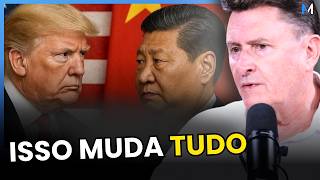
- The discussion centers on the bipolar world order dominated by the United States and China, highlighting their contrasting models of governance and leadership.
- It analyzes Brazil's strategic but delicate position as a global agribusiness powerhouse, supplying food to the world and navigating relationships with both superpowers.
- The episode explores how the global trade environment is shifting from a rule-based system to a more transactional, "law of the strongest" approach, increasing volatility and risk.
- It touches on Brazil's future potential in emerging strategic sectors like bioenergy and rare earth minerals, which could further enhance its geopolitical importance.
Key Concepts
- Bipolar Geopolitics: The world is increasingly structured around two opposing poles: the democratic, market-driven model of the United States and the state-controlled, long-term planning model of China.
- Brazil's Strategic Neutrality: Brazil's agribusiness success depends on a delicate balance. It relies heavily on demand from Asia (with China accounting for nearly 40% of agro exports) while simultaneously depending on technology and inputs from American and European multinational corporations. This makes taking a side in the geopolitical dispute highly risky.
- The End of Rule-Based Trade: The global system, once governed by institutions like the World Trade Organization (WTO), is fragmenting. Nations, particularly superpowers, are prioritizing bilateral negotiations and power plays, creating an unpredictable environment where established rules are no longer guaranteed.
- New Strategic Assets for Brazil: Beyond food security, Brazil holds significant potential in two other key areas: critical minerals/rare earths (where it has the second-largest reserves) and bioenergy (like ethanol and biodiesel). These are seen as "winning tickets" that could be leveraged in the new geopolitical landscape.
Quotes
- At 00:10 - "São duas economias que representam quase que ideias antagônicas de liderança mesmo." - The host, Thiago Salomão, frames the discussion by characterizing the US and China as representing opposing leadership philosophies.
- At 01:38 - "Mas não pode esquecer que a demanda que puxou o agro foi da Ásia, e principalmente da China." - Marcos Jank emphasizes that while technology and deregulation were crucial, the explosive growth of Brazilian agribusiness was fundamentally driven by demand from Asia, particularly China.
- At 03:17 - "É um mundo mercantilista que não tem mais regra." - Marcos Jank describes the current state of global trade, explaining that the old rules-based system has been replaced by a more aggressive environment where bilateral deals and power dynamics prevail.
Takeaways
- Maintain a pragmatic foreign policy. For a country like Brazil, whose key economic sector relies on both Western technology and Eastern demand, avoiding political alignment and maintaining good relations with all major powers is crucial for continued prosperity.
- Prioritize geopolitical risk management. As global trade moves away from predictable rules, businesses heavily exposed to international markets must intensify their risk management strategies to hedge against political volatility, sudden tariffs, and shifting alliances.
- Diversify strategic economic sectors. While agribusiness is a core strength, Brazil should actively develop its potential in other strategic areas like bioenergy and rare earth minerals to create new economic pillars and increase its leverage on the global stage.
More from Market Makers

EUA OU CHINA: QUEM VAI MANDAR NO MUNDO NO SÉCULO XXI?
Feb 13, 2026
CHINA E EUA: QUEM TEM MAIS PODER GLOBAL HOJE?
Feb 12, 2026

A ELEIÇÃO NÃO ESTÁ NO PREÇO (E O MERCADO PODE QUEBRAR A CARA)
Feb 11, 2026

BOLSA NA MÁXIMA HISTÓRICA: O QUE ESTÁ ACONTECENDO E COMO SE POSICIONAR | Second Level #32
Feb 11, 2026