Bonnie Bassler on How Bacteria Talk and Work Together | Mindscape 361
Audio Brief
Show transcript
This episode covers the complex world of microbial communication, exploring how single-celled bacteria coordinate their actions to behave like multicellular organisms.
There are three key takeaways from this research. First, bacteria use a chemical communication system called quorum sensing to measure their population density before launching coordinated attacks. Second, this discovery is shifting modern medicine away from traditional antibiotics toward therapies that disarm bacterial communication rather than killing the cells. Third, the microscopic world is highly interconnected, with viruses and human cells actively eavesdropping on bacterial signals to coordinate their own behaviors.
Bacteria are multilingual and communicate through chemical molecules called autoinducers, which accumulate as their population grows. By measuring the concentration of these molecules, bacteria determine their density and differentiate between their own species, related cousins, and competitors. This mathematical census allows them to delay major actions, such as releasing toxins, until they have the numbers required to overwhelm a host immune system.
This understanding of microbial networks has profound medical implications for combatting antibiotic resistance. Instead of using traditional drugs that kill bacteria and force rapid evolutionary adaptation, researchers are developing anti-quorum sensing therapies that simply mute the bacterial conversation. By preventing pathogens from coordinating, these treatments disarm the bacteria and allow the host immune system to clear the infection without driving drug resistance.
Furthermore, communication at the microscopic level extends far beyond bacterial boundaries. Bacterial viruses, known as phages, actively monitor bacterial signals to determine the optimal time to replicate and destroy their hosts. Human gut cells also participate in this biological network, producing mimic molecules that influence the microbiome and regulate human immunity and metabolism.
Ultimately, viewing bacteria as cooperative, communicative systems reshapes our understanding of biology and opens new frontiers for treating infectious disease.
Episode Overview
- This episode explores the fascinating world of complexity and emergence through the lens of microbiology, focusing on how single-celled bacteria communicate, coordinate, and act as collective, multicellular-like entities.
- The conversation traces the discovery of quorum sensing—the chemical language of bacteria—detailing how microbes assess their population density, differentiate friend from foe, and execute synchronized strategies.
- It delves into the profound medical implications of these discoveries, explaining how understanding microbial communication is shifting science away from traditional antibiotics toward anti-quorum sensing therapies that disarm rather than kill pathogens.
- The discussion also reveals a highly integrated microscopic world where viruses, human cells, and bacteria actively eavesdrop and cross-communicate, offering deep insights into the evolutionary origins of multicellularity and cooperation.
Key Concepts
- Emergence and Complexity: The study of complex systems explores how individual agents (like ants, cells, or bacteria), operating under simple rules, combine to produce unpredictable and organized collective behaviors. The concept is summarized by physicist Philip Anderson's phrase, "more is different."
- Quorum Sensing: A bacterial communication mechanism where bacteria release chemical signaling molecules (autoinducers) that increase in concentration as the population grows. Once a threshold concentration is reached, the bacteria collectively alter their gene expression to act in unison, transforming from individual cells into a coordinated collective.
- Bacterial Languages and Social Behaviors: Bacteria possess a multi-tiered communication system consisting of intra-species communication (a "clone" signal unique to a specific species), family-level communication (a "cousin" signal shared among closely related species), and inter-species communication (a universal "other" signal). By measuring these ratios, they determine who is in the majority and decide whether to cooperate, flee, or attack.
- Evolutionary Origins of Communication: The signaling molecules used in quorum sensing are simple, chemically cheap compounds derived from ancient, central metabolic pathways. These compounds likely began as metabolic waste leaking out of cells, which bacteria eventually evolved receptors to detect, transforming "garbage" into a census-taking communication system.
- The Human Microbiome and Symbiosis: Human biology is fundamentally cooperative with microbial life. The human body contains roughly equal numbers of bacterial and human cells, with the microbiome functioning like an extra organ that provides essential metabolic, digestive, and protective genetic traits that human DNA lacks.
- Eavesdropping Across Domains: Communication in the microscopic world is not limited to bacteria. Human gut cells produce molecules that mimic bacterial quorum-sensing signals to influence the microbiome, while bacterial viruses (phages) "eavesdrop" on bacterial communication to determine when host density is high enough to trigger replication and cell destruction.
- Collective Behavior vs. Multicellularity: While bacterial biofilms exhibit traits of multicellular organisms, such as cell specialization and programmed cell death, they differ fundamentally because individual bacterial cells retain the evolutionary capacity to survive, divide, and regenerate the entire community on their own if separated.
Quotes
- At 0:01:16 - "More is different... as a system... you can get behavior at the collective level that you would not have thought of just by thinking about the individual units." - explaining the concept of emergence where a collective system displays properties its individual parts do not possess
- At 0:02:46 - "The mechanism for them doing this is something called quorum sensing... when you get enough of them in a region... they are sending signals so they realize, 'Oh my goodness, there's a bunch of us grouped together here, we are now more powerful.'" - introducing the core mechanism of bacterial communication and collective action
- At 0:06:40 - "I just found bacteria to be this fantastic model system... these stripped-down versions of us... where you could have a surprise in the incubator every eight hours." - explaining why bacteria are ideal for laboratory study due to their rapid replication and simplified genetic structures
- At 0:09:38 - "What you need to know... is that bacteria talk to each other, they are multilingual, their language is chemical, and they are very good at math." - providing a concise, conceptual summary of how quorum sensing operates chemically and numerically
- At 0:17:44 - "Almost everything that exists on Earth you have not seen with your eyes... the world is microbial, and it's mostly bacterial." - recontextualizing the scale of biodiversity on Earth to emphasize that visible life is only a minor fraction of existence
- At 0:23:45 - "Any one bacterium can't do that much. So the secret to being an effective set of bacteria is that they can talk to each other and group up." - highlighting why collective behavior is an evolutionary necessity for single-celled organisms
- At 0:24:25 - "They believe, if you will, if these molecules are at high amount, it must mean there are other cells around, the quorum is there, and if they all change their behavior together, these tasks that they couldn't accomplish when they are few... they can accomplish when they are together." - explaining the functional logic of quorum sensing in preventing bacteria from wasting energy on tasks requiring a crowd
- At 0:28:10 - "They're asking, first, 'How many bacteria are here?' Then they're asking, 'Who are they? Is it me and my kin, or is it the enemy?' And then they actually change their behaviors based on who's in the majority and who's in the minority." - revealing the unexpected complexity of bacterial decision-making and self-recognition
- At 0:29:35 - "If a couple of bacteria dribbled out a few molecules of toxins, nothing would happen to me... But if they wait, and they count themselves... they can overwhelm my immune defenses and make a productive infection." - explaining how quorum sensing acts as a synchronized, military-style strike to bypass host defenses
- At 0:33:14 - "The ability to have collective behavior... changes you from being a subsistence farmer to living in New York City where there's a car mechanic, a grocer, and a librarian. You don't have to do everything yourself." - utilizing an intuitive analogy to explain how division of labor makes bacterial collectives highly efficient
- At 0:52:03 - "We can imagine preventing pathogenic effects, not necessarily just by killing the bacteria, but by preventing them from talking to each other." - introducing the therapeutic strategy of disrupting bacterial communication as an alternative to traditional antibiotics
- At 1:10:11 - "The viruses are eavesdropping. They're surveying the quorum sensing molecules, and then they recognize when there's lots of host cells around, and then that quorum sensing turns on the decision to switch from being dormant to go lytic." - showing how phages exploit bacterial communication pathways to maximize their own replication success
Takeaways
- Disrupt bacterial communication using "anti-quorum sensing" molecules to disarm pathogens, which avoids the massive selective pressure of traditional antibiotics and slows the evolution of drug resistance.
- Target biofilms directly when dealing with bacterial contamination or infections, recognizing that these structured, slime-shielded communities are highly resilient to standard mechanical removal, immune responses, and chemical agents.
- Utilize bacteria as simplified, highly manipulable model systems to study complex mathematical concepts, game theory, and the social dynamics of cooperation, cheating, and espionage.
- Harness beneficial bacterial communication to optimize agricultural, environmental bioremediation, and industrial processes by artificially boosting their quorum-sensing behaviors.
- Treat the human body as an integrated ecosystem rather than a single organism, supporting the microbiome as a vital, collaborative organ that regulates metabolism and immunity.
- Study the evolution of metabolic waste products to identify how simple chemical "garbage" can be repurposed by biological systems into complex communication networks.
- Apply a multidisciplinary approach—combining physics, chemistry, and biology—to decode the foundational, simple rules that govern complex, emergent behaviors in natural systems.
More from Sean Carroll

Mindscape 331 | Solo: Fine-Tuning, God, and the Multiverse

Mindscape Ask Me Anything, Sean Carroll | September 2026
Sep 14, 2026
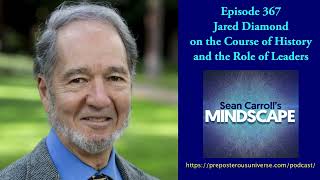
Jared Diamond on the Course of History and the Role of Leaders | Mindscape 367
Sep 07, 2026
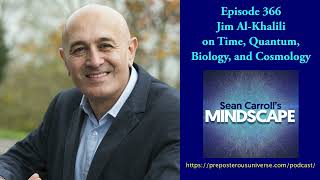
Jim Al-Khalili on Time, Quantum, Biology, and Cosmology | Mindscape 366
Aug 31, 2026