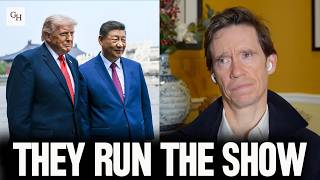
Better with EU: Burnham’s Political Gamble For Britain
Audio Brief
Show transcript
How can a medium sized nation survive when giant superpowers use weaponized trade and financial sanctions to bully them?
On this November 24, 2026 episode, British political analysts debate how the United Kingdom can protect itself.
By the end, you will understand how a new strategy of collective defense is reshaping European borders, trade, and international law.
A unified European bloc acts as a collective shield against superpower bullying.
In a world run by aggressive giants like the United States, China, and Russia, medium sized nations are highly vulnerable.
British political analysts argue that a unified European Union acts as a shared shield.
This cooperation protects the trade standards and democratic values of smaller nations from external pressure.
The European Union is an empire that has no army.
The European Union has the massive geographic scale and regulatory power of an historic empire, yet it lacks any central military power to enforce its will.
Instead of being forced by a central army, member nations voluntarily choose to follow agreed rules that their own national institutions enforce.
This unique setup prevents larger members from dominating the smaller ones.
The dream of a completely independent, low tax British economy is dead.
The grand Brexit promise of a deregulated, hyper competitive United Kingdom was built on a major structural flaw.
It assumed the world would always have frictionless free trade.
Today, global protectionism and weaponized supply chains mean a mid sized nation acting as a pure free agent will simply get squeezed by larger trading blocs.
British voters regret Brexit but there is a distinct lack of political appetite to actively campaign to rejoin.
A clear majority of fifty eight percent of the British public believe leaving the European Union was a mistake, but only thirty seven percent actually want to make rejoining a priority.
A decade of exhausting political debates has left the public deeply traumatized.
Because of this fatigue, any future attempt to align with Europe cannot be sold on trade details, but must be framed as a matter of vital national security.
Issues do not become national priorities just because they are important.
Political problems do not rise to the top of public consciousness on their own.
Instead, leaders must actively build and repeat persistent messages to force an issue into the spotlight.
This deliberate framing is exactly how political leaders successfully transformed Brexit from a niche interest into the defining political issue of a generation.
A coalition of European nations is pursuing a modified Rwanda asylum model.
A coalition of European countries is now building a modified framework to process asylum seekers in third country locations.
They are using lessons from British court rulings to design a legally resilient system.
Their goal is to deter irregular migration without violating international human rights agreements.
The United States threatens the operational survival of the ICC.
The International Criminal Court, which is also known as the ICC, is facing an existential threat after moving from prosecuting minor regional figures to indicting major global leaders.
The United States has responded with aggressive digital and financial sanctions against the court.
Because the court could go under if it cannot find a bank that will serve it, these unilateral sanctions threaten its operational survival, proving that international law remains at the mercy of superpower strength.
To survive an era of protectionism and superpower pressure, mid sized nations must seek collective security rather than isolated independence.
If we fail to build these cooperative shields, unilateral financial sanctions can easily destroy even the highest international courts.
Episode Overview
- British political analysts discuss how the UK can redefine its relationship with the EU through a strategy of "anti-coercion," the rise of European third-country asylum models, and how US financial leverage threatens international institutions like the International Criminal Court.
- The discussion shifts the Brexit debate from technical trade details to a grand strategy of national security, sovereignty, and defense against global superpowers.
- This episode is essential for anyone interested in European geopolitics, the long-term strategic consequences of Brexit, and the shifting landscape of international law and migration policy.
Key Concepts
- The Strategy of "Anti-Coercion": In a world dominated by large, aggressive superpowers like the US, China, and Russia, individual medium-sized nations are highly vulnerable to economic and political bullying. A unified European bloc acts as a collective shield, allowing democratic nations to protect their sovereignty, trade standards, and democratic values from external pressure.
- The Empire Without Coercion: The European Union's structure is historically unique because it behaves like an empire in its geographic scale and regulatory influence, but it lacks central coercive power like a standing army. Member states voluntarily submit to commonly agreed-upon rules enforced by their own national institutions, which alleviates fears of dominance by larger members.
- The Death of "Singapore-on-Thames": The Brexit vision of a deregulated, hyper-competitive, low-tax independent UK economy was structurally flawed because it assumed a globalized world of frictionless free trade. With the rise of global protectionism and weaponized supply chains, a mid-sized independent nation cannot survive as a pure free agent without getting squeezed by larger blocs.
- The Public Regret vs. Action Gap: While a clear majority of the British public believes Brexit was a mistake, there is a distinct lack of political appetite to actively campaign to rejoin. This inertia is driven by the exhaustion and societal trauma of the decade-long Brexit debates, meaning any future alignment must be framed as a security necessity rather than a return to the past.
- The Power of Political Narrative: Issues do not automatically become national priorities based on objective importance alone; instead, political leaders elevate topics through persistent messaging. This framing successfully transformed Brexit from a niche interest into the defining political issue of a generation.
- The Rwanda Asylum Model in Europe: A coalition of European nations is pursuing a modified approach to third-country asylum processing, using lessons from British legal rulings to build a legally resilient mechanism that deters irregular migration without violating human rights conventions.
- The International Criminal Court Under Pressure: The ICC's transition from prosecuting minor regional actors to indicting major global figures has triggered severe pushback from the United States. By using financial and digital sanctions to pressure the court, the US threatens its operational survival, highlighting a major conflict between international law and national sovereignty.
Quotes
- At 3:41 - "I think the way in which Andy Burnham needs to frame this is in terms of the big strategy of the world... The way to make this work for Britain, for Europe, and to sell it to the public, is to locate it in a strategic argument about how Britain, combined with Europe, can genuinely defend its freedom—freedom against coercion." - discussing a new security-focused framework for UK-EU alignment
- At 5:31 - "The fundamental mistake that Cameron made—and I think a whole generation, including people like Blair—is that they assumed that peace in Europe was a thing that was largely done... peace is never guaranteed." - explaining how leaders failed to anticipate the return of regional conflict
- At 8:44 - "The Monnet idea is that you are binding two potential enemies into a single structure, which is different from the US-China-Russia thing, which is how you deal with external players." - distinguishing the EU's internal peace-building origins from its modern external defense utility
- At 11:24 - "The big story is that this way of managing relations among countries—making common rules and then abiding by them voluntarily, not forced, not bullied—has worked so well on our continent... and the alternative way... has destroyed trust." - contrasting rule-of-law-based cooperation with unilateral power politics
- At 16:52 - "Europe is this quasi- ... it looks like an empire because it's big and expanding, but it's an empire without coercion." - refuting Eurosceptic claims of a coercive "European Superstate"
- At 21:58 - "One of the problems during the Brexit referendum I felt was that the... federalists in favor of ever more European integration kept... producing this line saying that... this goes in only one direction, this is a ratchet." - explaining how the perception of unstoppable integration alienated British voters
- At 26:01 - "58% of Britain... thought that Brexit was the wrong decision. Only 36% currently say it was the right decision... But only 37% of Britons say that rejoining it is the right priority." - illustrating the public fatigue and lack of appetite to reopen the divisive Brexit debate
- At 38:04 - "If the United States can destroy an institution that it doesn't like, any institution... by saying, 'If you don't do what we want, we will deny you all access to American services'... we could see an institution go under because we can't ensure that it has a bank that will serve it." - warning how unilateral US financial sanctions can undermine global legal structures like the ICC
Takeaways
- Frame pro-European alignment around "anti-coercion" and collective security rather than technical trade details to overcome public fatigue and political inertia.
- Recognize that mid-sized independent nations cannot survive as pure free-agent economies in an era of global protectionism and weaponized supply chains.
- Anticipate that international legal bodies like the ICC remain highly vulnerable to unilateral financial pressure and sanctions from major global superpowers.
- Watch for European centrist nations to increasingly adopt structured, third-country migration processing systems to legally deter irregular crossings and counter far-right populist platforms.
- Acknowledge that massive political and institutional integration requires a grand, uniting vision first, with regulatory and technical details serving as practical tools to achieve it.