Stockpiling & Faulty Fridges: Are We Prepared For The Unthinkable?
Audio Brief
Show transcript
SUMMARY:
How can a foreign adversary turn a grocery store freezer into an oven using just a default password? On the podcast with Alastair Campbell and Rory Stewart, which aired on November 12, 2026, the hosts dive into this frightening reality of digital conflict. By the end, you will understand how modern warfare targets your home, why global institutions struggle, and how to protect yourself.
Modern wars are being fought in your local grocery store. A recent cyberattack on European smart refrigeration systems did not demand ransom, but instead ruined tons of civilian food. Foreign state actors are bypassing traditional military weapons to launch digital sabotage on daily life, disabling cooling systems to inflict massive economic damage without firing a single bullet. Do not reflexively blame your own democratic government when these infrastructure crises occur, but direct your accountability toward the foreign adversaries responsible.
Artificial intelligence has turned simple passwords into national security threats. It takes just a few seconds for automated AI agents to crack devices using the default password, one two three four five. Foreign actors now deploy multiple AI agents simultaneously to scan thousands of smart systems at once, finding weak entry points instantly. Secure all your smart home devices immediately by changing factory default usernames and passwords to strong, unique credentials.
Governments can no longer protect all of your digital devices. Because absolute cyber defense is nearly impossible, the United Kingdom government now expects you to survive for three days on your own. Under the Be Ready campaign, officials urge citizens to prepare for sudden, seventy two hour disruptions to electricity, internet, and food supply chains. Build your household resilience by preparing emergency supplies, food, and water to sustain yourself for at least three days without power or internet.
Choosing the head of the United Nations is more secretive than electing a Pope. The process relies entirely on opaque straw polls and vetoes by the five permanent members of the Security Council. There is no transparent democratic election for the Secretary General, meaning the final appointment depends on quiet backroom consensus and deals among major world powers.
Decades of liberation dominance do not guarantee political survival. Engage with deep dive local reporting and ethnographic literature to understand these complex regional dynamics rather than relying on mainstream headlines.
Royal soft power outlasts prime ministers. A non partisan constitutional monarch operates on a timeline of decades, not election cycles. Free from immediate political pressures, a monarch can wield enduring global influence on long term issues like climate change and ethics, projecting soft power far more steadily than prime ministers holding executive office.
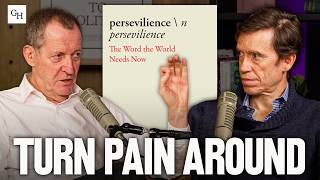
Surviving modern crises requires a new kind of endurance. Navigating deep seated social and economic decay requires a combination of perseverance and resilience.
The critical lesson is that security begins at home. To withstand the era of digital hybrid warfare, you must secure your own smart devices and prepare enough food and water to survive three days without electricity or the internet.
Episode Overview
- Alastair Campbell and Rory Stewart discuss the emerging threats of digital hybrid warfare, the shifting political landscape in South Africa, the opaque process of selecting the UN Secretary-General, and the contrasting natures of monarchical soft power versus executive power.
- The discussion begins with an analysis of recent smart infrastructure hacks in Europe, illustrating how foreign state actors use AI-enabled cyber threats to disrupt everyday civilian life.
- It then transitions into global governance and regional politics, examining the systemic failures behind the ANC's decline in South Africa and the secretive backroom diplomacy involved in choosing the next UN Secretary-General.
- This episode is essential for anyone interested in modern cybersecurity, geopolitical strategy, global leadership dynamics, and how local public resilience is becoming a critical tool of national defense.
Key Concepts
- Hybrid Warfare in the Digital Age: Traditional conflict has evolved to include non-military tactics such as cyberattacks, disinformation campaigns, and sabotage. The recent cyberattacks on European smart refrigeration systems show how foreign state actors can disrupt civilian food supplies and inflict economic damage without physical military action.
- AI-Enabled Cyber Threats and Vulnerable Infrastructure: Artificial Intelligence has shifted the cybersecurity power dynamic. Foreign actors can deploy AI agents to launch thousands of automated, coordinated login attempts simultaneously, finding and exploiting vulnerabilities in smart IoT systems that use weak default passwords.
- The Be Ready Philosophy and Public Preparedness: Because absolute defense of all digital endpoints is nearly impossible, governments are shifting from pure defense to encouraging citizen resilience. Initiatives like the UK's Be Ready program urge citizens to prepare for three-day disruptions to electricity, internet, and food supply chains.
- The Complex Politics of Selecting the UN Secretary-General: Unlike transparent democratic elections, selecting the United Nations Secretary-General is highly opaque and relies on a series of straw polls and vetoes by the permanent five members of the Security Council, making the final appointment dependent on backroom consensus among major world powers.
- The ANC's Decline in South Africa: Long-term dominance by a liberation movement does not guarantee permanent political power. The African National Congress has suffered electoral setbacks due to persistent systemic failures, including unemployment, corruption, and failure to deliver basic municipal services like water and electricity.
- Monarchical Soft Power vs. Executive Hard Power: On the global stage, a non-partisan constitutional monarch operates on a longer timeline and can wield enduring soft influence on issues like climate change and ethics, free from the immediate political and electoral pressures faced by prime ministers.
- The Concept of Persevilience: A combination of perseverance and resilience, this concept represents the unique quality of endurance and adaptability required to navigate deep-seated political, social, and economic crises over the long term.
Quotes
- At 2:44 - "The fridge thing was... I found it really sad because... there was these pictures of just tons of food just being thrown away... This was a deliberate cyberattack on supermarkets and refrigeration systems." - explaining the tangible, real-world consequences of digital warfare on everyday food supplies.
- At 3:42 - "The problem is that in this particular case, as usual, people had left their passwords as 1-2-3-4. So it was a very, very easy hack... The default username was 'supervisor' and the password was '1-2-3-4-5'." - highlighting how basic human negligence in digital security creates easy entry points for attackers.
- At 4:08 - "As we have more and more smart devices... it's easier and easier to do what happened here, which was not a ransom demand... but somebody thinking it would be disruptive or amusing... to essentially turn a fridge into an oven." - illustrating that cyberattacks are often designed purely to degrade social stability rather than extort money.
- At 9:27 - "The point is that AI is now able to explore, simultaneously with multiple agents in a few seconds, every combination... They are finding vulnerabilities that nobody expected." - explaining how AI has industrialized and accelerated the speed of cyber threats.
- At 12:06 - "The UK government, like the European government, want everybody to be able to survive for three days without internet, electricity, and supermarkets... they are gambling, correctly I think, that within three days they'll be able to get stuff to you." - highlighting the limits of state protection and the need for public self-reliance during crises.
- At 13:38 - "The dictatorships who are doing this know that the instinct of the population in the democracies is actually to point the finger at their own governments as opposed to point the finger at the people who are doing this." - revealing the psychological objective of hybrid warfare to turn citizens against their own democratic institutions.
- At 22:46 - "The system to get the Secretary-General is more complicated and more opaque than getting the Pope." - highlighting the highly politicized, secretive, and non-democratic nature of selecting the head of the United Nations.
- At 24:51 - "When you're in power for too long, it does corrupt, and it's been corrupted." - reflecting on how liberation movements like the ANC in South Africa struggle to maintain integrity and deliver good governance once in power.
Takeaways
- Secure all smart infrastructure and home IoT devices by immediately changing factory default usernames and passwords to strong, unique credentials.
- Build individual and household resilience by preparing emergency supplies, food, and water to sustain self-reliance for at least three days without electricity or internet.
- Recognize and resist the psychological trap of hybrid warfare by directing accountability toward foreign adversaries rather than reflexively blaming democratic institutions during infrastructure crises.
- Engage with deep-dive local reporting and ethnographic literature to understand complex regional political dynamics, rather than relying solely on high-level data or mainstream news headlines.