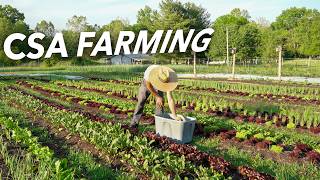
Answering Your Summer Garden Questions LIVE with Farmer Jesse
Audio Brief
Show transcript
This episode covers practical, small-scale farming and homesteading strategies designed to improve operational efficiency, crop resilience, and physical longevity. The discussion highlights real-world farm management, detailing how to optimize physical layouts, manage persistent pests, and handle extreme weather events.
There are three key takeaways to enhance small-scale farming operations and overall business sustainability. First, physical layout must prioritize accessibility through permaculture zoning to maximize daily labor efficiency. Second, crop success depends on precise post-harvest handling, targeted weeding strategies, and biological soil health. Finally, physical and mental longevity require setting realistic expectations, balancing farm labor, and stepping away from digital comparison traps.
Efficient farm design relies heavily on permaculture zoning to eliminate wasted steps and protect expensive physical infrastructure. Operators should position high-frequency facilities, such as greenhouses, nurseries, and wash-pack stations, closest to the primary residence. Lower-use zones, including perennial orchards and pastures, can be placed further away, which streamlines daily traffic patterns and reduces labor fatigue.
Operational success also hinges on proper post-harvest preservation and strategic weed control. To prevent rapid wilting, harvested leafy greens must be cooled immediately in cold water to remove field heat and then stored in airtight containers to block dehydrating refrigerator air. Additionally, weeding with tools like stirrup hoes should occur only as the soil is drying, and growers must avoid immediate irrigation so uprooted weeds desiccate completely.
Maintaining long-term viability requires a conscious effort to prevent physical injury and mental burnout. Farmers can protect their bodies by balancing field labor with administrative tasks and shifting part of their crop mix from high-maintenance annuals to upright perennials. Mentally, success involves disconnecting from the curated perfection of social media, accepting seasonal crop failures as natural learning curves, and pursuing unrelated hobbies during the intense summer season.
By focusing on spatial efficiency, precise harvesting protocols, and personal well-being, small-scale growers can build resilient operations that endure for years to come.
Episode Overview
- This episode covers practical, small-scale farming and homesteading strategies, focusing on soil health, pest management, crop preservation, and efficient property layout.
- The discussion highlights the realities of farm management, detailing how to handle extreme weather, salvage damaged crops, and avoid the mental burnout of comparing oneself to others on social media.
- Listeners will learn actionable methods for optimizing weeding schedules, extending the shelf life of leafy greens, and selecting durable physical infrastructure without overspending.
- This content is highly relevant to market gardeners, homesteaders, and small-scale farmers seeking to improve their operational efficiency, crop resilience, and physical longevity.
Key Concepts
- Diversifying Cover Crops and Living Mulches: Relying on a single cover crop, like white clover, is often insufficient for full-season weed suppression because it may go dormant in high summer heat. Incorporating a diverse mix of warm-season grasses and multiple clover varieties mimics natural ecosystems, improves soil structure, and brings in a greater variety of microbes and nutrients.
- Physical Barriers for Pest Management: Natural repellents provide only temporary relief against persistent pests. Physical exclusion methods—such as row covers for rabbits and buried fencing for gophers—are the most reliable long-term solutions to break pest feeding habits and protect vulnerable crops.
- Resuscitating Damaged Sweet Potato Slips: If sweet potato slips arrive in poor condition with visible rot, potting them in a nursery mix, shading them, and watering heavily ("mudding them in") allows them to establish roots. This nursery phase makes it easy to identify which slips will recover before committing them to field beds.
- Permaculture Zoning for Homestead Efficiency: Layout efficiency relies on placing high-use infrastructure (such as greenhouses, nurseries, intensive gardens, and wash-pack stations) closest to the home. Low-frequency zones (like orchards, perennial beds, and pastures) should be positioned further away to minimize wasted daily steps.
- Preventing Post-Harvest Lettuce Wilt: Leafy greens wilt rapidly due to retained field heat and dehydration. Because refrigerators act as dehydrators by stripping ambient moisture, harvested greens must be cooled immediately in cold water or a cooler and stored in airtight, sealed containers to prevent rapid desiccation.
- Weeding Timing Relative to Moisture: For cultivation tools like stirrup hoes to be effective, weeding must occur as the soil begins to dry after rain or irrigation—never when it is wet, as this causes soil compaction. Additionally, watering immediately after hoeing must be avoided so that the uprooted weeds fully desiccate and die rather than re-rooting.
- Ergonomics and Business Longevity: Physical sustainability in farming involves finding a balance between physical labor and desk work, as well as shifting a portion of the farm's crop mix from labor-intensive annuals (which require constant bending) to upright perennials like fruit trees, berries, and shrubs.
- Avoiding the "Instagram Farm" Comparison Trap: Social media often presents a curated, perfect view of farming that can lead to feelings of inadequacy. Real-world farms face constant setbacks, such as crop failures from extreme weather and saturated clay soils, and accepting these challenges is a normal part of the learning process.
- The Importance of Escaping Farm Stress: To maintain long-term motivation during the demanding summer season, farmers need a mental escape from their daily tasks. Engaging in unrelated passions (such as sports, reading, or family time) provides necessary relaxation and prevents burnout.
Quotes
- At 0:06:25 - "For me, it actually helps to take a break from farming stuff sometimes... I need a thing to just take my brain for a minute, and that is for me like one of my best [escapes]." - Explaining the necessity of mental hobbies to sustain motivation and prevent summer burnout.
- At 0:08:18 - "Get off Instagram, get off Facebook, all those things. Comparison is the thief of joy... don't let that comparison steal all the good that you're actually doing or all the things that you're learning." - Advising farmers against comparing their daily struggles with curated online content.
- At 0:09:07 - "I had one bed of carrots... after we got that 6 or 7 inches of rain... I lost almost an entire bed of carrots... we have really dense clay soil... I have failures all the time." - Normalizing crop loss and highlighting the physical challenges of farming in poorly draining clay soils.
- At 0:12:34 - "Our season is so incredibly long that there's no one crop that's going to protect the soil the whole season... we'll plant white clover and it's good until like June, but then all the grasses start to poke through because they're warm-season grasses." - Highlighting the limitations of monoculture living mulches in long growing seasons.
- At 0:13:28 - "You want as much as you can, you just want that diversity because that's going to bring in the greatest variety of microbes, it's going to bring in the greatest diversity of nutrients." - Explaining the biological benefits of diverse plantings in pathways and fields.
- At 0:22:04 - "The challenge with rabbits really is just if they can physically get to it... once you break the habit a little bit it helps... so one easy thing to do is just throw some row cover over them for a few nights." - Offering practical advice on using physical exclusion to disrupt pest patterns.
- At 0:25:33 - "What a lot of people do is they'll 'mud them in.' So basically, you'll dig a little trench, you'll put your sweet potato slips in there, you'll cover them... and then water them in really well and let them root a little bit, then take them out and plant them." - Explaining how to salvage damaged, partially rotted sweet potato slips.
- At 0:28:22 - "A physical barrier, once again... some sort of fencing that you bury deep enough that they can't get under it, would probably be the place to start. Gophers are tough." - On managing persistent underground pests in silty soils.
- At 0:32:12 - "The biggest thing with [homestead layout] is: keep the stuff that you're going to visit the most closer to the house... and anything you don't need to visit that much, you put further out." - Clarifying the core principle of permaculture zone planning.
- At 0:38:39 - "A refrigerator is just a giant dehydrator; it's taking the moisture out and putting in the cold. So, it has to be sealed in plastic or sealed in a container, or otherwise, it will wilt." - Revealing why harvested lettuce must be stored in airtight containers to prevent rapid desiccation.
- At 0:40:36 - "Honestly, the hardest thing on my back is sitting. This is way harder on me than farming most of the time. So, finding a good balance between those two things—my creative side and my physically outside side—is key." - On managing physical health and ergonomic changes as an aging grower.
- At 0:47:50 - "What you don't want to do is cultivate and then immediately water, because then you're just going to water all those plants you cultivated out back in. You want that stuff to dry out." - Advising on the proper sequence of cultivation and irrigation to kill weeds permanently.
Takeaways
- Map out your homestead or farm using permaculture zones, placing daily-use facilities (like the nursery and wash-pack station) closest to the house to save time and energy.
- Prevent harvested lettuce and leafy greens from wilting by harvesting in the cool morning, dunking them in cold water to remove field heat, and sealing them in airtight containers before refrigerating.
- Time your weeding activities for when the soil is drying out, and avoid watering immediately after cultivating to ensure uprooted weeds dry out and die completely.
- Source affordable farm infrastructure, such as steel T-posts and cattle panels, by looking for deals at local physical farm auctions, Craigslist, and Facebook Marketplace.
- Keep physical reference books, such as Pam Dawling's Sustainable Market Farming, directly in your wash-pack shed so you can quickly troubleshoot issues without relying on digital devices.
- Propagate your own sweet potato slips by purchasing organic sweet potatoes from local farms in the spring, avoiding the risk of damaged or rotted commercial shipments.