A High-Flying Half-Acre Combining Flowers and Veg with Andy Borak of Red Fern Farm
Audio Brief
Show transcript
How can a single farmer run a highly profitable farm without burning out or hiring a massive crew? On this episode of the show, which aired on November twenty-four, twenty-six, a small-scale solo farmer shares how extreme simplification and smart crop choices keep the business thriving. By the end of this episode, you will learn the exact systems to maximize your farm revenue using minimal labor.
The secret to surviving as a one-person farm.
A single injury or illness can completely shut down a solo farming business if your systems are too complex. Operating entirely on your own means you must plan for the unexpected and mitigate your risks. By simplifying every process and selecting only highly reliable crops, you protect your farm from taking a massive financial hit if you get sick.
Designing your farm layout around standard materials.
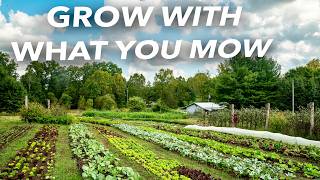
One solo grower realized that standard, off-the-shelf landscape fabric is four feet wide, so they built every single growing bed to match that exact width. This simple alignment completely eliminated weeding time and made tool selection incredibly efficient. To save hours of manual labor, try standardizing your bed widths to match the exact dimensions of your landscape fabrics.
Why growing fewer crops actually increases your profits.
Trying to grow every vegetable under the sun is a fast track to burnout. Limiting your farm to a manageable number, such as thirty total varieties of flowers and vegetables, ensures consistent production. Resisting the urge to experiment with new crops keeps your daily routines highly predictable and efficient. To prevent burnout, try capping your crop list at thirty varieties and ensuring consistent production.
Using flowers to fill your seasonal income gaps.
Vegetable demand or production often dips during the shoulder seasons of spring and fall. Integrating specialty cut flowers alongside vegetables helps stabilize your cash flow throughout the year. Cold-hardy flowers can be grown during these transitional seasons to boost your income when vegetable production is low. To balance your revenue, try dedicating a portion of your growing space to cold-hardy specialty blooms.
The hidden gas that can ruin your flower harvest.
Storing your freshly cut flowers in the same cooler as your vegetables can compromise post-harvest quality. Some vegetables release ethylene, a natural ripening gas that flowers are sensitive to. To maintain peak quality, you must keep separate coolers, holding vegetables at thirty-six degrees Fahrenheit and flowers at thirty-eight to thirty-nine degrees. To protect your post-harvest quality, try setting up two distinct cooling zones for your crops.
The high-yield crop that outperforms winter greens.
A fifty-foot bed of snapdragons can generate fifteen hundred dollars wholesale with almost no winter labor. While winter vegetables require intensive, weekly maintenance, cold-hardy flowers like snapdragons can be planted in late autumn and left alone. They require minimal work until they are harvested all at once in the spring, yielding a much higher return per hour. To maximize your tunnel space, try overwintering snapdragons as a low-effort, high-profit spring savings account.
Eliminating hours of tedious string-tying labor.
Traditional vertical trellising can take up hours of your valuable springtime schedule when you are working alone. Using high-efficiency vertical trellising methods and versatile low-tunnel hoops allows you to easily transition a bed from a protected winter tunnel to an open-air vertical trellis. These specialized systems save hours of manual labor because you do not have to tie traditional strings. To streamline your seasonal field transitions, try utilizing specialized hoop systems.
Remember that smart crop choices and standardized bed sizes are your best tools for saving labor. Maximize small spaces by growing fast-maturing radishes under single-leader crops, and use screens or organic molasses sprays to raise plant Brix to keep pests out of covered tunnels. A fifty-foot bed of snapdragons can generate about fifteen hundred dollars wholesale.
Episode Overview
- A small-scale farmer shares the operational systems, tool standardizations, and crop selection strategies required to run a highly profitable farm with minimal labor.
- The discussion highlights the strategic integration of specialty cut flowers and high-yield vegetables to maximize revenue and stabilize seasonal cash flow.
- This content is ideal for small-scale growers, market gardeners, and solo farmers looking to optimize their labor efficiency, infrastructure, and crop profitability.
Key Concepts
- Solo Farming Operations: Running a farm with minimal labor requires extreme simplification of processes, standardization of tools, and a focused crop selection to manage workload and mitigate risk.
- Acreage and Bed Standardization: Designing a farm with standard bed sizes (such as 30-inch and 4-foot widths) makes crop planning, tool selection, and the use of materials like landscape fabric highly efficient.
- The Power of Crop Simplification: For a solo farmer, limiting crop varieties to a reliable and manageable number (such as 30 total varieties of flowers and vegetables) is a crucial strategy to ensure consistent production and prevent burnout.
- Niche Flower and Vegetable Synergy: Integrating specialty cut flowers and vegetables allows a farm to optimize revenue across seasons, using cold-hardy flowers to boost income during the shoulder seasons of spring and fall.
- Temperature-Specific Storage: Keeping separate coolers for vegetables (held at ~36°F) and flowers (held at ~38 to 39°F) is necessary for maintaining post-harvest quality, especially since flowers are sensitive to ethylene produced by some vegetables.
- Financial Performance of Overwintered Flowers vs. Winter Veggies: Overwintering a low-maintenance, high-yield flower crop like snapdragons can be more financially lucrative than growing cold-tolerant vegetables in the same tunnel space. While vegetables require intensive, weekly labor throughout the winter, overwintered snapdragons require minimal maintenance until they are harvested all at once in the spring, yielding a much higher return per labor hour.
- The "Clipper" Trellising and "LowCat" Systems: High-efficiency vertical trellising methods and versatile low-tunnel hoops allow growers to easily transition a bed from a protected winter tunnel to an open-air vertical trellis in the spring while saving hours of traditional string-tying labor.
Quotes
- At 3:15 - "We started using landscape fabric because I’m the only person doing the work and I was trying to cut down on weeding, and landscape fabric is four foot wide... so it just made sense to have the beds at four feet." - Explains how tool and material dimensions directly dictate farm layout and labor efficiency.
- At 11:38 - "I try and simplify it as much as I possibly can because I know I’m it. If I get sick or I get injured... the farm really takes a pretty good hit." - Highlights the high-stakes risk management required when operating as a solo farmer.
- At 12:13 - "Trying something new more often than not leads to a little headache... trying to keep it as simple as possible without too much experimentation for me has made things a lot more simple." - Illustrates the discipline needed to resist the temptation of over-experimentation in favor of reliable, standardized crops.
- At 20:36 - "So the flowers have really taken up the shoulder seasons. So we go really hard on flowers in spring and really hard on flowers in fall." - Shows how diversifying into specialty cut flowers can financially stabilize a small farm during times when vegetable demand or production dips.
- At 22:33 - "Flowers are really ethylene sensitive and they’re kind of held at different temperatures... so we do have the two separate coolers." - Explains the physiological necessity of separate post-harvest storage systems for mixed flower and vegetable farms.
- At 25:47 - "We plant snapdragons in late October or early November... they're really cold hardy. We don't cover them unless it's going to get down below about 27 degrees." - Demonstrates the extreme cold-tolerance of snapdragons, making them an ideal low-input overwintering crop in high tunnels.
- At 27:40 - "We start foliar application... once they start producing buds. But up until then, they'll get the Neptune's Harvest fish emulsion, the more nitrogen-focused one." - Outlines the targeted, growth-stage-specific organic fertilizer regimen used to maximize snapdragon stem length and bud quality.
- At 29:32 - "A 50-foot bed of snapdragons... is going to generate about $1,500 wholesale... the return for what I'm putting into it is significantly higher than if I tried to overwinter spinach." - Breaks down the financial math of high-tunnel space allocation, showing why flowers can be a better business decision than winter produce.
Takeaways
- Balance labor efficiency when overwintering by choosing crops like snapdragons that require almost no winter labor but deliver a high-profit payout in early spring, acting as a "savings account" compared to labor-intensive winter greens.
- Prevent pest infestations in covered tunnels by using screens to block pests like cucumber beetles, but monitor closely for aphids and use organic controls like molasses sprays to raise plant Brix levels when natural airflow and beneficial insects are restricted.
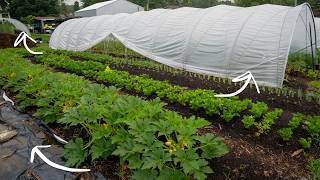
- Maximize small growing spaces with intercropping by utilizing the open edges of 30-inch beds under single-leader trellised crops to grow fast-maturing root crops like radishes or turnips.
- Standardize farm bed dimensions to fit off-the-shelf materials like standard landscape fabrics to eliminate weeding time and simplify crop planning across all growing areas.