What Led Seven Missing Women to the Horsch House of Horrors?

Audio Brief
Show transcript
How did a father and son connect to at least seven missing or harmed women inside a North Philadelphia House of Horrors, and why can police still not officially certify some of those deaths? On Crime Junkie, Audiochuck founder Ashley Flowers and cohost Brit Prawat investigate the unfolding 2026 case of Raymond and Eugene Horsch. By the end, you will understand how a routine traffic stop uncovered decades of hidden violence, and why the hardest forensic questions remain unanswered.
How a Routine Traffic Stop Uncovered a House of Horrors
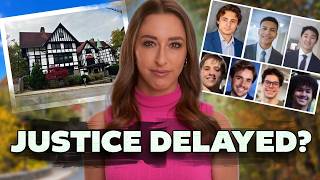
A routine parking violation near the Liberty Bell exposed a hidden basement lab and a link to a woman missing since 2022. On June 19, 2026, a park ranger approached an illegally parked BMW holding Eugene Horsch and a woman using a fake ID with the information of missing person Blair Tonzelli. When police raided his home in Olney, they found a makeshift basement lab, five cremation urns with two unidentified, a handwritten letter referencing Ted Bundy and zip ties, and a fifty-five gallon drum hooked to water lines, which Ashley hedges could have been for watering plants in his marijuana grow operation.
The Making of a Father and Son Crime Team
Long before that raid, Eugene was raised by a father who openly called himself a sociopath. After Eugene's mother died of an overdose with seven-year-old Eugene in the room, Raymond Horsch, who died in 2025, raised him alone in Chalfont, exposing him early to extreme gore and torture pornography.
Hiding Real Disappearances Behind a Fetish Filmmaker Persona
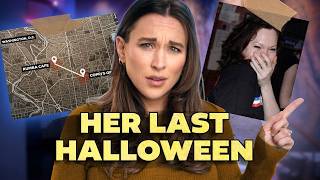
Moving into that Olney house gave Raymond a base to hide real disappearances in plain sight by claiming he was just making movies. Because he operated openly as a fetish filmmaker, police dismissed repeated red flags, failing to get a search warrant even when his ex-wife Amy McHale vanished after leaving a voicemail from his house in 2016.
Why Six Hundred Thousand Seized Files Still Leave Police With Doubts
That same claim of fiction is now complicating the review of roughly fifty hard drives seized in the raid, which hold over 600,000 images. While a Federal Bureau of Investigation lab confirmed to Nicole's cousin Jonathan Halloran-Koren that her murder video is not a computer-generated deepfake, police and the Medical Examiner hedge that other deaths cannot be officially certified without bodies because Raymond staged fake deaths and the house's reported blood tested negative for real blood.
Why a Corrupt Crematorium Cannot Explain Where the Bodies Went
Without certified deaths, investigators still face a glaring question: none of the women's bodies have been recovered. While Raymond paid off a man named George Newsome in the early 2000s to film a real body burning at a crematorium tied to the Garzone Funeral Home, journalist Max Marin notes that the crematorium closed in 2007, so that timeline does not explain the disappearances after 2012.
The Unsearched Property and Unresolved Evidence Left Behind
While the Olney investigation continues, an older Horsch property in Chalfont remains unsearched despite a trail of strange evidence. Before losing the Chalfont home in 2013, the Horsches installed a human-sized steel safe room in the basement foundation, while neighbors saw a groundskeeper constantly moving dirt and at least fifteen barrels, which Ashley hedges could relate to marijuana growing or darkroom chemicals.
With two-thirds of the fifty hard drives still unreviewed as of September 2026 and dozens of women in the footage still unidentified, this investigation is happening in real time. As Eugene's defense attorney Jerome Brown put it, quote, We believe Mr. Horsch is innocent.
Episode Overview
- Hosts Ashley Flowers (founder/owner of Audiochuck) and Brit Prawat investigate the unfolding 2026 case of the North Philadelphia "House of Horrors" at 417 West Chew Avenue, connecting father and son Raymond and Eugene Horsch to at least 7 missing or harmed women.
- The narrative traces how a June 19, 2026 traffic stop near the Liberty Bell uncovered fake IDs belonging to missing woman Blair Tonzelli, triggering a multi-day hazmat raid that yielded a basement chemical lab, 5 cremation urns, and roughly 50 hard drives packed with graphic digital evidence.
- Through police records, Philadelphia Inquirer reporting, and original interviews, the episode examines how deceased self-proclaimed "sociopath" Raymond Horsch exploited vulnerable women in Kensington under the guise of filming staged death fetish scenes, masking real violence and disappearances as "fiction."
- Listeners gain a detailed look into the forensic challenges of an active, real-time investigation—including altered camera metadata, missing physical remains, unsearched prior properties in Chalfont, and the ongoing effort to identify dozens of women seen in over 600,000 seized images and 70,000 videos.
Key Concepts
- The Catalyst Arrest and the Olney Raid: On June 19, 2026, a park ranger approached an illegally parked BMW containing 44-year-old Eugene Horsch (carrying a fake DEA badge #07384, crack cocaine, switchblades, a cattle prod, handcuffs, a .40 S&W Taurus G2S pistol serial #ABC419937, and a .38 Special revolver with an obliterated serial number) and a woman using a fake ID with the information of Blair Tonzelli (missing since August 2022, reported missing February 2023). Searching Eugene's 3-story home at 417 West Chew Avenue in Olney uncovered over 100 pieces of ballistic evidence, a marijuana grow operation, a makeshift basement lab, a 55-gallon drum hooked to water lines running into the ground (which Ashley hedges could have been for watering plants), 5 urns (3 accounted for, 2 unidentified), and a handwritten letter referencing hurting people, zip ties, a drum, and Ted Bundy.
- Disclosures & Sponsorships: Ashley Flowers is the founder and owner of Audiochuck LLC, which produces Crime Junkie and Dark Down East (promoted by host Kylie Low). Sponsored segments include the Ladder fitness app (
ladder.fit/crimejunkiefor a 7-day free trial and $10 off the first month) and YouTube Premium. - Intergenerational Criminality and Desensitization: Eugene's father, Raymond Horsch (who died in 2025), ran a 1970s meth empire, counterfeited money, fled to New Zealand, and was diagnosed in a 1985 sentencing psychological evaluation (resulting in a 3-year prison sentence) as obsessed with control and "consumed by anger," pointing toward bipolar and paranoid personality disorders. After Eugene's mother died of an overdose in 1989 with 7-year-old Eugene in the room, Raymond raised him alone in Chalfont, exposing him early to extreme gore and torture pornography. Following a 2009 Chalfont marijuana arrest and a sentence of just over 50 months, Raymond moved into Eugene's Olney house in 2013—the same year Eugene had a nearly $2 million marijuana bust there (Eugene spent about 5 years total in prison across his adult life, including a November 21, 2025 felony drug conviction and a 2025 house fire that revealed 3 guns).
- The "Fiction" Defense and Law Enforcement Blind Spots: Raymond targeted substance-dependent women in Kensington, paying them with cash or shelter to film staged hangings, strangulations, and drownings. Because he openly operated as an erotic/fetish filmmaker, repeated red flags were dismissed. When his ex-wife Amy McHale (roughly 30 years his junior; married 2004, divorced 2008) vanished after leaving a voicemail from his house on June 14, 2016, police did not secure a search warrant. Even when researcher Barbara Rotella found a 2016 photo of Amy crying on Raymond's website in 2024 (alongside a photo of Blair Tonzelli with a black eye and bloody lip), Raymond successfully brushed it off to police as "fiction."
- Digital Forensics vs. Altered Metadata and Stage Props: Police seized roughly 50 hard drives containing over 600,000 images, over 70,000 videos, and over 10,000 pages of writing. On August 12, 2026 (having reviewed 5% of the files), police announced that Maribel Fresses (reported missing February 2018) and Gabrielle Amarando (missing since 2012) appeared alive and then dead in photos. On September 16, 2026 (with one-third reviewed), police identified 3 more victims: two unconscious women (one ~25 years old) and 27-year-old Nicole Fusaro (missing July 2018), who was filmed on 2 cameras being strangled to death by Raymond using a zip tie and pliers. While an FBI lab confirmed to Nicole's cousin Jonathan Halloran-Koren that Nicole's murder video is not a deepfake, police and the Medical Examiner hedge that other victims' deaths cannot be officially certified without bodies because Raymond staged fake deaths (and the "significant amount of blood" initially reported in the house tested negative for real blood). Furthermore, the 2017 metadata timestamp on the files for Gabrielle, Maribel, and Nicole is unreliable because the camera's date had to be set manually.
- The Unresolved Mystery of the Victims' Remains: None of the women's bodies have been recovered, and Ashley notes that cremation temperatures generally destroy DNA unless a bone fragment survives in the 2 unidentified urns. While Raymond paid off George Newsome (who died in 2014) in the early 2000s to film a real body being incinerated at a crematorium tied to the Garzone Funeral Home (where the Garzone brothers and James McCafferty Jr. were convicted in 2008 and sentenced to 8–20 and 3.5–10 years for harvesting tissue from ~250 bodies), journalist Max Marin notes that the crematorium closed in 2007—meaning the timeline does not explain the post-2012 disappearances.
- The Unsearched Chalfont Property and Current Legal Status: Before losing the Chalfont home in 2013, the Horsches rebuilt the house after a fire, installing a human-sized steel safe room in the basement foundation, while neighbors saw a groundskeeper constantly moving dirt and at least 15 barrels on the property (which Ashley hedges could relate to marijuana horticulture or darkroom chemicals). During the 2009 Chalfont raid, police found firearms and multiple female IDs that were handed to the Bucks County DA's office and never publicly resolved, and new homeowners later threw away homemade DVDs found hidden inside the garage walls. Out of roughly 60 people identified in the digital files so far (5 lifeless, 10 later died of overdoses elsewhere, 16 alive/uncooperative, 25 scheduled for interviews, 3 refusing to come in), Eugene Horsch faces only 2 federal charges from the car stop (felon in possession of a firearm and possession of an unlawfully produced document) and was incarcerated when Amy disappeared in June 2016.
Quotes
- At 0:09:33 - "She also said that although Eugene never actually hurt her, he did once tell her that he knew the chemicals needed to dissolve human bodies." - Ashley Flowers explaining a witness statement from the woman arrested in Eugene's car, contextualizing why the basement chemical lab and 55-gallon drum alarmed investigators.
- At 0:13:42 - "He says that this whole thing was getting overblown, quote, 'much ado about nothing.'" - Ashley Flowers quoting Eugene Horsch's defense attorney, Jerome Brown, who argued the basement chemistry equipment belonged to Eugene's deceased father, Raymond.
- At 0:15:30 - "'An artist, filmmaker, composer, writer, porn performer, drug smuggler, sometime political activist, art forger, counterfeiter, pot grower, airshow pilot, army deserter, fugitive, sociopath, ex-convict, and all-out villain.'" - Brit Prawat reading the biographical summary from Raymond Horsch's 2003 book Erato, illustrating how openly he broadcasted his criminal persona.
- At 0:16:44 - "Basically, I'm a sociopath, always have been, and it was a nice way to express myself." - Archival audio from 2014 of Raymond Horsch speaking to reporter Peter Crimmins about his 1973 erotic film and his lifelong lack of empathy.
- At 0:16:56 - "I don't like—disagree with society. I think civilization is the biggest evolutionary mistake ever made." - Raymond Horsch in the 2014 interview explaining his worldview and contempt for societal rules.
- At 0:35:45 - "'Eugene lived there. He lived there for a long time. His dad lived there for a long time.'" - Ashley Flowers quoting Inspector Raymond Evers from the August 12, 2026 press conference, highlighting why police have stopped short of officially naming which man killed Maribel Fresses and Gabrielle Amarando.
- At 0:46:50 - "'Well, we know they're unconscious. We know they're not there. People looked at them, but as long as everything we see is accurate, and we can't say that yet.'" - Ashley Flowers quoting police officials explaining the forensic caveat that prevents declaring victims dead based solely on photographs from a house known for staged fetish shoots.
- At 0:48:43 - "'The medical examiner totally botched the autopsy and didn't even bother to sew her up properly. My horrible photograph is all that is left of her, the only trace of her short, sad existence.'" - Ashley Flowers reading Raymond Horsch's 2014 art show promotional text describing his illicit access to dead bodies at a city morgue warehouse and crematorium.
- At 0:54:37 - "'As a part of the investigation, firearms were found. There were also IDs of various females. There were a few of them. The DA's office took them and were going to follow up. I really don't know what happened after that.'" - Ashley Flowers quoting the retired New Britain Township Police Chief regarding uninvestigated evidence from the 2009 raid on the Horsch home in Chalfont.
- At 1:00:06 - "He has said, quote, 'We believe Mr. Horsch is innocent.'" - Ashley Flowers quoting defense attorney Jerome Brown regarding Eugene Horsch's legal stance as of September 2026, noting Eugene has not been charged with any murders or missing persons cases.
Takeaways
- Submit tips on Kensington, Olney, or Chalfont connections: Because two-thirds of the 50 hard drives remained unreviewed as of September 2026 and dozens of women in the footage are still unidentified or uninterviewed, anyone with information about Raymond or Eugene Horsch, their Craigslist modeling ads, or their properties at 417 West Chew Avenue (Olney) and Chalfont (Bucks County) should contact Philadelphia Police at 215-686-TIPS (8477) or the FBI Philadelphia Field Office at (215) 418-4000.
- Look beyond camera metadata timestamps in missing persons timelines: Investigators and family members should not rely strictly on digital file creation dates when establishing a victim's timeline of death; as demonstrated by the 2017 timestamps on Nicole Fusaro's 2018 murder video, manually set camera clocks can create false chronological alibis or confusion.
- Follow up on cold-case physical evidence across jurisdictions: Law enforcement agencies investigating serial offenders should audit evidence logs from prior property raids in neighboring jurisdictions—specifically tracking down the "IDs of various females" seized during the 2009 New Britain Township raid in Chalfont and handed to the Bucks County DA's office, as well as searching the Chalfont property itself.
- Preserve unusual items found during property renovations: Homeowners who discover hidden media (such as the homemade DVDs found inside the Chalfont garage walls) or structural anomalies (like the basement foundation safe) in homes previously owned by convicted felons should turn the materials over to law enforcement rather than discarding them.
- Advocate persistently when reporting vulnerable missing adults: When a missing person struggles with substance use or criminal records (like Blair Tonzelli, Amy McHale, and Nicole Fusaro), friends and family should document exact addresses, save voicemails, and archive online appearances (as researcher Barbara Rotella did on Raymond's website) to push past law enforcement reluctance to secure search warrants.
- Improve law enforcement communication protocols with non-immediate family: Police departments handling graphic cold-case resolutions should establish compassionate protocols for extended family members who have actively searched for victims (like Nicole Fusaro's cousin Jonathan, who searched for 6 years after her mother died two months prior), ensuring families do not learn graphic murder details for the first time via live television press conferences after being turned away under strict "next of kin" rules.