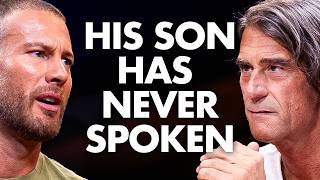
What Colin Kaepernick Endured Growing Up & How He Survived It

Audio Brief
Show transcript
Why does the National Football League welcome back players with severe off the field trouble, while blackballing players who protest? Colin Kaepernick answers this question by pointing to a hidden currency in professional sports: obedience. Ten years after kneeling during the national anthem in 2016, the former San Francisco 49ers quarterback joins host Rich Roll on his show. By the end of this audio, you will learn how Kaepernick navigates different spaces, the hidden mechanics of football, and how to turn protest into lasting community support.
Discover how to navigate different environments without splitting who you are. Kaepernick grew up in Turlock without a significant Black population or many Black mentors, raised by loving white adoptive parents who could not create a safe space to process racial trauma, such as when white kids using racial slurs tied him to a rose tree in fourth grade. Rather than seeing this as a fractured dual identity, Kaepernick frames it as an essential situational awareness of how to show up in different spaces while honoring his heritage, though he says he is not sure if that is just his innate personality.
Uncover the hidden leverage behind conformity in the National Football League, or NFL. Rich Roll notes that player Deshaun Watson received a 230 million dollar contract despite being in all kinds of trouble, a contract Kaepernick says he does not know how it even happened. Kaepernick explains that the league welcomes back players with off the field issues because it gives teams leverage to demand a higher level of obedience.
That desire for control extends right onto the playing field, where you can see how coaching staffs quietly tank a player's statistics. Kaepernick explains that if teams want to suppress a player's value, they can keep a wide receiver on the field while removing him from the quarterback's throwing options.
Learn why an unshakeable public stand requires years of quiet preparation. When Kaepernick sat and then knelt in 2016, facing death threats and people trying to send bombs to his house, it was not impulsive. It followed more than 15 years of working toward his first NFL start, auditing graduate classes at Berkeley, and witnessing the killings of Black people like Mike Brown, Eric Garner, and Tamir Rice.
See how symbolic awareness grows into real community infrastructure. Launched in 2016, Kaepernick's Know Your Rights Camp expanded to provide legal defense, COVID 19 relief, and free independent second autopsies for families who lost loved ones in custody.
Protect your mind from letting artificial intelligence do your thinking. Kaepernick points out that about 70 percent of United States students are not proficient at reading and writing, and an advisor from New York University told his literacy company, Lumi, that incoming university students cannot write. Lumi uses artificial intelligence with strict guardrails that never write for the student, preventing them from offloading their thinking.
Finally, understand why outrage is a dangerous way to measure success. Kaepernick rejects the idea that being attacked proves an activist is right, warning that chasing backlash can lead to extreme, off the mark behavior, and he is not sure if doing broadcast interviews like 60 Minutes in 2016 would have moved the needle.
Prepare relentlessly for the opportunities you want, even when institutions close the door. Despite a decade out of the league, Kaepernick still wakes up at 4:30 every morning to train, telling league decision makers simply, be true to who you say you are.
Episode Overview
- Ten years after kneeling during the national anthem in 2016, former San Francisco 49ers quarterback Colin Kaepernick joins host Rich Roll to discuss the roots of his protest against systemic oppression, his evolution over the past decade, and his new book (releasing September 15th, described as equal parts memoir and manifesto).
- The conversation traces Kaepernick’s upbringing in Wisconsin and Turlock, California, with loving white adoptive parents who couldn't fully understand his racial experiences—such as being tied to a rose tree by white kids using racial slurs in fourth grade or surviving a college incident on the precipice of a triple homicide.
- Kaepernick unpacks the internal mechanics of the NFL, explaining the pressure on quarterbacks to conform to a "white CEO type profile," how teams can intentionally sabotage a player's on-field statistics to maintain leverage, and why he still wakes up at 4:30 AM daily to train for an NFL return.
- The episode explores Kaepernick’s ongoing work through the Know Your Rights Camp (founded in 2016) and his AI-driven K–12 literacy company, Lumi, while examining the current political climate, the pitfalls of using public backlash as a metric for activism, and how separating personal identity from ideas enables genuine societal progress.
Key Concepts
- Navigating Awareness vs. Dual Identity: Growing up in Turlock without a significant Black population or many Black mentors—while raised by white adoptive parents unable to create a safe space to process racial trauma—forced Kaepernick to learn how to navigate different environments. Rather than viewing this as a fractured "dual identity," he frames it as an essential situational awareness of how to show up in different spaces while honoring his heritage—though he hedges that he is "not sure if that is just like innate personality of who I am."
- Cultural Conformity and Leverage in the NFL: Kaepernick looked up to Allen Iverson, Randy Moss, and Ken Griffey Jr. as athletes who were undeniable at their sports yet constantly critiqued for their Blackness and culture. In the NFL, quarterbacks face intense pressure to fit a "white CEO type profile"—Kaepernick was told not to get more tattoos and was criticized for wearing a snapback hat despite leading his team to a Super Bowl and an NFC Championship. Furthermore, while Rich Roll notes Deshaun Watson received a $230 million contract despite being in "all kinds of trouble" (a contract Kaepernick hedges he doesn't know how it even happened), Kaepernick explains that the NFL welcomes back players with off-the-field issues because it gives teams leverage to demand a higher level of obedience.
- Structural Sabotage on the Football Field: Unlike basketball, where a player like LeBron James can score 50 points even on the worst team, football relies on 10 other players on the field and coaches calling plays. If NFL teams want to suppress a player's value or stats, they can set them up to fail—for instance, keeping a wide receiver on the field but removing them from the quarterback's progression read, or pulling a running back in the red zone to reduce their catches, yards, and touchdowns.
- The Roots and Trajectory of the 2016 Protest: Kaepernick’s decision to sit for the first couple of games in 2016 before adopting the kneel—a period during which he was required to speak to the press three times a week, received death threats, and had people try to send bombs to his house—was not impulsive. It was preceded by 15+ years of working toward his first NFL start, educating himself, auditing graduate classes at Berkeley, and witnessing the killings of Mike Brown, Eric Garner, Tamir Rice, Mario Woods, Freddie Gray, Alton Sterling, and Philando Castile. He notes that US policing originated from slave patrols and acts as a feeder into the prison-industrial complex. While the last 10 years brought local and state policy changes (like sending social workers to mental health crises), police killings are up and police budgets have expanded, showing that work must go further.
- Community Infrastructure and Political Pushback: Ideated in 2015 and launched in 2016, Kaepernick's Know Your Rights Camp (
knowyourrightscamp.com) expanded to include a free second-autopsy initiative for families who lost loved ones in custody, a 2020 COVID-19 initiative, and a legal defense initiative. Looking at the political landscape in 2026, Kaepernick argues that while a small group is trying to redirect the country back 50 to 100+ years culturally and systemically, the overwhelming majority is rejecting it, evidenced by support for candidates like Mamdani in New York, Abdul El-Sayed, and Angie Nixon. - Combating "Cognitive Offloading" in Literacy: Approximately 70% of US students are not proficient at reading and writing—a crisis echoed by an NYU advisor to Kaepernick's company Lumi (
lumistory.ai) who reported incoming university students cannot write, and the UC system having to go back to basics. While Kaepernick tested into gifted/talented and magnet programs early on (earning a 4.5 high school GPA with AP courses and a 4.0 college GPA), he notes that intellect in a Black athlete was often treated as an anomaly, despite his understanding that Black women are among the most educated demographics in the country. Lumi addresses K–12 literacy using AI with strict guardrails that never write for the student, preventing "cognitive offloading" and forcing productive struggle. - Why Backlash is a Dangerous Metric for Activism: History often validates unpopular stances only in hindsight—for example, Kaepernick notes that only about 33% of Black people supported Martin Luther King Jr. during his lifetime, and Rich Roll suggests looking 50 years into the future for historical hindsight on 2016. However, Kaepernick rejects the idea that being attacked by critics proves an activist is doing something right. Relying on backlash as a metric of success can incentivize extreme, off-the-mark behavior just to provoke a reaction. When asked what he might do differently from 2016 (where he declined a 60 Minutes sit-down), he hedges that he isn't sure if pushing people more aggressively or doing broadcast interviews would have changed the outcome or moved the needle.
- Disclosures and Sponsor Research Claims: Alongside Kaepernick's disclosed ties to his book, personal site (
kaepernick7.com), Know Your Rights Camp, and Lumi, the episode includes sponsor segments. Rivian CEO RJ Scaringe claims the R2 (stories.rivian.com/richroll) will feature hands-off point-to-point navigation by year-end and "eyes-off" highway driving next year. Rich Roll shares that ProLon (prolonlife.com/richroll, 15% off + $40 bonus gift) is backed by 40+ clinical trials at Stanford, Yale, and the Mayo Clinic to trigger human autophagy, and running its 5-day program 3 months in a row is clinically shown to reduce biological age by an average of 2.5 years. Roll also notes that while 98% to 99% of wellness gadgets sent to him end up in a drawer, he uses iRestore (irestore.com, code:RICHROLL, 12-month money-back guarantee), stating the Illumina mask uses 360 medical-grade LEDs across 3 wavelengths (red, infrared, blue) simultaneously, and the Elite helmet uses 300 lasers and 200 LEDs to support thicker hair in as little as 3 months. Airbnb (airbnb.com/host) is also a disclosed sponsor.
Quotes
- At 0:00:31 - "Protesting to say police shouldn't kill Black people was controversial. There were death threats, people trying to send bombs to the house." - Illustrating the extreme hostility and physical danger Kaepernick faced in 2016 for what he viewed as a baseline moral stance.
- At 0:04:04 - "I look at it less as a dual identity, but more so an awareness that you have to navigate, and understanding how you show up in different spaces." - Explaining how he reconciled growing up as a Black child with white adoptive parents in predominantly white communities.
- At 0:06:34 - "I don't want people to ever have to go through that. But I also think those moments of struggle, they build and shape you and your character. And also how you come out the other side, to me, you come out stronger, even in the worst situations." - Reflecting on how early racial trauma and near-death experiences forged his resilience.
- At 0:11:15 - "I think about this from the quarterback position specifically: this should fit this white CEO type profile. And like when there's variance of that, the push or the pull to try to get you to be like, 'Be as close to that as possible,' becomes so significant." - Highlighting the cultural and racial conformity demanded of NFL quarterbacks.
- At 0:17:16 - "The thing that I think about most in relation to that is it gives the NFL leverage, and it gives the teams leverage, to be able to demand a higher level of obedience. Like, 'We helped you out of this situation, we looked out for you. Now you're going to do exactly what we tell you to do.'" - Explaining why the NFL readily welcomes back players with severe off-the-field legal or behavioral issues while blackballing players who protest.
- At 0:19:38 - "If teams don't want to succeed and they don't want players to do well, they can be like, 'You know what? We're going to draw these routes up, you're actually not even going to be in the read. You'll be on the field, but like the football isn't coming your way.'" - Detailing the mechanics of how football coaching staffs can quietly tank a player's statistical production.
- At 0:28:27 - "I think where we're at politically is we have a small group of people who are trying to redirect the country back 50, 100 plus years culturally and systemically. What I see more broadly, though, is people on the ground and the overwhelming majority of the country rejecting that." - Offering an optimistic grassroots perspective on the current political climate despite institutional regression.
- At 0:32:30 - "The experiences navigating police, the experiences navigating racism, having to educate myself and learn and do research and auditing graduate classes at Berkeley, like all of those experiences ultimately led up to that moment of protesting in 2016." - Clarifying that his anthem protest was the culmination of lived experience and rigorous academic study.
- At 0:38:10 - "Policing within the United States came out of slave patrols, and the progression and development of that, the role that that plays in supporting and becoming a feeder into the prison-industrial complex, like these are all systems that have been built within the United States." - Connecting historical institutions directly to modern systemic issues in law enforcement and incarceration.
- At 0:40:46 - "10 years later, police killings are up, police budgets have expanded. I think it paints the picture of the work that's been done has been important, but we have to go further with it." - Assessing the mixed progress of the past decade and why systemic reform remains urgent.
- At 0:58:05 - "In many ways, you're playing the game many times mentally before you ever step on the field." - Describing the intensive mental visualization required to execute under pressure without friction.
- At 1:07:29 - "We have approximately 70% of our students across the country that aren't proficient at reading and writing. Largely, we've just accepted this as the norm." - Identifying the national educational crisis that motivated him to found his literacy company, Lumi.
- At 1:13:21 - "To me, what it revealed was the expectation for, I will say particularly a Black athlete, to have intelligence or to have intellect was perceived as an anomaly." - Discussing how the public and media reacted with surprise to his academic background and articulate advocacy.
- At 1:26:21 - "I don't like using that as a metric, because if the metric becomes the goal of like, 'Oh, if they're responding to us and attacking us, like that's how you know you're doing something right,' that can lead us to like extreme places that are just off the mark of what we should be trying to accomplish." - Warning activists against using outrage or criticism as a compass for effective work.
- At 1:31:23 - "A surprising amount of people have come up and been like, 'I hated you. Like, I really didn't like you. And I've seen what you've done over the years, and I've had conversations, and you were right.'" - Sharing how consistent action over a decade changed the minds of former critics, including many from deep Southern states.
- At 1:38:04 - "Be true to who you say you are. The NFL, coaches, GMs all say the NFL is a meritocracy, and the best players will play, they want the best talent on the field. Be true to that." - Challenging NFL leadership to live up to their stated values regarding his desire to return to the league.
Takeaways
- Separate Ideas from Personal Identity to Enable Growth: When challenging systemic issues or deeply held beliefs, frame conversations around improving systems and outcomes rather than attacking individuals. Interrogating beliefs separately from the ego prevents defensive reactions and creates a window of opportunity for genuine transformation—as seen when critics from the Deep South eventually approached Kaepernick to admit he was right.
- Write Down Specific Long-Term Goals: Turn ambitions into concrete targets by writing them down. In 4th grade, for a time capsule project assigned by his teacher Mr. Sutterly, Kaepernick wrote where he would be in 15 to 20 years: playing for the Packers or 49ers, standing 6'4", and weighing "somewhere like 170 to 190 pounds, I think" (he grew to 6'5" and was drafted by the 49ers). Similarly, going into his 2nd NFL season as a backup who hadn't played, coach Jim Harbaugh had the team write down season goals; Kaepernick wrote that he would become the starter and go to the Super Bowl—and after starter Alex Smith got hurt mid-season, Kaepernick's 10th NFL start was the Super Bowl. (While Kaepernick hedges that he doesn't know how to reconcile fate vs. free will in his 4th-grade prediction, or whether Harbaugh questioned his written goals to test his readiness or realism, the practice anchored his trajectory.)
- Use Mental Visualization to Reduce Execution Friction: Before stepping into high-pressure situations, rehearse the scenarios repeatedly in your mind. Kaepernick notes what he believes is "good neuroscience" showing that writing down goals and visualizing them reduces friction in real time because the brain feels it has already accomplished the task. Practice walking through specific situational variations—just as Kaepernick visualizes 1st, 2nd, and 3rd down plays against a Cover 3 defense and anticipates 1 to 3 or 4 defensive things that could happen before stepping on the field.
- Enforce Guardrails Against "Cognitive Offloading" When Using AI: When integrating AI into learning or problem-solving, configure or use the tools to diagnose skill gaps and prompt critical thinking rather than generating the final output for you. Embrace "productive struggle" so your foundational capabilities—like reading, writing, and synthesis—strengthen rather than atrophy.
- Educate Yourself Thoroughly Before Taking Public Stands: Ground your advocacy in deep research and lived reality before stepping into the spotlight. Follow Kaepernick’s pre-2016 blueprint of doing independent research, seeking out academic rigor (such as auditing graduate courses), and listening to affected communities so your position remains unshakeable under intense media scrutiny.
- Anchor Activism in Tangible Community Infrastructure: Move beyond symbolic awareness by building practical systems that directly serve vulnerable populations. Model efforts on initiatives like the Know Your Rights Camp, which translates protest into youth education, legal defense funds, COVID-19 relief, and free independent autopsies for families seeking truth after in-custody deaths.
- Evaluate Success by Outcomes, Not Outrage: Do not measure the effectiveness of your work or advocacy by how angrily opponents attack you. Keep your focus strictly on whether systemic outcomes are improving, avoiding the trap of chasing provocation for its own sake.
- Maintain Daily Discipline Regardless of External Gatekeepers: Prepare relentlessly for the opportunities you want, even when institutions close the door. Despite a decade out of the league—and Rich Roll noting that half of the 63 NFL quarterbacks last year ended up on the weekly injury report—Kaepernick still wakes up at 4:30 AM every day to complete NFL quarterback skill training, lifting, and plyometrics so he is ready the moment an opportunity arises.
- Hold Institutions Accountable to Their Stated Meritocracy: When organizations claim to value merit, excellence, or equality, actively call on decision-makers (such as GMs, coaches, and executives) to align their hiring and operational practices with the principles they publicly profess.