US Stock Market Flashes Dreaded “Titanic” Signal
Audio Brief
Show transcript
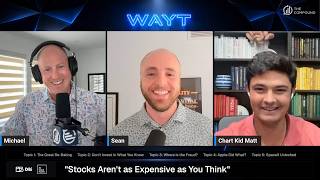
This episode explores the implications of a highly concentrated stock market, the disruptive rise of prediction platforms, and the nuances of the K-shaped economy.
There are four key takeaways from this conversation. First, traditional market breadth indicators may be noisy in today's top-heavy market, demanding focus on the strength of mega-cap leaders. Second, prediction markets are emerging as a significant competitive threat to established online sports betting. Third, the K-shaped economy is better understood through the lens of asset ownership and remote work flexibility, not just wage growth. Fourth, the valuation of certain visionary companies reflects a long-term bet on transformative futures, beyond conventional metrics.
The market currently exhibits extreme concentration, with a few mega-cap technology stocks driving major index performance. This divergence means traditional breadth indicators, like the "Titanic signal" which flags more 52-week lows than highs, may offer noisy signals rather than clear warnings of broad market weakness. Investors should therefore scrutinize the health of market leaders over wider market softness.
Prediction platforms like Kalshi are experiencing explosive growth in contract volume, rapidly increasing their competitive footprint. This surge directly threatens the online sports betting duopoly, notably DraftKings and FanDuel. Analyst downgrades of these incumbents explicitly cite the rise of prediction markets as a factor eroding margins.
The debate surrounding the K-shaped economy requires a nuanced perspective. While some data points to post-pandemic wage growth for lower-earning quartiles, the more significant economic divide appears to be between asset owners with remote work options and wage earners without these advantages. This reframes the discussion, emphasizing structural advantages over simple income comparisons.
Finally, the rationale behind Elon Musk's controversial Tesla pay package highlights a vision-based valuation approach. This compensation is framed as a shareholder bet on his unique ability to achieve a long-term, ambitious vision of autonomous vehicles and robotics. Such investments prioritize a disruptive future over current financial performance.
These insights underscore the importance of discerning signal from noise in evolving financial landscapes.
Episode Overview
- The hosts analyze the current top-heavy stock market, where the strength of a few mega-cap tech stocks masks underlying weakness in the broader market, rendering traditional breadth indicators like the "Titanic signal" potentially noisy.
- They discuss the explosive growth of prediction markets, highlighting their emergence as a tangible competitive threat to established online sports betting platforms like DraftKings and FanDuel.
- The conversation delves into the "K-shaped economy," with a debate on the true state of the low-end consumer, contrasting post-pandemic wage growth against the significant advantages of asset ownership and remote work.
- The episode concludes with analysis of specific companies, including the rationale behind Elon Musk's controversial pay package as a long-term bet on Tesla's transformative vision.
Key Concepts
- Top-Heavy Market Structure: The current market is characterized by extreme concentration, with a small number of mega-cap tech stocks driving the performance of major indices like the S&P 500 and Nasdaq.
- Divergence: There is a significant and widening gap between the performance of the cap-weighted S&P 500 index and the drawdown experienced by the median stock within it.
- The "Titanic Signal": A market breadth indicator from Turning Point Market Research that flags when more stocks are making 52-week lows than highs while the overall market is near a multi-year high. The hosts suggest it may be a "noisy" signal in the current environment.
- Prediction Markets: Platforms like Kalshi are experiencing explosive growth in contract volume, emerging as a competitive threat to the online sports betting duopoly (DraftKings and FanDuel), leading to analyst downgrades.
- K-Shaped Economy Debate: The discussion explores two frames for the economy's divergence: one focused on wage growth across different quartiles, and another emphasizing the more significant divide between asset owners who can work remotely versus wage earners who cannot.
- Vision-Based Valuation: The rationale for Elon Musk's large Tesla pay package is framed not by conventional metrics, but as a shareholder bet on his unique ability to achieve a long-term, ambitious vision of autonomous vehicles and robotics.
Quotes
- At 2:17 - "Every time it looks like these stocks are faltering a little bit or the headlines have turned negative, the next day you get this huge rally in the Nasdaq and you get the same old, same old." - Josh Brown describing the persistent and explosive comebacks in large-cap technology stocks.
- At 2:53 - "Until we see a 2000-level type of divergence, where you see the rest of the market crashing and only the leadership holding up the index, I think a lot of this data that we're about to talk about is interesting, but I think it might be noisy." - Michael Batnick setting the context that current market weakness indicators may not be significant unless they reach extreme levels.
- At 3:22 - "They have this thing called the Titanic signal. And what that means is when you have stocks that recorded more 52-week lows than highs for five straight sessions within a week of a multi-year high, the results on a forward basis are mixed to not great." - Michael Batnick explaining the definition of the "Titanic signal."
- At 4:08 - "Historically, when you have this type of environment where the index is at an all-time high but a lot of stocks are making 52-week lows, it just signals maybe... maybe yellow light, that's all." - Michael Batnick clarifying that the "Titanic signal" should be viewed as a caution sign rather than a definitive crash indicator.
- At 5:23 - "It's been relentless. The market has not been letting you in at an index level." - Josh Brown commenting on how difficult it has been for investors waiting for a pullback to find an entry point in the major indexes.
- At 27:16 - "October alone was up to 2.5 billion contracts. So October by itself was bigger than all of Q3 combined." - Michael Batnick highlights the massive and accelerating volume on the prediction market platform Kalshi.
- At 28:28 - "Bank of America downgraded both stocks [DraftKings and FanDuel] to neutral from buy, and they cited specifically the rise of prediction market platforms... as one of several factors eroding margins." - Josh Brown points to tangible evidence that Wall Street analysts see prediction markets as a real threat to the sports betting duopoly.
- At 37:35 - "You can't look at this chart and look at the line all the way on the right without looking to the left. Look at the gains on the... by the lowest wage quartile during the pandemic." - Michael Batnick arguing one must consider historic wage gains before concluding the low-end consumer is collapsing.
- At 40:24 - "The real story of the K-shaped economy is who has the luxury of doing a job on an email/cell phone... and furthermore, who has financial assets that are benefiting from asset price inflation and who doesn't." - Josh Brown reframing the K-shaped economy debate around asset ownership and job nature, not just wages.
- At 48:20 - "I'm sick of every article acting like there's only a small group of people that are doing okay and everybody else... are struggling. I reject that." - Michael Batnick pushing back on what he sees as an overly pessimistic and simplistic media narrative about the state of the consumer.
- At 50:23 - "If you're voting against this, do yourself a favor and just sell the stock, because you don't get it... All of your fellow shareholders are playing a different game. They believe that autonomous taxis and robots are going to be ubiquitous." - Josh Brown explaining that investing in Tesla is a vote of confidence in a long-term, transformative vision.
Takeaways
- In a highly concentrated market, focus on the health of the mega-cap leaders themselves, as traditional breadth indicators showing weakness in the broader market may not be reliable warning signs.
- Challenge simplistic economic narratives by examining underlying data, such as considering historic wage gains for low-earners before accepting that their spending is collapsing.
- Recognize that the most significant economic divide may not be between wage levels, but between those who own financial assets and those who do not.
- Pay attention to emerging technologies like prediction markets, as they can quickly become disruptive competitive threats to established players in adjacent industries.
- In a momentum-driven market, waiting for a significant pullback to invest can be a losing strategy, as dips in leading stocks are often bought aggressively and quickly.
- When evaluating certain companies, especially those with visionary leaders, understand that the investment thesis may be a bet on a long-term, disruptive future rather than on current financial performance.