Trump is Symbolically Castrated by Green Algae Reflecting Pool
Audio Brief
Show transcript
This episode covers how public monuments and political events are understood through semiotics, revealing how unconscious symbols and cultural myths shape public discourse far more than material facts or objective reality.
There are three key takeaways from this analysis. First, public infrastructure projects state power through symbolic aesthetics rather than material utility. Second, the political obsession with cleanliness and color reflects a deep cultural drive to conquer natural entropy. Third, opposing political factions ultimately rely on the exact same underlying mythic frameworks to attack one another.
Public monuments function primarily as signs of state authority and civilizational stability. When these physical structures are altered or neglected, it triggers unconscious anxieties about the erosion of societal order. Consequently, political actors react not to the physical reality of the infrastructure, but to the perceived threat to symbolic dominance.
The visceral public reaction to environmental changes, such as a historic reflecting pool turning green with algae, highlights an evolutionary association of green water with stagnation and danger. To project power and progress, societies must continuously purge signs of nature from civic spaces. Cleanliness is rarely politically neutral, as blue water represents control and design while green entropy signifies a loss of state authority.
Furthermore, ideological opponents constantly recycle the same binary divisions, such as civilization versus chaos. Media commentators on both the left and the right weaponize these pre existing myths, simply swapping who plays the role of the destructive force. This demonstrates that highly polarized debates are often structured by the exact same cultural frameworks, regardless of political affiliation.
Ultimately, recognizing these hidden semiotic patterns is essential for navigating modern media literacy and understanding the symbolic forces that drive public discourse.
Episode Overview
- This episode explores how public monuments and political events are understood through semiotics—the study of signs and symbols—rather than just material economics or utility.
- It analyzes the political and media hysteria surrounding the Lincoln Memorial Reflecting Pool turning green with algae, framing it as a battle over symbolic control, order, and civilization.
- The narrative connects psychoanalytic theory, color psychology, and cultural myths to explain how both the political Left and Right use the exact same underlying symbolic frameworks to attack one another.
- This content is highly relevant to anyone interested in political communication, media literacy, cultural theory, and understanding how public discourse is shaped by unconscious symbols rather than objective facts.
Key Concepts
- Sign Value and Semiotic Analysis: Objects, public works, and political events carry profound symbolic meaning that transcends their material or economic utility. Seemingly irrational political actions—such as comparing the depth of a reflecting pool to the height of a skyscraper—become legible only when analyzed through their symbolic weight.
- Symbolic Power, Purity, and Control Over Nature: Human civilization projects power by continuously purging signs of nature (decay, algae, dirt). In the semiotics of water, blue signifies purity, design, and structural stability, while green (algae) represents entropy, stagnation, and a loss of state control.
- Symbolic Castration and Phallic Imagery: Utilizing psychoanalytic theory, the vertical projection of horizontal monuments (like a reflecting pool) serves as a phallic symbol of dominance. Physical damage to these structures triggers unconscious anxieties of castration, leading to defensive political overreactions, blame, and displays of military force.
- The Semiology of Color and Water: Human perception of safety is deeply tied to color. Culturally and evolutionarily, blue water represents life and flow, whereas green water triggers unconscious associations with stagnation, toxicity, and danger—even when the actual algae present is scientifically harmless.
- Mythic Structures and Binary Oppositions: Human societies organize information through unconscious binaries (civilization vs. nature, sacred vs. profane, order vs. chaos). Because these structures are hardwired into culture, bitter political opponents unconsciously utilize the exact same symbolic frameworks to make their arguments.
- The "Barbarians at the Gate" Trope: A recurring cultural myth where a civilized center is threatened by external, entropic "vandals." Political actors across the spectrum constantly recycle this trope to paint their opponents as destructive forces seeking to desecrate sacred cultural spaces.
- Commercial and Political Hygiene: Cleanliness is rarely politically neutral. Advertising (such as historical Lysol campaigns) and political rhetoric both utilize the concept of "disinfecting" as a moral duty to defend civilization against "dirty," "foreign," or "abnormal" elements.
Quotes
- At 2:11 - "It's only if you understand sign value that an event like this becomes legible." - Explaining why traditional materialist economics cannot fully account for the political obsession with the aesthetic appearance of public monuments.
- At 5:18 - "For some reason, we are comparing the length of a hole in the ground to the height of some towers... a pool's not big or tall. In fact, they're negative tall." - Highlighting the physical absurdity of comparing horizontal pools to vertical towers, which only makes sense under a symbolic, semiotic logic.
- At 9:25 - "If you want to present power and order and civilization, you got to be constantly purging the signs of nature from your shit." - Explaining the relationship between cleanliness, order, and the projection of state power over environmental entropy.
- At 15:10 - "She actually expresses exactly the same underlying meaning structure as Trump and Trump's defenders do." - Explaining how opposing ideological sides are bound by the same structural semiotic frameworks, proving that cultural myths transcend conscious political divides.
- At 17:43 - "Green for water means that algae can grow in it... and stagnant water can be polluted... It means danger." - Highlighting the evolutionary and psychological roots of why green water triggers an unconscious disgust and fear response in humans, regardless of actual scientific toxicity.
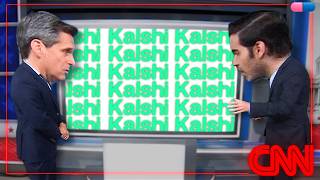
- At 28:10 - "Algae is the perfect analogy of left-wing politics... it lives off the things you make... if there was no wealth, there'd be no socialism." - Showing a clip from Fox News that perfectly maps the biological phenomenon of algae onto political ideology, demonstrating how mythic structures are actively weaponized in mass media.
Takeaways
- Recognize Monuments as Symbolic Extensions: Look past the physical utility of public infrastructure to analyze how political leaders use architecture and aesthetics to project power, authority, and control.
- Distinguish Social Truth from Scientific Fact: Understand that public panic and media narratives are driven by emotional and symbolic resonance ("social truth") rather than objective scientific data, meaning facts alone are rarely enough to shift public opinion.
- Identify Shared Mythic Frameworks: When analyzing political polarization, identify how opposing sides are often using the exact same underlying cultural myths (such as "civilization vs. the barbarians") while merely swapping who plays the role of the villain.