Tom Lee: "Best 18-24 Months We've Ever Seen" Is Coming
Audio Brief
Show transcript
This episode covers retail investor behavior and market resilience in the face of geopolitical shocks. There are three key takeaways. Investors should look past nominal commodity prices to gauge real consumer resilience, overweight US equities for their structural innovation advantage, and monitor underlying economic indicators to cut through temporary geopolitical fears.
Extreme policy uncertainty can initially freeze retail investors who fear spiking energy prices. However, when adjusted for inflation, current gasoline costs represent a much smaller burden on the consumer than during previous historical peaks. Furthermore, the US stock market warrants its premium valuation because it remains the undisputed global engine for innovation in technology and healthcare.
Ultimately, fundamental economic strength continues to override temporary market anxieties. Focusing on these core indicators provides clarity amidst the noise.
Episode Overview
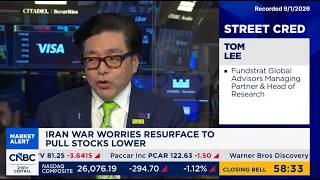
- This episode analyzes retail investor behavior and market resilience in the face of geopolitical shocks, specifically discussing a scenario involving conflict with Iran.
- The conversation explores why initial investor reactions deviated from traditional "buy the dip" strategies due to policy uncertainty and fears of inflation, particularly regarding gasoline prices.
- It provides a compelling framework for understanding why the US consumer remains strong and why US equities are positioned to outperform international markets due to fundamental innovation advantages.
Key Concepts
- The Impact of "Policy Puzzlement": Extreme uncertainty regarding how political administrations will handle geopolitical crises can temporarily freeze retail investor action. This uncertainty about tail risks can initially override the historical market reflex to simply "buy the dip."
- Perception vs. Reality of Energy Costs: There is a significant disconnect between consumer anxiety over rising gasoline prices and their actual economic impact. When adjusted for inflation, current gas prices represent a much smaller burden on the consumer than during previous historical peaks (such as 2008), meaning the broader economy is more resilient than sentiment suggests.
- Geopolitics as Economic Stimulus: While generally negative, major geopolitical conflicts can paradoxically act as economic stimuli. This is evidenced by strengthened supply chains, upward revisions in corporate earnings estimates, positive ISM manufacturing data, and robust job reports.
- The Innovation Premium of US Markets: The US stock market warrants a higher price-to-earnings (PE) multiple compared to international markets because it is the global engine for innovation. Growth in critical sectors like technology, healthcare, and financial services/fintech is overwhelmingly driven by US companies.
Quotes
- At 0:38 - "They didn't really know how big this war could become... their biggest fear was gasoline spiking and we could get a recession or a depression." - This highlights how fear of macroeconomic fallout, specifically driven by energy prices, initially paralyzed retail investors from entering the market.
- At 1:34 - "Inflation-adjusted, even gasoline prices here aren't nearly the burden they were five years ago, ten years ago, even at the '08 peak." - This is a critical perspective shift, teaching investors to look past nominal sticker shock and evaluate economic burdens in real, inflation-adjusted terms to accurately assess consumer health.
- At 2:37 - "I'd still be overweighting US because I think if you think about where innovation comes from, whether it's in tech, healthcare, or financial services... that's really US companies." - This succinctly explains the fundamental rationale for maintaining a home-country bias in equity portfolios, anchoring the strategy to technological and innovative dominance.
Takeaways
- Look past nominal commodity price increases (like gasoline) and evaluate their inflation-adjusted impact to accurately gauge the true strength and resilience of the consumer.
- Overweight US equities in your portfolio when seeking growth, as domestic markets hold a concentrated, structural advantage in highly innovative sectors like technology and healthcare.
- Monitor underlying economic indicators—such as earnings estimates, ISM data, and job reports—to identify when fundamental economic strength will likely override temporary market fears driven by geopolitical headlines.