The Three Components of Meaning in Life | Peter Attia & Arthur Brooks
Audio Brief
Show transcript
This episode features Arthur Brooks discussing the essential role of purpose as a "macronutrient" for a happy life.
There are three key takeaways from this discussion on cultivating purpose. First, a sense of purpose is the "protein" of happiness. Second, meaning is composed of three elements: coherence, purpose, and significance. Third, a simple two-question test can diagnose a "meaning crisis" and initiate a "vision quest" for answers.
Brooks argues that a lack of purpose is as detrimental to well-being as a protein deficiency is to physical health. Cultivating this "macronutrient" is non-negotiable for a fulfilling and happy existence, preventing an empty and miserable life.
Philosophers and psychologists define meaning through three distinct elements. Coherence is the belief your life makes sense and things happen for a reason. Purpose is having a clear north star guiding your journey. Significance is the conviction your life matters and has an impact.
To assess your sense of purpose, ask yourself two fundamental questions: Why are you alive? And for what are you willing to die today? Genuine, personal answers are crucial for determining if you are experiencing a "meaning crisis."
If these questions lack clear answers, Brooks suggests embarking on a "vision quest." This involves actively seeking answers through reading, meditation, reflection, or new experiences to discover your deepest motivations and direction.
This framework offers a practical guide for assessing and actively building a more meaningful and purposeful life.
Episode Overview
- Arthur Brooks discusses the concept of a "sense of purpose" as an essential macronutrient for a happy life, comparing it to protein in a diet.
- He breaks down the philosophical idea of meaning into three practical components: coherence, purpose, and significance.
- Brooks offers a simple two-question diagnostic test to help individuals determine if they are experiencing a "meaning crisis."
- The conversation explores how to embark on a "vision quest" to find answers to life's biggest questions if they are not immediately clear.
Key Concepts
- Meaning as a Macronutrient: The sense of purpose is presented as the "protein" of happiness. Just as a lack of protein is detrimental to physical health, a lack of meaning leads to an empty and miserable life.
- The Three Components of Meaning: Philosophers and psychologists define meaning as a combination of three distinct elements:
- Coherence: The belief that your life makes sense and that things happen for a reason.
- Purpose: Having a sense of direction and a "north star" guiding your life's journey.
- Significance: The conviction that your life matters and your existence has an impact on the world.
- The Two-Question "Meaning Crisis" Test: A diagnostic tool to assess one's sense of purpose by asking two fundamental questions:
- Why are you alive?
- For what are you willing to die today?
- The Vision Quest: If you don't have genuine, personal answers to the two diagnostic questions, your next step is to embark on a quest to find them through activities like reading, meditation, prayer, therapy, or self-reflection.
Quotes
- At 00:27 - "Meaning is the most important because... it's the protein. You'll die." - Arthur Brooks explains his analogy for why a sense of purpose is a non-negotiable component of a fulfilling life.
- At 01:03 - "Coherence is things happen for a reason. That's the first part of meaning." - Brooks defines the first of the three pillars required to build a sense of meaning, which is the underlying belief that life is not random.
- At 03:02 - "Question number one is, why are you alive? ... Question number two is, for what are you willing to die today?" - Brooks shares his two-question diagnostic exam to determine if someone is suffering from a "meaning crisis."
Takeaways
- Conduct a "Meaning Audit" on Your Life: Take the two-question test seriously by asking yourself, "Why am I alive?" and "What am I willing to die for?" A lack of clear, compelling answers indicates an opportunity to prioritize the search for a deeper sense of purpose.
- Systematically Build Your Sense of Meaning: Instead of treating "purpose" as a vague goal, work on its three core components separately. Foster coherence by finding the narrative in your life, define your purpose by setting a clear direction, and build significance by understanding how your existence matters.
- Turn a Lack of Answers into an Adventure: If you cannot answer the big questions about your life's meaning, reframe it not as a personal failing but as the beginning of a "vision quest." Actively dedicate time to exploration—through reading, self-reflection, new experiences, or spiritual practice—to discover what truly motivates you.
More from Peter Attia MD

Why healthspan is a crucial component of longevity | Peter Attia, M.D.
Sep 11, 2026

399 - The evolution of Alzheimer's disease and dementia care | Gayatri Devi, M.D.
Jul 13, 2026
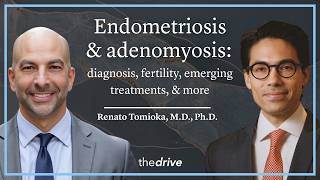
397 - Endometriosis and adenomyosis: diagnosis, fertility, reproductive aging, & emerging treatments
Jun 22, 2026

396 – Breast cancer screening: understanding risk, deciding when to start, and more
Jun 15, 2026