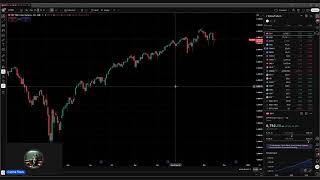
The Storm Is Coming - The Most Important Video I'm Making All Year
Audio Brief
Show transcript
This episode covers an impending market storm, driven by an orchestrated U.S. dollar devaluation, challenging its traditional safe-haven status and posing a significant risk to asset prices.
There are three key takeaways from this conversation.
First, the market faces extreme volatility from an orchestrated U.S. dollar devaluation. This devaluation, contrary to common belief, will be a major risk to asset prices, not a tailwind. This represents a significant and misunderstood global market risk.
Second, the dollar's long-held role as a safe-haven asset during instability is breaking down. Foreign investors in unhedged U.S. assets can no longer assume a rallying dollar will offset losses. This structural vulnerability stems from the U.S. being on the receiving end of most global "carry trades," exposing it to severe selling.
Third, in a crisis driven by external flows and a falling dollar, the Federal Reserve's traditional tools, like rate cuts, could be counterproductive. Such interventions might further weaken the currency and amplify asset sell-offs. This signals a "macro end game" where currency and cross-border flows, not domestic economic indicators, become the decisive factors for all asset classes.
Investors must re-evaluate portfolio constructions implicitly relying on the dollar as a guaranteed safe-haven hedge and prepare for a potential correlation breakdown between the dollar and U.S. risk assets.
Episode Overview
- The central thesis is that a major "storm is coming" to financial markets, characterized by a dramatic increase in volatility that will dwarf recent crises.
- This volatility will be driven by an orchestrated devaluation of the U.S. dollar, which, contrary to popular belief, will be a significant risk for asset prices, not a tailwind.
- The podcast challenges the long-held assumption that the dollar will act as a safe-haven asset during instability, arguing that this "natural hedge" is breaking down due to structural imbalances in cross-border flows.
- This new dynamic creates a "macro end game" where the Federal Reserve's traditional tools, like rate cuts, could be counterproductive and actually amplify a crisis driven by external selling pressure.
Key Concepts
- "A Storm Is Coming" Thesis: An impending period of extreme market volatility driven by an orchestrated devaluation of the dollar, representing the most significant and misunderstood risk in global markets.
- Contrarian Dollar View: This specific type of dollar devaluation will be a major risk to asset prices, breaking the common assumption that a falling dollar is bullish for markets.
- Flawed "Natural Hedge": The long-held belief that the dollar will act as a safe-haven asset during instability is breaking down. Foreign investors who hold unhedged U.S. assets can no longer rely on a rallying dollar to offset losses.
- Structural Vulnerability: The U.S. is on the receiving side of most global "carry trades," creating a structural liquidity imbalance that exposes it to sudden and severe selling from cross-border flows.
- The Fed's Dilemma: In a crisis driven by external flows and a falling dollar, traditional Fed tools like rate cuts could be counterproductive, further weakening the currency and exacerbating the sell-off in U.S. assets.
- The "Macro End Game": A new market regime where currency movements and cross-border flows become the decisive factor for all major asset classes, superseding domestic economic indicators and the traditional "Fed put."
- New Macro Frontier: With quantitative strategies compressing most statistical edges, the primary source of returns in macro trading is now the "quality of ideas" and understanding these high-level structural shifts.
Quotes
- At 0:08 - "the most important report that I believe I have written all year." - The speaker emphasizes the significance of the "A Storm Is Coming" macro report he is about to discuss.
- At 0:53 - "the final frontier in macro is the quality of ideas... What remains is macro volatility expressed over higher timeframes." - Highlighting that traditional statistical edges are disappearing, making unique, well-researched ideas the primary driver of success.
- At 1:00 - "I believe we are going to see an increase in macro volatility in the next 12 months that will dwarf 2022, COVID, and potentially 2008, but the SOURCE of volatility will be from an orchestrated devaluation in the dollar against major currencies." - The speaker outlines his core thesis for the coming market environment.
- At 1:14 - "Most people think that a fall in the dollar or 'dollar devaluation' will cause risk assets to rally but this couldn't be further from the truth. I believe this is the biggest risk in markets today." - Clarifying his contrarian stance: a falling dollar, in this specific context, will be a negative catalyst for markets, not a positive one.
- At 28:07 - "The dollar thus will likely rally in the event of a significant equity market correction... and hedging dollar risk effectively means undoing a natural hedge." - This quote details the conventional wisdom that the dollar provides a "natural hedge," which the speaker believes is a flawed assumption.
- At 30:48 - "Investors should not assume that the dollar will rally in future instability." - The speaker directly challenges the long-held belief that the dollar is a guaranteed safe-haven asset.
- At 30:53 - "One thing is absolutely clear: the U.S. is currently on the receiving side of most carry trades." - This statement highlights the structural positioning in global markets that makes the US vulnerable to an unwind of these trades.
- At 34:40 - "We saw the dollar sell off AT THE SAME TIME that US equities sold off because it was driven by tariffs and cross-border flows as opposed to domestic delinquencies." - The speaker points to a recent event where the traditional dollar-equity correlation broke down, proving his thesis is not just theoretical.
- At 35:41 - "The real problem is that if the dollar is selling off at the same time as equities, any intervention by the Fed will push down the dollar even more, which would almost certainly further amplify the downside in equities." - This describes the core dilemma for the Federal Reserve, where a typical response could worsen a crisis.
- At 35:56 - "...we have already entered the 'macro end game' where the currency is becoming the asymmetrical lynchpin for everything." - The speaker defines his concept of the "macro end game," where currency movements become the most critical factor for all asset prices.
- At 55:15 - "'What important truths do very few people agree with you on?'... The market is sleepwalking into a structural risk that almost no one is pricing: an engineered dollar devaluation that turns what investors assume is a tailwind into the primary source of volatility over the next year." - He frames his core thesis as a significant, underappreciated, and contrarian risk facing global markets.
Takeaways
- Re-evaluate any portfolio construction that implicitly relies on the U.S. dollar acting as a guaranteed safe-haven hedge during equity market downturns.
- Do not automatically assume a "Fed put" will rescue markets in the next crisis; if the sell-off is driven by external currency pressures, traditional policy tools may be ineffective or even harmful.
- Shift analytical focus from purely domestic economic data toward global cross-border flows and currency dynamics, as these are becoming the primary drivers of asset prices.
- Be prepared for a scenario where the dollar and U.S. risk assets fall simultaneously, a correlation breakdown that would catch most investors off guard.
- To find a trading edge, prioritize developing unique, high-quality macro theses over relying on purely quantitative or statistical strategies that are becoming less effective.
- Monitor global carry trades and the positioning of foreign investors in U.S. assets as key leading indicators for a potential large-scale deleveraging event.