The Ingenious Simplicity Of O-Rings

Audio Brief
Show transcript
This episode explores the critical role of O-rings in complex engineering systems, using the 1986 Space Shuttle Challenger disaster as a stark lesson on component failure.
There are three key takeaways from this discussion. First, even seemingly minor components like O-rings can lead to catastrophic system failure if their operational limits, particularly temperature, are not fully respected. Second, selecting the correct O-ring material is a complex decision, demanding careful consideration of temperature, pressure, chemical exposure, and application type. Finally, the design of the surrounding gland and proper installation are as vital to a successful seal as the O-ring itself.
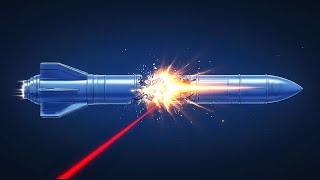
The Challenger disaster tragically highlighted these points. Its cause was the failure of O-rings in a solid rocket booster. Unusually cold launch-day temperatures compromised the O-rings' elasticity, preventing them from sealing properly and allowing hot combustion gases to escape, leading to the shuttle's catastrophic structural failure. This event underscored the severe consequences of overlooking a component's environmental tolerances.
O-rings function by deforming within a precisely engineered groove, acting like an incompressible fluid to block potential leak paths. Their effectiveness relies heavily on selecting the appropriate elastomeric material. Different materials, such as general-purpose Nitrile or high-temperature, chemical-resistant Fluorocarbon, offer varying properties tailored for specific uses, whether in static, reciprocating, or rotary dynamic sealing applications.
A successful and durable seal depends on more than just the O-ring material. The precise design of the gland, the groove that holds the O-ring, is paramount. Additionally, the surface finish of mating parts and careful installation techniques, including appropriate lubrication, are essential to prevent damage, ensure a proper seal, and extend the O-ring's service life.
Ultimately, O-rings demonstrate that even the simplest components are profoundly critical when their fundamental principles and operational boundaries are fully understood and respected.
Episode Overview
- The episode uses the 1986 Space Shuttle Challenger disaster as a stark example of the critical importance of O-rings in complex engineering systems.
- It delves into the history of the O-ring, from its early precursors in the 19th century to its modern invention by Niels Christensen.
- The video explains the fundamental mechanics of how O-rings function as seals, detailing different application types like static, reciprocating, oscillating, and rotary seals.
- It provides a comprehensive breakdown of various elastomeric materials used for O-rings, outlining their unique properties, temperature ranges, and chemical resistances for different applications.
Key Concepts
- The Challenger Disaster: The primary cause of the disaster was the failure of two rubber O-rings in the aft field joint of the right solid rocket booster. Unusually cold launch-day temperatures caused the O-rings to lose elasticity (approaching their glass transition temperature), preventing them from properly sealing the joint upon ignition. This allowed hot combustion gases to escape, leading to the catastrophic structural failure of the shuttle.
- History and Invention: The modern O-ring was invented by Danish machinist Niels Christensen in the 1930s as a simple yet revolutionary hydraulic seal. Its widespread use was accelerated during World War II when the U.S. government acquired the patent for military applications.
- Sealing Principles: An O-ring functions as an incompressible, viscous fluid within a groove (gland). Pressure deforms the ring, forcing it to flow and block any potential leak paths, creating a zero-clearance joint.
- Types of Seals:
- Static Seal: Used where there is no relative motion between mating parts (e.g., face seals on flanges).
- Dynamic Seal: Used where there is relative motion. Sub-types include reciprocating (back-and-forth), oscillating (arcing motion), and rotary (continuous rotation) seals.
- O-Ring Materials (Elastomers): The selection of the correct material is critical and depends on temperature, pressure, and chemical compatibility. Common types include:
- NBR (Nitrile): General-purpose, good resistance to oils and fuels.
- HNBR (Hydrogenated Nitrile): Better heat and chemical resistance than standard NBR.
- FKM (Fluorocarbon): Excellent chemical and high-temperature resistance.
- VMQ (Silicone): Wide temperature range but poor resistance to oils and low wear resistance.
- FFKM (Perfluoroelastomer): Offers the highest chemical and temperature resistance for the most demanding environments.
- Failure Modes: Key failure types include extrusion, where the O-ring material is forced into the clearance gap under high pressure, and ring nibbling, a type of extrusion caused by cyclic pressure fluctuations.
Quotes
- At 00:04 - "On January 28th, 1986, the fatal consequences of misunderstanding a simple component we rely on in multitude became tragically clear." - The narrator sets the stage by introducing the Space Shuttle Challenger disaster as a powerful lesson on the importance of O-rings.
- At 05:17 - "In sealing, an O-ring essentially functions as an incompressible viscous fluid with a very high surface tension." - This quote succinctly explains the fundamental principle behind how an O-ring effectively creates a seal under pressure.
- At 19:40 - "While O-rings might appear insignificant, their importance lies in their simplicity and effectiveness. They demonstrate that sometimes the most critical components are also the least complex." - This concluding statement summarizes the central theme of the video: the profound impact of a seemingly simple, yet vital, engineering component.
Takeaways
- The failure of a seemingly minor component, like an O-ring, can lead to catastrophic system failure if its operational limits (especially temperature) are not fully respected.
- Selecting the correct O-ring material is a complex decision that must account for a wide range of factors, including temperature, pressure, chemical exposure, and whether the application is static or dynamic.
- The design of the gland (the groove holding the O-ring) and the surface finish of mating parts are just as critical to a successful seal as the O-ring itself.
- Proper installation, including the use of appropriate lubricants, is essential to prevent damage, ensure a proper seal, and extend the service life of the O-ring.