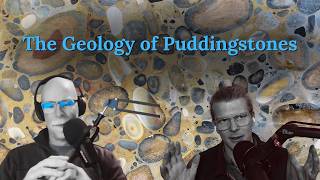
The Geology of Petoskey Stones

Audio Brief
Show transcript
This episode explores the unique geology and cultural significance of Michigan's state stone, the Petoskey stone.
There are four key takeaways from this discussion. First, the Petoskey "stone" is actually a fossilized coral from the Devonian period, not a rock. Second, Michigan's unique basin geology was vital for preserving these ancient reef systems deep underground. Third, a process called diagenesis transformed the original coral into a durable fossilized calcite. Finally, Pleistocene glaciers were responsible for widely distributing these resilient fossils across the state.
The Petoskey stone is not a rock, but a fossil of the Devonian-era colonial coral, Hexagonaria percarinata. Its signature hexagonal pattern reflects the preserved structure of the ancient coral colony from approximately 350 million years ago.
The Michigan Basin, a distinctive bullseye geological structure, protected these Devonian reef systems. This unique formation preserved the Gravel Point Formation source rock deep underground, preventing erosion for millions of years.
The coral's preservation and durability are attributed to diagenesis, a critical three-stage fossilization process. This involved the conversion of the original aragonite skeleton into a more stable and resilient calcite, making the fossil tough enough to endure geological forces.
Finally, Pleistocene glaciers played a crucial role in the stones' widespread distribution. These massive ice sheets scraped the resilient fossils from their northern bedrock and transported them, depositing Petoskey stones across Michigan's Lower Peninsula in glacial till.
From ancient coral to a modern-day state symbol, the Petoskey stone offers a compelling narrative of Michigan's unique geological past.
Episode Overview
- This episode provides a comprehensive look at the Petoskey stone, Michigan's state stone, exploring both its cultural significance to "Michiganders" and its fascinating geological origins.
- The hosts, Jesse Reimink (a geoscience professor) and Chris Bohlhuis (his former high school geology teacher), share their personal connections to the stone and their unique dynamic.
- The discussion details the stone's journey from a living Devonian-era coral (Hexagonaria percarinata) in an ancient reef to a fossilized rock found on modern beaches.
- Key geological concepts are explained, including the Michigan Basin's role in preserving the source rock and the three-stage fossilization process of sedimentation, diagenesis, and recrystallization.
- The hosts explain how Pleistocene glaciers were responsible for eroding the fossils from their bedrock and scattering them across the state in glacial till.
Key Concepts
- Petoskey Stone: The state stone of Michigan, which is not a stone but a fossil of a colonial coral named Hexagonaria percarinata.
- Hosts' Background: Co-host Chris Bohlhuis was co-host Jesse Reimink's high school science teacher. Jesse is now a geoscience professor at Penn State, and Chris is an award-winning high school geology teacher.
- Geological Origin: The fossils originated in a limestone reef system during the Devonian period, approximately 350 million years ago. The source rock is the Gravel Point Formation within the Traverse Group.
- Michigan Basin: A "bullseye" geological structure where rock layers get progressively younger toward the center. This basin structure preserved the ancient Devonian reef rocks deep underground.
- Fossilization Process: A three-stage process transformed the coral into the fossils found today:
- Sedimentation: Dead corals were buried in limestone mud.
- Diagenesis: A series of chemical and physical changes, including permineralization (groundwater filled pore spaces with calcite) and recrystallization (the coral's original aragonite skeleton converted to more stable calcite).
- Glacial Transport: During the Pleistocene epoch, massive glaciers scraped the durable, fossilized coral from the bedrock, transported it, and deposited it across Michigan in glacial till.
Quotes
- At 0:27 - "If you're a Michigander...you probably have some Michiganders out there who are listeners to this podcast, you know what a Petoskey stone is." - Jesse Reimink highlights the stone's regional fame and cultural significance in Michigan.
- At 2:03 - "You're one of my former high school students." - Chris Bohlhuis explains his history with his co-host, Jesse Reimink.
- At 19:46 - "It forms this bullseye pattern where the rocks crop up... and they get progressively younger toward the center of it, which is what you get in a basin." - Jesse Reimink explains the key geological map feature that defines the Michigan Basin.
- At 23:48 - "These were called... Hexagonaria percarinata... which we call Petoskey stones." - Jesse Reimink provides the scientific name for the specific colonial coral that forms the Petoskey stone fossil.
- At 32:21 - "Diagenesis is this kind of garbage can term that refers to the series of physical and chemical changes that happen to this system." - Jesse Reimink defines the broad geological term 'diagenesis' before explaining its role in fossilization.
- At 33:49 - "The net effect of this recrystallization process of turning it back into calcite is that it made it tougher. It made the Petoskey stones resilient." - Jesse Reimink explains how the mineral change from aragonite to calcite was crucial for the fossil's survival.
- At 38:35 - "It's really glacial transport. ...the glaciers scraped across here, they ripped up a ton of that stuff, deposited it in till all over Michigan." - Chris Bohlhuis explains how the Petoskey stones were moved from their original bedrock source and spread across the state.
Takeaways
- The Petoskey "stone" is actually a fossil of a 350-million-year-old colonial coral, not an igneous or metamorphic rock, and its distinct hexagonal pattern is the preserved structure of the original coral colony.
- Michigan's unique geology, specifically the basin structure, played a crucial role by preserving the ancient Devonian reef systems deep underground, protecting them from erosion for hundreds of millions of years.
- The fossil's ability to survive is due to diagenesis, a natural process where the coral's original skeleton was replaced by a more durable form of calcite, making it strong enough to withstand being ripped up and transported by glaciers.
- The widespread distribution of Petoskey stones across Michigan's beaches and gravel pits is a direct result of Pleistocene glaciers acting as a massive conveyor belt, scraping the fossils from their northern bedrock source and depositing them throughout the Lower Peninsula.