The Food Crisis Is Here: 4 Ways to Fix Our Food System

Audio Brief
Show transcript
This episode examines how the global food system is directly contributing to and being impacted by the climate crisis, posing an immediate threat to our food security.
There are four key takeaways from this discussion. First, our food system is a primary driver of climate change, contributing over a third of global greenhouse gas emissions. Second, the impact of climate change on our food supply is an urgent, present-day crisis. Third, reducing consumption of resource-intensive animals like cattle in favor of more efficient proteins is a practical step. Finally, adopting a "quality over quantity" mindset for meat consumption can significantly enhance sustainability.
Our food system is a powerful lever for climate action, currently responsible for an estimated 34% of all human-caused greenhouse gas emissions. This highlights agriculture's central role in the climate crisis, extending beyond direct emissions to soil degradation and resource use.
The climate crisis poses an immediate and urgent threat to global food security. Its impacts are already undermining the availability of common foods and challenging traditional ways of life, demanding present-day action, not just future planning.
A core challenge stems from the biological inefficiency of cattle in converting feed into protein. Shifting dietary patterns away from large, resource-intensive animals like beef, towards smaller, more efficient options such as chicken, offers a tangible path to reduce climate impact.
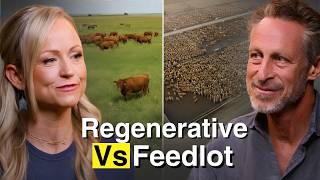
Adopting a "quality over quantity" approach to meat consumption is crucial. This involves prioritizing regeneratively raised options for their broader ecological benefits, such as soil health and biodiversity, even if direct emissions profiles might sometimes be similar to conventional alternatives.
Ultimately, individual food choices and a strategic shift in global dietary patterns present a powerful and immediate opportunity to mitigate the climate crisis and enhance food security.
Episode Overview
- This episode urgently addresses the intersection of our food system and the climate crisis, framing it as an immediate threat to our food supply and way of life.
- It explores how conventional agriculture is a primary driver of climate change, contributing to over a third of human-caused greenhouse gas emissions.
- The conversation provides a nuanced look at meat production, distinguishing between direct emissions and broader environmental impacts of different farming systems.
- It proposes a practical, actionable solution for individuals: shifting dietary patterns toward a "quality over quantity" model, focusing on more efficient animal proteins.
Key Concepts
- Agriculture's Climate Impact: The modern food system is a major contributor to climate change, responsible for an estimated 34% of anthropogenic greenhouse gas emissions and significant soil degradation.
- Urgency of the Food Crisis: The effects of climate change on our food supply are not a future problem but are happening now, threatening the availability of common foods and our way of life.
- The Inefficiency of Cattle: A core problem is the biological inefficiency of cows in converting feed into protein, making them a resource-intensive part of the food system.
- Emissions vs. Overall Environment: There is a critical distinction between a food's direct carbon emissions and its total ecological impact; for example, grass-fed beef has major benefits for soil health and biodiversity even if its direct emissions are similar to conventional beef.
- Quality Over Quantity: A proposed solution is to shift societal consumption patterns to eating higher-quality, regeneratively raised meat in smaller quantities, rather than complete elimination.
- Dietary Shift: A practical strategy to mitigate climate impact is to reduce consumption of large, inefficient animals like cattle and increase consumption of smaller, more efficient animals like chicken.
Quotes
- At 0:23 - "It's not about our kids and grandkids, this is happening right now." - Sam Kass underscores the immediacy and urgency of the climate and food crisis.
- At 0:52 - "It's estimated that our food systems contribute to 34% of anthropogenic greenhouse gas emissions." - Dr. Hyman provides a specific and impactful statistic to quantify agriculture's role in climate change.
- At 35:06 - "It is way healthier for the overall environment, but not from an emissions standpoint." - Sam Kass explains the crucial difference between the carbon footprint and the broader ecological benefits of grass-fed beef.
- At 36:23 - "The problem with the cow is it's just not that good at converting energy from the sun into animal protein." - Kass highlights the fundamental inefficiency of cattle as a primary protein source in our food system.
- At 37:23 - "...we must transition to a quality versus quantity system." - Kass summarizes his proposed approach to creating a more sustainable food system.
Takeaways
- Our food choices are a powerful tool for climate action, as the food system accounts for over a third of all greenhouse gas emissions.
- The climate crisis is an immediate threat to our food security, requiring urgent changes to how we produce and consume food.
- A practical step toward a more sustainable diet is to reduce overall consumption of beef and prioritize smaller, more efficient animals like chicken.
- Adopt a "quality over quantity" mindset for meat consumption, choosing regeneratively raised options when possible and eating them less frequently.
More from Mark Hyman, MD

Longevity Fact Check: What Urolithin A Really Does to Your Immune System
Oct 31, 2025

What Public Health Gets Wrong (and How to Get It Right) | Former CDC Director
Oct 22, 2025
Not All Meat Is the Same—Here’s What It Does to Your Health
Oct 15, 2025

Golfers Face 126% Higher Parkinson’s Risk - Here’s Why
Oct 11, 2025