Solo: Theories of Dark Energy | Mindscape 359
Audio Brief
Show transcript
This episode covers the profound mysteries of modern cosmology, exploring the accelerating expansion of the universe, the theoretical crisis of the cosmological constant, and the shift toward dynamical models of dark energy.
There are three key takeaways to understand this cosmic puzzle. First, the massive discrepancy between the observed vacuum energy and quantum field theory predictions forces cosmologists to look beyond a static constant toward dynamical alternatives. Second, these dynamical scalar fields require precise symmetry principles like approximate shift symmetries to remain mathematically viable without extreme fine-tuning. Third, validating these models requires looking for subtle, non-gravitational signatures and using screening mechanisms to align new forces with local gravity measurements.
The cosmological constant problem represents the largest discrepancy in modern physics, where theoretical calculations of vacuum energy exceed observation by one hundred and twenty-two orders of magnitude. To address this, researchers use the equation of state parameter to measure whether dark energy is truly static or evolving over time. Even minor deviations from a static state would indicate a dynamical field, transforming our understanding of cosmic expansion.
In dynamical frameworks like quintessence, dark energy is driven by a slowly rolling scalar field rather than a constant. However, keeping this field incredibly light without artificial fine-tuning is a major theoretical hurdle. Cosmologists resolve this by utilizing shift symmetries that protect the particle mass, making these extremely light fields technically natural within quantum mechanics.
Because gravitational forces from the dark sector are incredibly weak, scientists search for non-gravitational indicators such as cosmic birefringence, which rotates the polarization of ancient light. Additionally, theorists use the chameleon screening mechanism to hide these new forces in high-density regions like Earth while allowing them to accelerate expansion in cosmic voids. This ensures new theories remain consistent with strict local gravity tests while explaining the macro-scale universe.
Ultimately, tracking these subtle cosmological deviations through next-generation astronomical surveys remains our best path to unlocking the fundamental laws governing spacetime.
Episode Overview
- This episode explores the profound mysteries of modern cosmology: the accelerating expansion of the universe, the nature of dark energy, and the theoretical crises surrounding the cosmological constant.
- It traces the scientific transition from treating dark energy as a static Einsteinian constant to exploring dynamical, time-evolving scalar fields that could bridge the gap between quantum mechanics and general relativity.
- The discussion covers advanced theoretical frameworks, including quintessence, pseudo-Nambu-Goldstone bosons, cosmic birefringence, variable mass particles (VAMPs), and alternative theories of modified gravity.
- It serves as a comprehensive guide for understanding how cosmologists parameterize cosmic expansion and design high-precision astronomical surveys to test the fundamental limits of spacetime.
Key Concepts
- The Cosmological Constant Problem: The cosmological constant ($\Lambda$) represents vacuum energy—the energy density of empty space. According to effective field theory, quantum fluctuations should contribute an immense amount of energy to the vacuum. However, the observed value of the cosmological constant is $10^{-122}$ times smaller than theoretical expectations, marking the largest discrepancy between theory and observation in modern physics.
- The Coincidence Problem: Matter dilutes as the universe expands, whereas vacuum energy remains constant. Today, dark energy and matter exist in a roughly 70/30 split. The unresolved puzzle is why we live in the brief cosmic epoch where these two completely different energy densities are of the same order of magnitude.
- The Equation of State Parameter ($w$): Cosmologists use the equation of state parameter $w$ (relating pressure $P$ to energy density $\rho$ via $P = w\rho$) to model cosmic components. For matter, $w=0$; for radiation, $w=1/3$; and for a cosmological constant, $w=-1$. If $w$ deviates even slightly from $-1$, dark energy is dynamical rather than static.
- Quintessence and Technical Naturalness: Quintessence is a dynamical, spatially uniform dark energy model governed by a slowly rolling scalar field. To keep the field's mass extremely light ($\sim 10^{-33}\text{ eV}$) without severe fine-tuning, theorists utilize "technical naturalness" protected by an approximate shift symmetry. This manifests as a Pseudo-Nambu-Goldstone Boson (PNGB).
- The Fifth Force & Chameleon Screening: A dynamical dark energy field will naturally couple to ordinary matter, mediating a long-range "fifth force." To evade strict local gravitational tests, theorists propose the "chameleon mechanism," where the field's effective mass becomes heavy and short-ranged in high-density environments (like Earth) but remains light and active in cosmic voids.
- Cosmic Birefringence: If a quintessence field is a pseudo-scalar, it can couple to electromagnetism and rotate the plane of polarization of light as it travels across the universe. This provides a potentially detectable non-gravitational signature of dark energy in the Cosmic Microwave Background (CMB).
- Modified Gravity ($f(R)$ Gravity): As an alternative to dark energy, some models modify Einstein's general relativity on cosmological scales by replacing the linear Ricci scalar ($R$) in the Einstein-Hilbert action with a function $f(R)$. By adding inverse terms like $1/R$, gravity naturally deviates from classical behavior only at late cosmic times when curvature is extremely low.
Quotes
- At 0:01:24 - "The cosmological constant problem... is why is the value so much smaller than you might expect it to be? If you think about effective field theory... the cosmological constant appears as a number... and the actual number is smaller than the expectation by something like $10^{-122}$." - Explaining the immense scale of the cosmological constant problem and the direct tension between quantum field theory and observation.
- At 0:02:33 - "This is called the coincidence problem because the relative amounts of vacuum energy and matter density change as the universe expands. The vacuum energy stays constant... the amount of matter in the universe as a density goes away... it dilutes away to zero." - Outlining why the current ratio of matter to dark energy is a major temporal puzzle.
- At 0:03:46 - "Maybe it's something else. We should be open-minded... and that led people to the idea of dynamical dark energy. Something that's not quite the cosmological constant, but looks that way—is a pretty good approximation." - Detailing the paradigm shift toward time-dependent models of dark energy.
- At 0:07:21 - "The critical density... is a theoretical number... which would say you're exactly balanced between negative curvature and positive curvature... you have a geometrically flat universe." - Linking density values to the overall geometry of the universe.
- At 0:09:38 - "Matter to cosmologists... just means particles that are moving slowly compared to the speed of light... and why that's so important... is they don't lose energy as the universe expands because of the redshift." - Defining the distinct behaviors of matter and radiation in an expanding spacetime.
- At 0:11:10 - "To be like [the cosmological constant], what you need is something that is almost constantly spread throughout space... because if this dark energy were clumping into galaxies... then you would see it." - Pointing out the necessary spatial smoothness of any viable dark energy candidate.
- At 0:12:28 - "If you have an energy density that is constant, it leads to a constant Hubble parameter, which gets seen, visibly, as an accelerating universe. So all of those sentences still go through if you replace constant with almost constant." - Explaining why a slowly evolving dynamical field can still produce accelerated cosmic expansion.
- At 0:13:53 - "The thing about the cosmological constant, interpreted as a form of vacuum energy, is that it has a pressure that is negative... $P = -\rho$." - Explaining the counterintuitive physical property of vacuum energy that drives space apart.
- At 0:25:29 - "Wiggle room in the data tell you exactly how much room you have to play... increase the energy density in the dark energy a little bit and then compensate for it by having it fade away." - Detailing how modern cosmic data still allows for subtle dynamical deviations from a static constant.
- At 0:27:00 - "If it is the cosmological constant, then we're done probing it... we're just going to measure this one number to increasing precision, but the precision doesn't really tell us that much about what the underlying physics is." - Highlighting the primary philosophical motivation for exploring dynamical alternatives.
- At 0:29:41 - "The cosmological constant problem is not improved by saying that what is making the universe accelerate is not the cosmological constant... because that problem is still a problem even if the vacuum energy is zero." - Clarifying that dynamical dark energy does not resolve the baseline vacuum energy fine-tuning problem.
- At 0:31:07 - "To get approximately constant energy is to have the scalar field be approximately not rolling at all, and then its potential energy just remains constant." - Describing the basic physical mechanism required for quintessence models.
- At 0:33:09 - "The quintessence field has to have a mass of about $10^{-33}\text{ eV}$... it is hugely tiny compared to any known particle physics scale." - Explaining the severe fine-tuning and naturalness problems introduced by ultra-light scalar fields.
- At 0:34:25 - "The danger when you go from a constant vacuum energy to a dynamical field is that the field can do things... it can interact with other fields." - Pointing out that dynamical fields inevitably create new force couplings that must be accounted for.
- At 0:53:30 - "This symmetry is protecting the mass... It is technically natural for this kind of scalar field to be small... and if you do that, that actually immediately gives you an analogous smallness to all the other coupling constants." - Describing how shift symmetry shields physical parameters from large quantum corrections.
- At 0:56:07 - "If you have a pseudo-scalar field... it would couple to electromagnetism in a very particular way... as the scalar field is changing its value... it will rotate the plane of polarization of light from distant galaxies and the microwave background." - Explaining the observational physics behind the search for cosmic birefringence.
- At 1:01:29 - "No, $w$ cannot be less than $-1$ because it would be catastrophically unstable... empty space with zero energy can decay into a bunch of positive-mass particles and negative-mass particles. The vacuum would be catastrophically unstable." - Explaining why phantom energy models ($w < -1$) generally fail fundamental quantum field theory stability criteria.
- At 1:25:39 - "What if you could give those scalar fields a temporary mass when they were in the vicinity of ordinary matter? If the scalar field gets an effective contribution to its potential from its coupling to ordinary matter, that could pin it and stop it from giving rise to fifth forces. This is called the chameleon mechanism." - Summarizing how the chameleon mechanism hides fifth-force interactions in high-density regions.
- At 1:41:08 - "If the ordinary action is just $R$, the simplest thing you can do is add a constant... but we've already done that, that's the cosmological constant. The next obvious thing to do would be to add $1/R$, the reciprocal... something that would begin to kick in when the gravitational field became weak." - Explaining the mathematical intuition behind modified $f(R)$ gravity theories.
Takeaways
- Use the equation of state parameter ($w$) as a phenomenological tool to characterize unknown cosmic components, allowing observational constraints to guide theoretical physics rather than asserting untested theories.
- Leverage the massive datasets gathered by next-generation astronomical observatories (like Euclid or the Roman Space Telescope) to study auxiliary cosmology (galaxy clustering and lensing) even if the primary dark energy quest confirms a static $w = -1$.
- Prioritize symmetry principles, such as approximate shift symmetries, when building new physics models to make exceptionally small parameters "technically natural" rather than manually fine-tuned.
- Look for non-gravitational signatures of dark sectors, such as cosmic birefringence in CMB polarization, because gravitational interactions alone are often too weak to differentiate between models.
- Reject phantom energy models ($w < -1$) in realistic scenarios due to their mathematical requirement for negative kinetic energy, which causes catastrophic vacuum decay in quantum field theories.
- Apply screening mechanisms (like the chameleon or VAMP models) to resolve the conflict between proposing new light fields for cosmic acceleration and passing local solar system gravity tests.
- Evaluate alternative gravity models (such as MOND) against global cosmological scales like the CMB power spectrum, rather than relying solely on their success at solving local galactic rotation curves.
- Map complex modified gravity models (like $f(R)$) back to mathematically equivalent scalar-tensor theories to simplify calculations and assess their observational viability.
- Design local "fifth force" laboratory experiments (such as torsion balances) to place upper limits on how strongly dark energy fields can couple to baryonic matter.
- Avoid treating the dark sector components in isolation; explore coupled models where dark matter and dark energy dynamically exchange energy or influence each other's mass.
- Target theoretical predictions that lie just beneath current experimental detection thresholds to ensure hypotheses can be realistically validated or ruled out within a human lifetime.
More from Sean Carroll

Mindscape 331 | Solo: Fine-Tuning, God, and the Multiverse

Mindscape Ask Me Anything, Sean Carroll | September 2026
Sep 14, 2026
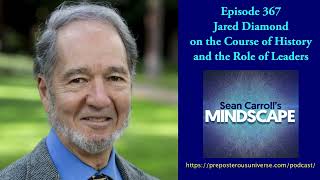
Jared Diamond on the Course of History and the Role of Leaders | Mindscape 367
Sep 07, 2026
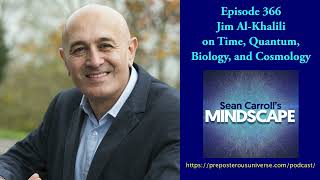
Jim Al-Khalili on Time, Quantum, Biology, and Cosmology | Mindscape 366
Aug 31, 2026