Simplicity in Trend Following | Andreas Clenow

Audio Brief
Show transcript
This episode explores Andreas Clenow's philosophy on simplified trading systems, differentiating between trend following in futures and stock momentum investing, alongside the psychological and business realities of trading.
There are four key takeaways from this conversation. First, prioritizing simplicity in trading systems is paramount; added complexity must significantly improve performance to be worthwhile. Second, recognizing that different asset classes demand distinct strategies is essential, meaning a trend following model for futures needs key adjustments, like a market filter, for stocks. Third, the greatest challenge in systematic trading lies not in rule complexity but in the psychological discipline to follow them consistently through losing periods. Fourth, a viable money management business requires covering high regulatory costs through stable management fees, not volatile performance fees.
Clenow champions simplicity, arguing that complexity is a liability unless it delivers substantial, quantifiable benefits. Robust, simple trading systems are often superior to complex ones, which tend to be over-optimized and harder to execute.
He highlights a critical distinction between trend following in diversified futures markets and momentum investing in stocks. Trend following thrives on broad diversification across uncorrelated assets. Applying this to stocks requires a market filter to avoid bear markets, as equities are highly correlated and tend to fall together. Shorting individual stocks is also generally not advised.
While a trading system's rules may be straightforward, the psychological discipline to execute it consistently, particularly through extended drawdowns, poses the greatest challenge. Adhering to the system during inevitable losing periods is paramount.
Starting a money management firm faces significant regulatory hurdles and rising operational costs. A sustainable business model must cover all expenses through stable management fees, as performance fees are too unreliable to build a foundation upon.
Ultimately, success in systematic trading combines a rigorous, simplified approach with unwavering psychological resilience and a sound business model.
Episode Overview
- Andreas Clenow champions the philosophy of simplicity in trading systems, arguing that complexity is a liability unless it provides a significant, paid-for advantage.
- The discussion distinguishes between "trend following" in diversified futures markets and "momentum investing" in stocks, highlighting the different rules and risk management required for each.
- Clenow emphasizes that while the rules of a trading system may be simple, the psychological discipline to execute it, especially during long drawdowns, is the most difficult aspect.
- The conversation touches on the practical realities of starting a trading business, including the significant regulatory hurdles and the necessity of building a model based on stable management fees.
Key Concepts
- Simplicity Over Complexity: Simple, robust trading systems are superior to complex ones. Complexity often leads to over-optimization and is harder to execute, so it should only be added if it provides a clear and substantial benefit.
- Trend Following vs. Stock Momentum: A clear distinction is made between trend following, which relies on broad diversification across uncorrelated futures, and stock momentum, which requires specific rules like a market filter to avoid bear markets and generally avoids shorting individual stocks.
- The Power of Diversification: The success of trend following is deeply rooted in trading a wide array of uncorrelated markets; this diversification benefit is lost when applying the strategy to a small or highly correlated set of assets like stocks.
- Simple Rules, Difficult Execution: The rules of a systematic strategy can be straightforward, but the psychological challenge of adhering to the system through inevitable and potentially long drawdowns is what makes successful execution difficult.
- Challenges of Stock Momentum: Trading momentum in equities requires a ranking method to select from thousands of stocks and a market filter to avoid buying in a bear market, as stocks are highly correlated and tend to fall together.
- Practicalities of the Trading Business: Starting a money management firm involves significant and rising regulatory costs, which create a high barrier to entry. A sustainable business must be able to cover all costs from management fees, as performance fees are too unreliable.
Quotes
- At 0:04 - "Why add complexity if you don't get paid for it? You have to get paid a lot to add complexity, otherwise the complexity is not worth having there." - Andreas Clenow explaining his core philosophy on designing trading systems.
- At 29:56 - "On one side you can say easy. The rules themselves are often easy... That's not where the complexity is." - Clenow clarifies that the concept of trend following is simple, but the psychological challenge of executing it is what makes it difficult in practice.
- At 40:27 - "Don't buy stocks in a bear market. You have to have some sort of filter for what is the overall stock market doing." - Clenow states the most important rule for his stock momentum strategy, emphasizing that you cannot expect individual stocks to rise if the overall market is falling.
- At 41:05 - "Shorting stocks is a fool's errand... Most people lose money on shorting stocks. Shorting stocks is very, very difficult." - He explains his reasoning for not shorting individual stocks in his momentum model, citing their violent behavior in bear markets and the risk of takeovers.
- At 49:35 - "All the wrong people know this anyway, so who am I really hiding it from?" - Clenow explains why he is open about sharing his trading models and "secrets," stating that professionals and competitors can already figure it out, so he prefers to be transparent.
Takeaways
- Prioritize simplicity when designing trading systems; added complexity must justify its existence with significantly improved performance.
- Recognize that different asset classes require different strategies; a trend following model for futures cannot be directly applied to stocks without key adjustments, such as a market filter.
- The greatest challenge in systematic trading is not the complexity of the rules but the psychological discipline required to follow them consistently, especially through losing periods.
- Building a viable money management business requires a robust plan to cover high regulatory and operational costs through stable management fees, not volatile performance fees.
More from Top Traders Unplugged

How Bonds Quietly Built the Modern World ft. Robin Wigglesworth | Ideas Lab | Ep.53
Sep 17, 2026
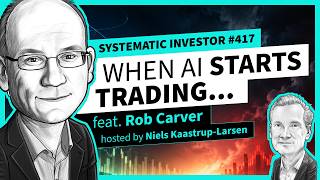
AI Could Change Markets Forever | Systematic Investor | Ep.417
Sep 13, 2026

AI, Higher Rates and the Next Big Economic Imbalance | Global Macro | Ep.107
Sep 10, 2026
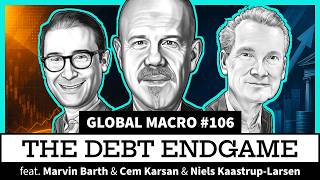
Inflation, Debt and the Fed: What Happens Next? | Global Macro | Ep.106
Sep 02, 2026