Satya Nadella – How Microsoft is preparing for AGI
Audio Brief
Show transcript
This episode covers Microsoft’s strategy for building hyperscale AI infrastructure, the commoditization of AI models, and the critical role of trust and autonomous agents in the future of computing.
There are three key takeaways from this conversation. First, defensible value in AI lies in proprietary data and application scaffolding, not just the models themselves. Second, building a long term, flexible hyperscale infrastructure is paramount for supporting the diverse future of AI workloads. Third, trust in platforms and the rise of autonomous AI agents are fundamentally reshaping the computing landscape.
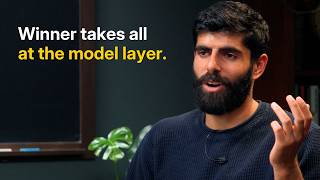
The defensible value in AI lies not in models, which risk commoditization, but in proprietary data, unique application integrations, and the “scaffolding” built around them. Microsoft emphasizes that standalone models face a “winner's curse,” where innovation can be quickly replicated, shifting true value to surrounding components. This means embedding AI deeply into software’s core logic, teaching it native skills beyond simple UI wrappers.
Microsoft’s infrastructure strategy prioritizes extreme flexibility and a multi decade vision over short term optimization for any single model. This hyperscale approach is designed to adapt to a "long tail" of diverse AI models and evolving hardware architectures, focusing on scalability over 50 years. True hyperscalers differentiate themselves through sophisticated software layers that manage, schedule, and optimize vast, distributed hardware fleets. Data center strategy balances compute economics, evolving usage patterns, and critical data sovereignty regulations.
The future of computing will increasingly involve autonomous AI agents alongside human users, requiring end user computing infrastructure designed for these agents. In a geopolitically complex world, the most crucial “feature” of any global technology platform is trust. Reliability and stability, rather than just model capability, become primary competitive advantages for long term suppliers.
These insights underscore the profound strategic shifts defining the global AI landscape, emphasizing adaptability, integrated value, and trust as core pillars of future success.
Episode Overview
- Microsoft's strategy to build a long-term, hyperscale AI infrastructure, emphasizing flexibility to support a diverse "long-tail" of models and workloads rather than optimizing for a single partner.
- The argument that the defensible value in the AI ecosystem lies not in the models themselves—which face a "winner's curse" of commoditization—but in the proprietary data, application integration, and "scaffolding" built around them.
- A vision for the future of computing where Microsoft provides an "end-user computing infrastructure" not just for humans, but for a growing number of autonomous AI agents.
- The critical role of geopolitics, data sovereignty, and trust in shaping global technology platforms, with "trust in American tech" positioned as a key competitive advantage.
Key Concepts
- Hyperscale AI Infrastructure: Microsoft's strategy is to build a flexible, long-term infrastructure designed for a diverse "long-tail" of AI models and workloads. This involves "scaling in time" to adapt to new hardware and model architectures, rather than over-optimizing for one partner or technology.
- Model Commoditization: The core argument that standalone AI models face a "winner's curse," risking commoditization as innovations can be quickly replicated. Defensible value is instead found in proprietary data, unique application integrations, and the "scaffolding" that grounds the models.
- Full-Stack AI Strategy: Microsoft's approach involves three layers: being the leading infrastructure provider for all models, leveraging its OpenAI partnership for first-party products, and developing its own models to compete and innovate across the stack.
- The "Cognitive Layer": The concept of deeply embedding AI into the middle-tier of applications (like the "Excel agent"), creating an intelligent layer that understands and operates the software's core functions, moving beyond simple UI wrappers.
- Data Center Strategy Drivers: The design and placement of data centers are driven by a complex interplay of factors including the economics of compute ("tokens per dollar per watt"), evolving AI usage patterns, and the growing importance of data residency and national sovereignty regulations.
- End-User Computing for AI Agents: A vision for a future market where computing resources are provisioned not just for human users, but for a growing population of autonomous AI agents that utilize software tools on their behalf.
- Trust as a Competitive Advantage: The idea that in a geopolitically complex world, the most crucial "feature" of the American tech ecosystem is the trust and reliability it offers as a long-term partner and supplier.
- Software as the Differentiator: The assertion that what separates a true hyperscaler from a simple hoster is the sophisticated software layer that manages, schedules, and optimizes a vast, distributed, and heterogeneous hardware fleet.
Quotes
- At 0:00 - "Maybe after the Industrial Revolution, this is the biggest thing." - Satya Nadella provides context for the massive scale and societal impact he foresees from the AI revolution.
- At 0:08 - "If you're a model company, you may have a winner's curse... it's kind of like one copy away from that being commoditized." - Nadella explains the business risk for companies that only focus on creating a single frontier model.
- At 0:29 - "You can't build an infrastructure that's optimized for one model... you're one tweak away... your entire network topology goes out of the window. Then that's a scary thing." - Nadella describes the danger of over-optimizing infrastructure for a specific AI architecture.
- At 0:48 - "The thing that you have to think through is not what you do in the next 5 years, but what you do for the next 50." - Nadella emphasizes the importance of long-term strategic vision when building foundational infrastructure for AI.
- At 1:19 - "We've tried to 10x the training capacity every 18 to 24 months. And so this would be effectively a 10x increase from what GPT-5 was trained with." - Scott Guthrie quantifies the exponential growth in computing power being built at Microsoft's AI data centers.
- At 23:46 - "Structurally I think there will always be an open-source model... that will be fairly capable in the world that you could then use as long as you have something that you can use that with, which is data and a scaffolding." - Nadella explains that open source will provide a competitive floor for models, shifting the value to data and integration.
- At 25:13 - "On Anthropic, their gross margins on inference went from, you know, well below 40% to north of 60% by the end of the year... despite, hey, more Chinese open-source models than ever." - Dwarkesh Patel counters Nadella's point by highlighting the strong financial performance of model companies.
- At 26:04 - "Excel agent is not a UI level wrapper. It's actually a model that is in the middle tier... we are taking that and putting it into the core middle tier of the Office system to both teach it what it means to natively understand Excel." - Nadella differentiates simple API calls from deeply integrating AI into an application's core architecture.
- At 27:16 - "You're taking the Excel business logic in the traditional sense and wrapping essentially a cognitive layer to it, using this model, which knows how to use the tool." - He describes a new paradigm where AI acts as an intelligent layer that understands and operates existing software tools.
- At 33:11 - "This will become essentially an end-user computing infrastructure business, which I think is going to just keep growing because guess what, it's going to grow faster than the number of users." - Nadella predicts Microsoft's business will evolve from selling tools to users to providing infrastructure for AI agents.
- At 53:18 - "What we have said is we're in the hyperscale business, which is at the end of the day, a long-tail business for AI workloads." - Nadella explains that Microsoft's strategy is to serve the wide and varied market of AI applications.
- At 54:54 - "The topology as we build out will have to evolve one for tokens per dollar per watt... what are the economics, overlay that with what is the usage pattern." - Nadella outlines the core factors shaping Microsoft's infrastructure strategy.
- At 1:03:42 - "The difference between a classic old-time hoster and a hyperscaler, it is software." - Nadella identifies sophisticated software systems as the key differentiator for a true hyperscaler.
- At 1:05:43 - "I think the trust in American tech is probably the most important feature. It's not even the model capability, maybe. It is, can I trust you, the company? Can I trust you, your country, and its institutions to be a long-term supplier?" - Nadella argues that reliability and trustworthiness are the ultimate competitive advantages on the global stage.
Takeaways
- Focus on building defensible value in the proprietary data, unique integrations, and "scaffolding" around AI models, rather than on the model itself.
- Prioritize flexibility and adaptability over short-term optimization when building foundational technology to avoid being made obsolete by the next architectural shift.
- Create powerful AI applications by embedding AI into the core logic of software to teach it native "skills," rather than relying on simple UI-level API calls.
- Adopt a multi-decade strategic horizon for foundational infrastructure decisions, as short-term efficiencies can lead to long-term constraints.
- Prepare for a future where autonomous AI agents, not just humans, are the primary consumers of computing resources, which will fundamentally alter business models.
- Recognize that modern infrastructure strategy is a complex equation balancing pure economics (cost per token), user behavior, and non-negotiable regulatory demands like data sovereignty.
- In the global technology market, cultivate and protect trust as a primary asset, as reliability and stability can be more critical differentiators than any single feature.
- To compete effectively in the AI era, consider a multi-pronged strategy that covers the full stack—from providing infrastructure to partnering with leaders and developing proprietary models.