Return Dispersion: The 2025 Story | Systematic Investor | Ep.380 [REUPLOAD]
Audio Brief
Show transcript
Episode Overview
- Navigating the "Trend Speed" Dilemma: Explores why medium-term trend strategies struggled in 2023's V-shaped markets, while very fast (reactive) and very slow (complacent) models outperformed.
- The Structural Shift to Non-Correlated Assets: Discusses the breakdown of the 60/40 portfolio and the massive capital rotation into alternative strategies required for portfolio survival in a high-rate environment.
- The "Democratization" of Complex Strategies: Examines the benefits and risks of hedge fund strategies moving into ETFs, specifically focusing on the dangers of investor behavior and lack of education.
- Dispersion as a Double-Edged Sword: Analyzes why managers in the same category produce vastly different returns and how allocators should navigate this "manager risk" versus "strategy risk."
Key Concepts
-
The "Barbell" of Trend Efficacy: In volatile, choppy markets (like 2023), performance often follows a "barbell" distribution.
- Fast Models react quickly enough to capture short moves or exit before reversals cause damage.
- Slow Models are "complacent" enough to ignore the dip entirely, riding through volatility.
- The Middle Danger Zone: Medium-term models (6-8 month lookbacks) suffer most because they are slow enough to ride the market down but fast enough to sell at the bottom, locking in losses just before the recovery.
-
Structural vs. Conditional Non-Correlation: Investors often confuse assets with strategies. An asset (like Gold or Crypto) may be uncorrelated in a bull market but highly correlated during a liquidity crash. True diversification comes from strategies (like trend following or vol arbitrage) designed to provide convexity specifically when traditional assets fail.
-
Capital Efficiency and the "Collateral Yield" Boost: The return of positive interest rates has fundamentally changed the math for systematic strategies. Because Managed Futures and similar strategies are capital efficient (using small margin), unencumbered cash now earns ~5%. This "collateral yield" acts as a massive tailwind, making these strategies mathematically superior to traditional assets that don't offer this dual return stream.
-
Market Selection Drives Dispersion: Performance differences are often driven more by what a manager trades than how they trade. Concentrated portfolios focusing on idiosyncratic winners (like Gold or specific currencies) outperformed broad diversification in 2023. This creates "dispersion," where two funds in the same category can have massive performance gaps.
-
Reflexivity and Behavioral Risk: As passive flows and structured products grow, they alter market physics (reflexivity). When everyone reacts to the same signal (e.g., a VIX spike), historical correlations break down. This creates "behavioral risk" for investors who might abandon a sound long-term strategy because they chose a fund that underperformed its peers in the short term.
-
The "Design Decision" Reality: There is no "obvious" correct way to build a model. Every parameter (speed, volatility targeting, market selection) is a trade-off. Allocators cannot rely on statistical proof of superiority (which takes decades) and must instead evaluate the economic rationale and operational robustness of the manager's design choices.
Quotes
- At 0:05:09 - "Around eight months was probably the worst place that you could be in terms of a typical trend window... [this] shows how different choices in your time horizons is also quite important for providing very different returns." - Context: Explaining the specific time-horizon failure point in 2023 markets.
- At 0:08:30 - "The shorter term models... almost kept taking Trump too literally... whereas the longer term things were really much more [like]... 'let's just see how this plays out a little bit.'" - Context: Analogy for why slower models outperformed by avoiding overreaction to noise.
- At 0:09:33 - "If you're too quick in a V-shape, you'll get some of the first part and some of the second part. If you're too slow, you just stomach the first part [and] you get all the recovery. If there's something in between... the bridge is basically falling." - Context: A visual explanation of why medium-speed trend following fails during sharp market reversals.
- At 0:16:36 - "The big point is there's only $20 trillion in non-correlated assets relative to call it $400 to $500 trillion on the other side... This could be a very interesting decade... for anything related to non-correlated." - Context: Identifying the macro supply/demand imbalance driving the growth of alternative investments.
- At 0:22:30 - "There is that distinction between assets and strategies that are uncorrelated with equities in a bull market and those that are uncorrelated with equities in a bear market." - Context: Explaining why simply buying "different" assets doesn't guarantee protection during a crash.
- At 0:23:54 - "The flip in correlation of stocks and bonds [in 2022]... is indelible. You can never get rid of that. Every asset allocation model for the next 20 years has to incorporate that." - Context: Highlight that the failure of bonds to protect portfolios has permanently altered wealth management.
- At 0:30:25 - "The benefit of these non-correlated strategies is not just non-correlation... but for a lot of them is capital efficiency... If you can get the 5% yield... and then also get the exposure, that is going to drive a dramatic amount of flows." - Context: Identifying high interest rates as a structural engine for the growth of capital-efficient strategies.
- At 0:31:00 - "We will experience correlations not in a backtest, but in reality... those externalities become much, much, much more relevant." - Context: Noting that when everyone reacts to a shock simultaneously, historical correlation models fail.
- At 0:47:35 - "Design decisions are never obvious... There are inevitably trade-offs in everything I do... If we are relying on a precedent regime, I tend to think that's overfitting." - Context: Countering the idea that strategy construction is easy; it is an exercise in managing uncertainty.
- At 0:54:14 - "I think [dispersion] is actually unhealthy... It allows for a lot of different differentiation across managers, but I think it's unhealthy for investors because they have a harder time now trying to figure out who is the right manager." - Context: Arguing that too much performance variance makes the asset class confusing for allocators.
- At 0:59:36 - "This is a very, very human business of people making very human decisions around how they decide to build their models, but the explanation is often of a technical one that I think most allocators... it just leaves them feeling flat." - Context: Highlighting the disconnect between technical jargon and the human judgment actually driving design decisions.
- At 1:04:40 - "The decision [to allocate]... is really about actually how well thought out his thought process is... how solid are the data ingestion, computation, release process... and then how they handle the changing dynamics in the market." - Context: Due diligence is less about statistical proof of return and more about verifying infrastructure and logic.
Takeaways
- Diversify Your "Speeds": Do not rely on a single trend-following timeframe. Ensure your portfolio includes managers or strategies that operate at different speeds (fast vs. slow) to smooth out returns across different market regimes (V-shapes vs. long trends).
- Audit for Structural Convexity: Review your "diversified" assets. Ask: "Does this asset correlate with stocks during a crash?" If yes, it is conditional diversification. Replace or supplement with strategies designed for structural non-correlation (e.g., Managed Futures).
- Leverage Capital Efficiency: In a high-interest rate environment, prioritize strategies that offer capital efficiency (exposure via derivatives). This allows you to capture the "risk-free" rate on your cash collateral while simultaneously accessing the strategy's alpha.
- Look Beyond the Backtest: Be skeptical of strategies that look perfect in historical simulations. Recognize that massive flows into these strategies create reflexivity that can break historical correlations. Prioritize robustness over optimization.
- Evaluate "Design Decisions" over Performance Chasing: When picking a manager, don't just look at last year's returns. Understand their design choices (concentration, volatility targets). Did they underperform because their design was flawed, or because the market didn't favor their specific (valid) style?
- Distinguish "Alpha" from "Beta" Fees: Be willing to pay higher fees for capacity-constrained, unique strategies (true alpha), but demand low fees for scalable, replicable strategies (beta), such as basic trend following.
- Prioritize Operational Due Diligence: Since you cannot wait 30 years for statistical significance, base allocation decisions on the manager's operational robustness, data integrity, and the economic logic of why the strategy should work.
More from Top Traders Unplugged
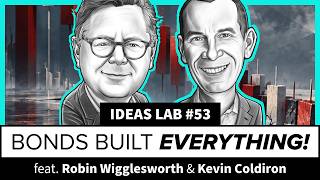
How Bonds Quietly Built the Modern World ft. Robin Wigglesworth | Ideas Lab | Ep.53
Sep 17, 2026
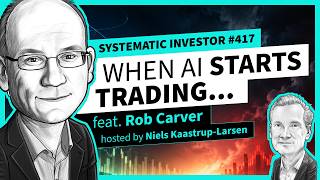
AI Could Change Markets Forever | Systematic Investor | Ep.417
Sep 13, 2026

AI, Higher Rates and the Next Big Economic Imbalance | Global Macro | Ep.107
Sep 10, 2026
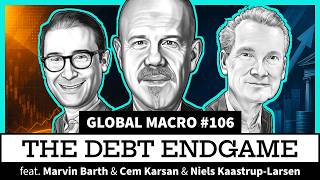
Inflation, Debt and the Fed: What Happens Next? | Global Macro | Ep.106
Sep 02, 2026