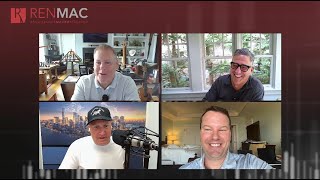
RenMac Off-Script: Bubble Bandwagons
Audio Brief
Show transcript
This episode explores the psychology of market bubbles, the politicization of economic data, and key drivers of current market sentiment and housing demand.
There are three key takeaways from this discussion. First, market bubbles often persist longer than anticipated, challenging investors to hold rather than sell prematurely. Second, the selective release of economic data can raise questions about political influence and its implications for market interpretation. Third, assumptions of significant pent-up demand in the housing market may be unfounded due to consumer expectations of future price and rate declines.
When identifying a potential market bubble, recognize its capacity to inflate beyond initial expectations. The optimal strategy often involves holding through the emotional difficulty, rather than attempting to time a premature exit.
The selective release of economic information, such as CPI data while withholding employment numbers during a government shutdown, prompts scrutiny. This raises questions about potential political motivations influencing market data transparency.
Evidence for significant pent-up demand in the housing market remains scarce. Consumer psychology, driven by expectations of lower interest rates and declining home prices, currently outweighs factors that might otherwise stimulate demand.
These insights emphasize the importance of understanding market psychology and critically assessing economic information to navigate current financial landscapes.
Of course. Here is a comprehensive summary of the podcast episode.
Episode Overview
- The episode begins with a discussion on the psychology of trading market bubbles, emphasizing that selling too early can be a costly mistake.
- The hosts analyze the latest CPI data, questioning the selective release of economic information during a government shutdown and its potential political motivations.
- The conversation covers the impact of tariffs on inflation, market seasonality, and sentiment, particularly in the gold and semiconductor sectors.
- In the mailbag segment, the team addresses a listener's question about pent-up demand in the housing market, concluding that there is little evidence to support it.
Key Concepts
- Bubble Dynamics: The hosts discuss the counterintuitive nature of market bubbles, suggesting that once a bubble is identified, it often continues to inflate. The challenge for investors is managing the emotional difficulty of holding on, rather than selling prematurely.
- Economic Data and Political Influence: The selective release of CPI data while withholding employment numbers during a government shutdown is examined, raising questions about the politicization of economic information.
- Inflation, Tariffs, and Market Psychology: The group debates whether tariffs are truly inflationary, suggesting they cause relative price shifts rather than broad inflation. They also explore how consumer psychology, including expectations about future interest rates and home prices, is currently suppressing housing demand.
- Seasonality vs. Sentiment: A key theme is the conflict between strong historical seasonal trends that favor equities and gold at this time of year and the current market sentiment, which shows signs of excess enthusiasm that could lead to a consolidation phase.
Quotes
- At 00:09 - "When you identify it, the best course of action is to buy it, not sell it because it goes on." - Discussing the common mistake investors make when trying to time the top of a market bubble.
- At 01:30 - "You look like you might go get a pumpkin spice latte somewhere..." - One host humorously critiques another's "autumnal" attire, setting a lighthearted tone for the episode.
- At 02:14 - "Is there a reason why they released this and not the employment number for September? Just saying, not a conspiracy theorist, but..." - Questioning the motivation behind the selective release of economic data during a government shutdown.
- At 10:24 - "This is not a precision business. This is an accuracy business." - Emphasizing that investors should focus on being generally right about market direction rather than trying to achieve perfect timing.
- At 22:04 - "If you think interest rates are going down and you think prices will keep coming down, why would you buy now?" - Explaining the consumer psychology that is currently holding back potential demand in the housing market.
Takeaways
- When identifying a potential market bubble, recognize that it can persist longer than expected. The optimal strategy may be to hold on rather than attempting to sell at the peak.
- In investing, striving for accuracy (being generally correct on direction) is more effective and realistic than striving for precision (perfectly timing entries and exits).
- Do not assume significant pent-up demand exists in the housing market, as factors like slow wage growth and expectations of falling prices can outweigh the impact of lower mortgage rates.
- Pay attention to how markets react to overbought or oversold conditions, as this can be a key indicator of trend strength or an impending reversal.
- Strong seasonal trends can provide a tailwind for markets, but they are not guarantees and must be considered alongside current sentiment and technical analysis.