Quantum Field Theory visualized

Audio Brief
Show transcript
This episode introduces Quantum Field Theory, the framework unifying quantum mechanics with special relativity and explaining the fundamental nature of particles and forces.
There are four key takeaways from this discussion.
First, QFT posits that fundamental components are not particles, but universal fields. Particles like electrons are localized excitations of their corresponding fields, explaining why all particles of the same type are perfectly identical.
Second, special relativity imposes strict symmetry requirements on these fields. These symmetries directly result in conserved quantities such as energy, momentum, and charge. Crucially, these symmetries also explain the origin of fundamental forces.
Third, forces are the macroscopic result of interactions between these quantum fields. These interactions are mediated by the exchange of "virtual particles," which are temporary fluctuations. For example, the electromagnetic force arises from the exchange of virtual photons.
Finally, the collection of all known quantum fields and their interactions forms the Standard Model of Particle Physics. This model classifies particles by their spin, describing quarks, leptons, and force-carrying bosons. Quantum Field Theory is currently the most precise and successful description of the microscopic universe.
This framework profoundly reshapes our understanding of reality, revealing a universe built on dynamic, interacting fields.
Episode Overview
- This episode introduces Quantum Field Theory (QFT) as the framework that unifies quantum mechanics with special relativity, resolving key limitations of the former.
- It explains the fundamental concept that particles are not point-like objects but rather localized excitations or "quanta" of underlying fields that permeate all of spacetime.
- The video demonstrates how fundamental forces, such as electromagnetism, arise from the interactions and exchange of virtual particles between these quantum fields.
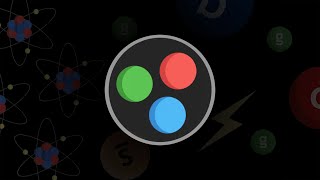
- It provides a high-level overview of the Standard Model of Particle Physics as a collection of different quantum fields, each corresponding to a different family of particles classified by their "spin".
Key Concepts
- Limitations of Quantum Mechanics: While quantum mechanics describes particles as waves of probability, it fails to explain situations with changing particle numbers (creation/annihilation) or why all particles of the same type (e.g., all electrons) are perfectly identical.
- Fields as Fundamental: QFT postulates that the fundamental components of the universe are not particles but fields. Every particle is an excitation of its corresponding field (e.g., an electron is an excitation of the electron field). This explains why all particles of the same type are identical.
- Role of Relativity and Symmetry: Special relativity imposes strict symmetry requirements (related to translation, rotation, and reference frames) on these fields. These symmetries lead directly to conserved quantities like energy, momentum, and charge.
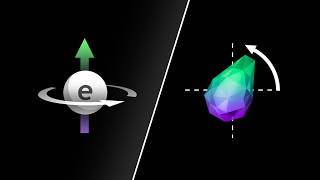
- Spin: Fields and their associated particles are classified by a quantum property called spin. Spin-0 fields correspond to scalar particles (like the Higgs boson), spin-1/2 fields to matter particles (fermions like electrons and quarks), and spin-1 fields to force-carrying particles (bosons like the photon).
- Interactions and Forces: Forces are the macroscopic result of interactions between fields. These interactions are mediated by the exchange of "virtual particles," which are temporary fluctuations in a field. For example, the electromagnetic force between two electrons is the result of them exchanging virtual photons.
- The Standard Model: The collection of all known quantum fields (for quarks, leptons, bosons) and their interactions is known as the Standard Model of Particle Physics, which is currently the most successful description of the microscopic universe.
Quotes
- At 02:22 - "as if they were only local manifestations of a single underlying object which would fill the whole universe: a field." - This quote introduces the central idea of QFT, explaining that the identical nature of all particles of the same type arises because they are all excitations of the same universal field.
- At 07:05 - "Much like a wave on the surface of water, a particle is simply a disturbance which propagates within the field." - This provides a clear and intuitive analogy for understanding the modern definition of a particle as a quantized excitation of a field.
- At 13:47 - "By allowing particles to interact and exchange momentum, carried by virtual particles, quantum field theory explains how forces arise from simple symmetries." - This statement powerfully summarizes how QFT provides a deep and unified explanation for the origin of fundamental forces, connecting them directly to the underlying symmetries of the fields.
Takeaways
- Particles are best understood not as tiny balls, but as quantized ripples or excitations in fundamental fields that fill all of space.
- The seemingly complex rules of the subatomic world, including the existence of forces and conserved quantities like charge, are a direct consequence of the underlying symmetries of these fields.
- The universe is a dynamic stage of interacting quantum fields, constantly fizzing with temporary "virtual particles" that mediate all fundamental forces.
- Quantum Field Theory successfully describes all known particles and forces (except gravity) and is the most precise and tested theory in the history of science.