OpenAI Codex lead on the new shape of product work | Andrew Ambrosino
Audio Brief
Show transcript
In this conversation, we explore how generative AI is radically reshaping the software development lifecycle by shifting the primary constraint from technical coding to human curation and taste.
There are four key takeaways from this discussion. First, product teams must shift from manual implementation to rapid prototyping where editing is the primary value driver. Second, organizations should adopt a zone defense model to handle collapsing boundaries between traditional roles. Third, teams must manage the lifecycle of AI features dynamically, while aggressively combating AI-generated code bloat.
Historically, expensive engineering implementation forced teams to spend months upfront de-risking ideas with static designs before writing code. With AI making prototyping virtually free, teams can now generate dozens of concurrent high-fidelity options instantly. The modern challenge is no longer building features, but applying deep user empathy and design taste to curate the best generated outputs.
The boundaries between product managers, engineers, and designers are blurring into high-agency generalist makers who can build functional prototypes independently. To manage this speed, teams are moving away from rigid, siloed feature ownership toward a dynamic zone defense model. In this setup, generalist product leaders constantly scan for gaps and position themselves where the most chaos or opportunity exists.
A feature's viability is now tightly coupled with the raw intelligence of the underlying foundation model rather than just the user interface design. A product experience that fails on older models can succeed instantly on a newer release without a single line of frontend code changing. This means product organizations must maintain a backlog of failed AI concepts and constantly re-evaluate them against the newest model capabilities.
Software development is shifting from writing syntax to high-level orchestration and steering of AI agents. Because AI code generators are fundamentally biased toward adding code rather than deleting or optimizing it, codebases can bloat rapidly. Teams must establish intentional garbage collection processes to aggressively refactor and simplify AI-generated code.
Ultimately, succeeding in the AI era requires teams to move away from rigid development processes and embrace organizational agility, curation, and outcome-focused execution.
Episode Overview
- This episode explores how generative AI is radically reshaping the software development lifecycle, transforming the traditional boundaries between product managers, engineers, and designers.
- It maps out the dramatic shift from expensive, upfront engineering implementation to rapid, AI-driven prototyping, where the bottleneck is no longer coding, but curation, taste, and strategic direction.
- The conversation details practical frameworks for modern product teams, including "zone defense" management, navigating AI model dependency, and managing the challenges of AI-generated code bloat.
- This content is highly relevant to product managers, software engineers, designers, and tech leaders looking to adapt their processes, roles, and organizational structures for the AI-native era.
Key Concepts
- Role Collapse and the Rise of the Generalist Maker: The boundaries between PMs, engineers, and designers are blurring into high-agency "generalist makers." AI bridges technical skill gaps, shifting the core value of human talent from manual technical execution to taste, curation, and overall product judgment.
- The Inverted Product Development Lifecycle: Historically, expensive implementation forced teams to spend months upfront derisking ideas using static designs. With AI making prototyping virtually free, teams now start with a "multi-player exploration" phase of concurrent high-fidelity prototypes, shifting the primary challenge from building to editing.
- The Trap of Visual Completeness: Highly polished, AI-generated prototypes can look production-ready in minutes. This creates a dangerous cognitive bias where stakeholders assume the product's underlying logic, data safety, and model constraints are fully resolved when they have not yet been evaluated.
- "Zone Defense" Product Management: Traditional product management relies on assigning PMs to rigid, siloed features. In fast-paced AI environments, teams must adopt a dynamic "zone defense" model, where generalist product leaders constantly scan the product surface, identify coverage gaps, and position themselves where the most chaos or opportunity exists.
- The AI "Smartness" Dependency: A feature's viability is now tightly coupled with the raw intelligence of the underlying foundation model rather than just user interface design. Features with the exact same UX can fail on older models and succeed on newer ones, meaning "failed" ideas have a shelf life and must be continually re-tested.
- "Vibe Coding" and the Threat of Code Bloat: Software engineering is shifting from manual line-by-line coding to high-level orchestration and "steering." However, because AI models are fundamentally biased toward adding code rather than deleting or optimizing it, teams face rapid codebase bloat and "spaghetti" code complexity that requires proactive maintenance.
Quotes
- At 0:01:00 - "The implementation is actually not the expensive part anymore. It’s, dare I say, taste." - Andrew explains how AI has commoditized coding, shifting the value of product work from technical execution to curation, judgment, and design aesthetic.
- At 0:01:11 - "I’ve heard a lot of companies be like, 'We’re getting rid of the product role, and everybody's just going to be a builder'... I think that can dangerously eliminate the idea that things are specialties with knowable best practices." - Andrew cautions against extreme "role collapse," arguing that product management remains a distinct discipline with specialized skills that cannot be entirely replaced by generalist "builders."
- At 0:03:17 - "Anybody can build anything... starting from scratch, if you talk to these models... you can stand up whatever feature you want. And that’s not necessarily the hard part of software." - Highlighting how generative AI models have dismantled the traditional barriers to entry for software implementation.
- At 0:04:18 - "The implementation was expensive. And so what you wanted to do is you wanted to derisk all implementation upfront... and that’s changed. It’s like totally changed." - Contrasting the old resource-constrained product workflow with the modern, AI-accelerated paradigm.
- At 0:05:05 - "It’s the curation process. It’s like, of those 90 attempts, what’s good about these? What should we fold into other aspects of this?" - Explaining that the primary role of a product leader is no longer to build from scratch, but to act as an editor filtering down a massive volume of AI-generated options.
- At 0:08:08 - "If that point is product clarity around a vague area, then it might actually be a document. If what you’re trying to do is get something in people’s hands to try out... it’s a prototype." - Andrew emphasizes that despite the ease of prototyping, written documents (PRDs) still have a vital role in resolving conceptual ambiguity.
- At 0:29:21 - "As a product org, you sort of want to do this like force-directed activity, where you’re like: where are the gaps? Especially in this new world where curation and steering and alignment is a lot of things... we need the tastemakers to guide things from inception to what the product should be." - Explaining why the role of the product manager is shifting from feature owner to product curator and director.
- At 0:33:33 - "I am very confident that the Codex app that we released in February, if that had been ready in November, it would have absolutely failed in the market. And the only difference was the models between November and February." - Illustrating how the success of AI features depends entirely on the "smartness" of the underlying model, not the UI design.
- At 0:39:38 - "Coding is steering the AI. And when you think about 'what percentage of my code is written by AI,' it's almost like: how many times did I have to steer it in the right direction?" - Redefining the modern developer's role from writing syntax to guiding intelligent agents.
- At 0:41:00 - "If you're using the goalposts from last year, it's like: well, 100% of our product right now is AI-written code. So the question is more like: is the code written supervised versus unsupervised?" - Explaining how the definition of "AI-written code" has evolved from simple autocompletion to fully autonomous code generation.
- At 1:08:06 - "Do not get married to your exact process. Get married to the outcomes that you are uniquely able to deliver, and then do things like change your process to try things." - Offering a core career philosophy for operating in highly volatile technology environments.
Takeaways
- Establish a "Baby Codebase" (a lightweight, simplified sandbox version of your application) to allow anyone on the team to safely and rapidly test AI-generated features without breaking the core production environment.
- Shift from strict, siloed "man-to-man" role assignments to a "zone defense" model where high-agency generalists dynamically step in to solve problems and maintain overall product coherence.
- Maintain an active backlog of previously "failed" or unfeasible AI features and systematically re-test them every time a more advanced, smarter underlying foundation model is released.
- Proactively manage code quality by establishing manual or semi-autonomous "garbage collection" processes to aggressively refactor and delete redundant code, counteracting AI's natural bias to only add bloat.
- Do not skip written product requirement documents (PRDs); use them strategically when a project lacks conceptual alignment, rather than jumping straight into misleadingly polished high-fidelity prototypes.
- Focus on developing and applying organizational "taste"—such as deep user empathy, visual harmony, and strategic alignment—to serve as the ultimate differentiator when features are cheap to build.
More from Lenny's Podcast

How we built Grok Bot in a month | Roman Ugarte (SpaceXAI)
Sep 08, 2026
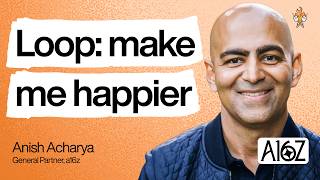
Why companies are becoming a series of loops | Anish Acharya (a16z)
Sep 06, 2026
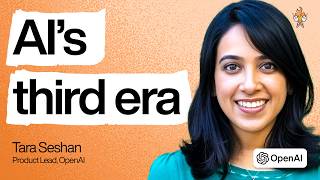
AI’s third era: the rise of persistent AI coworkers | Tara Seshan (OpenAI’s product lead)
Aug 30, 2026
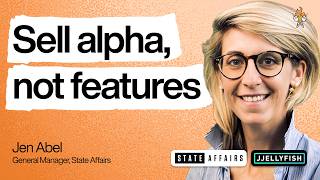
How to close $100K+ enterprise deals, step by step | Jen Abel
Aug 23, 2026