O PLANO DOS EUA PARA DOMINAR A ECONOMIA GLOBAL EM 2026
Audio Brief
Show transcript
This episode covers the transition from the post-World War II Bretton Woods economic order to a new global framework defined by national interest and strategic competition.
There are three key takeaways from this discussion. First, the global economic order is moving away from cooperation-focused multilateralism toward strategic competition. Second, international trade and investment will increasingly be based on strict reciprocity. Third, securing national supply chains for critical goods is now a central pillar of foreign policy.
The original Bretton Woods system established institutions like the IMF and World Bank, creating a post-WWII multilateral order. We are now witnessing a "Bretton Woods 2.0," a new international framework shaped by the United States, prioritizing national interest and reciprocity. This replaces a system that sometimes offered developing nations preferential treatment with a direct quid pro quo model, reflecting a clash of globalizations with competing systems from powers like the US and China.
Reciprocity is a foundational principle of this new framework. It dictates that the treatment of a country's companies and capital in a foreign jurisdiction will determine the reciprocal treatment of that foreign country's assets in return. This marks an end to an era of unilateral concessions in global economic relations.
Securing national supply chains for critical goods like semiconductors, active pharmaceutical ingredients, and essential minerals is a growing imperative. Nations are reducing dependency on geopolitical rivals to achieve greater strategic autonomy. This push for self-sufficiency directly informs foreign policy decisions.
Understanding these shifts is crucial for navigating the evolving landscape of international economics and geopolitics.
Episode Overview
- Marcos Troyjo discusses the original Bretton Woods agreement and its role in establishing the post-WWII global economic order through institutions like the IMF and World Bank.
- He introduces the concept of a "Bretton Woods 2.0," describing a new international framework being shaped by the United States based on national interest and reciprocity.
- The episode contrasts the old multilateral system, which often gave preferential treatment to developing nations, with a new model demanding equal treatment ("quid pro quo").
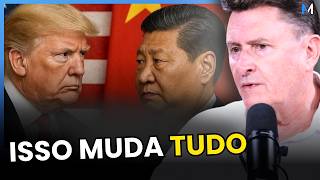
- Troyjo argues that we are witnessing a "clash of globalizations," where different powers, such as the US and China, are creating their own parallel systems and spheres of influence.
Key Concepts
- Original Bretton Woods System: The post-WWII framework that created multilateral institutions like the International Monetary Fund (IMF) and the World Bank to govern international finance, liquidity, and development.
- "Bretton Woods 2.0": A term used to describe a potential new global order being pushed by the United States, moving away from broad multilateralism and towards a system based on reciprocity and strategic national interests.
- Reciprocity (Quid Pro Quo): A core principle of this new framework, where the way a country's companies and capital are treated in a foreign jurisdiction will determine how that foreign country's assets are treated in return.
- Strategic Autonomy: The growing imperative for nations to reduce dependency on geopolitical rivals for critical supply chains, such as semiconductors, active pharmaceutical ingredients (APIs), and essential minerals.
- Clash of Globalizations: The idea that the world is transitioning from a single, Western-led model of globalization to a multipolar environment with competing systems and standards, notably between the US and China.
Quotes
- At 01:14 - "Era um momento em que estava se desenhando, não é, a planta de um mundo, as molduras no interior da qual o mundo mais ou menos ia funcionar." - Describing the significance of the post-WWII period when institutions like the UN and Bretton Woods were created to define the global order.
- At 02:00 - "A primeira coisa é a noção de quid pro quo." - Explaining that the foundational principle of the "new Bretton Woods" being pushed by the US is reciprocity in economic and business relations.
- At 08:04 - "Existe no mundo um choque de globalizações. Você tem uma globalização que surgiu mais como resultado da expansão de ideias, capitais e tecnologias dos países ocidentais e você tem um outro agora emergindo." - Concluding that the world is shifting from a single model of globalization to competing models led by different powers like the US and China.
Takeaways
- The global economic order is moving away from cooperation-focused multilateralism and toward a new era defined by strategic competition and direct national interest.
- International trade and investment will increasingly be based on strict reciprocity, meaning nations can expect their economic access to be mirrored by the access they provide to others, ending an era of unilateral concessions.
- Securing national supply chains for critical goods (like pharmaceuticals and semiconductors) is now a central pillar of foreign policy, driving a push for greater strategic independence from geopolitical rivals.
More from Market Makers

EUA OU CHINA: QUEM VAI MANDAR NO MUNDO NO SÉCULO XXI?
Feb 13, 2026
CHINA E EUA: QUEM TEM MAIS PODER GLOBAL HOJE?
Feb 12, 2026

A ELEIÇÃO NÃO ESTÁ NO PREÇO (E O MERCADO PODE QUEBRAR A CARA)
Feb 11, 2026

BOLSA NA MÁXIMA HISTÓRICA: O QUE ESTÁ ACONTECENDO E COMO SE POSICIONAR | Second Level #32
Feb 11, 2026