Manage Your Energy, Not Your Time - A Leader’s Guide to Energy Management

Audio Brief
Show transcript
This episode explores the crucial shift from managing time to managing energy for sustainable productivity and avoiding burnout.
There are four key takeaways from this conversation.
First, prioritize managing your limited daily energy for deep work over simply managing your time, aligning demanding tasks with peak energy periods.
Second, proactively establish communication norms and response time expectations with your team to protect focus time and reduce the stress of being constantly "on."
Third, intentionally leave 20 to 25 percent of your schedule open as a buffer, allowing you to handle unexpected issues without derailing your entire week.
Fourth, adopt a "marathon" mindset for your career by building sustainable habits, taking breaks, and avoiding the trap of front-loading your week, which often leads to burnout.
Expanding on these points:
The core idea centers on optimizing high quality output by aligning tasks with fluctuating personal energy levels, rather than just filling a calendar. Individuals possess a finite daily "battery" for deep, concentrated work, estimated at only about four to five hours. Differentiating between high and low intensity tasks is crucial for effectively utilizing this limited energy.
To safeguard this critical focus time, it is essential to proactively define communication expectations with your team. This includes setting norms for various channels, such as Slack versus email, which reduces stress and prevents a culture of constant urgency. Clear boundaries help protect everyone's ability to concentrate.
The practice of intentionally scheduling only 75 to 80 percent of your time creates a vital buffer. This crucial margin allows for handling unexpected issues without derailing your priorities, thereby reducing stress and increasing adaptability in your daily work.
Finally, reframing a career as a long term journey requiring a sustainable pace, rather than a series of sprints, promotes long term well-being over short term achievement. This mindset encourages building sustainable habits and prioritizing health over constant high intensity.
This conversation emphasizes the importance of intentionality in how we approach our work and personal lives to achieve lasting effectiveness and well-being.
Episode Overview
- The podcast explores the concept of managing your energy rather than just your time to achieve sustainable productivity and avoid burnout.
- It introduces the idea of a finite daily "battery" for deep, concentrated work (around 4-5 hours) and the importance of aligning high-impact tasks with high-energy periods.
- Practical strategies are discussed, such as establishing team communication norms, planning for only 80% capacity, and using tools like "brag docs" for self-reflection.
- The conversation shifts to a broader philosophical view of career as a "marathon, not a sprint," emphasizing long-term well-being over short-term achievement.
Key Concepts
- Energy vs. Time Management: The core idea is to shift focus from filling every moment on a calendar (time management) to optimizing for high-quality output by aligning tasks with fluctuating personal energy levels (energy management).
- The "Battery" of Concentration: Individuals have a limited daily capacity for deep, concentrated work, estimated at about 4-5 hours. Differentiating between high-intensity and low-intensity tasks is crucial for using this energy effectively.
- Establishing Communication Norms: Proactively defining expectations with your team for different communication channels (e.g., Slack vs. email) is key to reducing stress, preventing a culture of constant urgency, and protecting everyone's focus time.
- The 80% Rule: Intentionally scheduling only 75-80% of your time creates a crucial buffer to handle unexpected issues without derailing your priorities, thereby reducing stress and increasing adaptability.
- Career as a Marathon: This concept reframes a career as a long-term journey requiring a sustainable pace, contrasting with the sprint-based, goal-oriented structure of education. This mindset prioritizes long-term effectiveness and health over constant high intensity.
- The "Second Mountain": A philosophical shift in career focus from individualistic achievement (the "first mountain") to a more fulfilling orientation toward community, service, and interdependence (the "second mountain").
Quotes
- At 0:05:48 - "Managing your time is one thing, however, energy is way more important." - James Stanier explains the core premise of the episode, distinguishing between the two concepts.
- At 0:08:44 - "Maybe you have four or five hours of really intense concentration that you can play with in your work day." - James Stanier introduces the idea of a finite daily "battery" for deep work, suggesting it's more limited than the typical 8-hour workday implies.
- At 27:15 - "Doing an exercise with either your manager, or with your team, or your peers, where you try and establish your norms." - A key actionable tip for reducing communication-related stress by setting clear expectations.
- At 32:25 - "This is a marathon, isn't it? It's not a sprint... there is no end game that you're trying to get to." - Stanier on viewing a career as a long-term journey that requires a sustainable pace rather than constant high intensity.
- At 37:51 - "Act with the same intentionality and urgency on those things as you do with the work things." - Stanier's advice on giving personal and family activities the same priority that is often automatically given to work commitments.
Takeaways
- Prioritize managing your limited daily energy for deep work over simply managing your time, aligning your most demanding tasks with your peak energy periods.
- Proactively establish communication norms and response time expectations with your team to protect focus time and reduce the stress of being "always on."
- Adopt a "marathon" mindset for your career by building sustainable habits, taking breaks, and avoiding the trap of front-loading your week, which leads to burnout.
- Intentionally leave 20-25% of your schedule open as a buffer, allowing you to handle unexpected issues without derailing your entire week.
More from Level-Up Engineering Podcast 🎤

🎁Merry Christmas from the Level-Up Engineering Podcast🎁
Jan 07, 2024

How to be a Great Leader and Manager: Strategies to Improve your Team - and their Results
Nov 28, 2023

The Ultimate Guide to Building High-Performance Teams in Tech
Oct 18, 2022
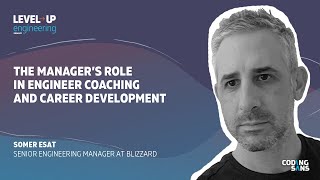
The Manager’s Role in Engineer Coaching and Career Development
Sep 06, 2022