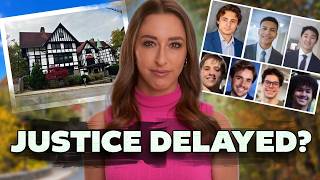
Lindsay Clancy Juror Explains Why They Couldn’t Agree

Audio Brief
Show transcript
Why did eleven jurors send a note to the judge accusing the lone holdout of breaking the law? According to juror Paula Devlin, everyone in the room heard him admit he had doubt, only for him to deny saying it and still vote guilty. Host Briana Whitney interviews Devlin, who served as Juror Number Thirteen, to examine the five week Lindsay Clancy murder trial that ended in a mistrial. By the end of this summary, you will learn how the jury dissected the evidence, why their view differed so sharply from the public's, and what happened when the media tracked them down.
What happens when reasonable doubt meets a deadlocked jury room.
When deliberations began, only two jurors were strongly for a guilty verdict, while eight leaned toward not criminally responsible due to insanity and two were undecided. That split eventually narrowed to eleven to one, prompting the judge to issue a Tuey Rodriguez charge, which is a formal instruction urging a deadlocked jury to work toward a consensus. The eleven jurors then wrote to the judge stating that the holdout juror, Mike, was not following the law. Devlin explains that after watching a pre trial video of prosecution experts interviewing Clancy, Mike stated he no longer believed the crime was premeditated first degree murder, yet he later denied voicing that doubt, offered zero evidence for his own theories, and continued to vote guilty.
Why watching a trial from the jury box gives a completely different picture than testing the raw evidence yourself.
After the mistrial, when the deliberating jurors met the alternate jurors at a beach five minutes from the Plymouth courthouse, one alternate said there was no doubt it was first degree murder. That stark divide happened because the alternates only watched the courtroom testimony, while the deliberating jurors methodically dissected nearly three hundred pieces of evidence and saw the prosecution's case fall apart. For example, prosecution experts claimed Clancy spoke on the 911 call and purposefully left out mentioning her children, but when jurors replayed the audio repeatedly to filter out background chatter in the dispatcher's office, they found she never spoke a single coherent word.
How the strict boundaries of a courtroom can block out the biggest questions circulating online.
While hundreds of thousands of online comments questioned Patrick Clancy's timeline or whether Lindsay killed the children at all, the jury never once discussed the possibility that she did not commit the act. Inside the courtroom, her actions were presented as established fact, leaving the jury with the sole task of evaluating her mental state. However, after defense attorney Kevin Reddington argued in a denied post trial motion that Clancy never confessed, Devlin admitted she did not know how to answer whether Clancy actually committed the act.
How fast outside pressures can breach a jury, both during deliberations and minutes after a mistrial.
Even with a judge's embargo on juror identities, reporters contacted three jurors at a beach bar before they even finished their first drink. On CBS Mornings with Gayle King, Devlin revealed the holdout juror was a Black man because another juror had already spoken to ABC News, NBC already knew his identity, and there were only three men on the jury, which led to his public unmasking as Michael Desravines and online fundraisers for him. Devlin says that revealing this is the only thing from her interviews she regrets, and she also noted that procedural vulnerabilities existed inside the jury room itself, where cell phones were allowed and the holdout juror actively scrolled on his phone during deliberations.
When evaluating a high stakes case, never rely on courtroom impressions or expert summaries alone. Physically inspect the exhibits, replay the raw audio, and map out every point of doubt against the primary evidence.
Episode Overview
- Host Briana Whitney interviews Paula Devlin (Juror #13) to examine what happened inside the deliberation room during the 5-week Lindsay Clancy murder trial, which resulted in an 11–1 deadlock and a mistrial.
- The discussion explores the dynamic between the 11 jurors leaning toward not criminally responsible (insanity) and the lone holdout juror, Michael Desravines, whom the others accused of failing to follow the law or properly apply reasonable doubt.
- Devlin addresses the intense post-trial media fallout, including how three jurors were contacted by reporters within minutes of their release despite a judicial embargo, and her regret over publicly revealing the holdout juror's race.
- The episode details how the deliberating jurors methodically dissected 297 pieces of evidence and testimony from 80 to 85 witnesses, contrasting their findings with the initial impressions of the 6 alternate jurors and widespread internet speculation.
- Finally, the conversation covers a post-trial hearing where defense attorney Kevin Reddington shifted strategy from postpartum psychosis to argue that Clancy never confessed and that the evidence failed to prove she killed her three children.
Key Concepts
- Application of Reasonable Doubt in Deliberations: The jury's initial vote was split 8–2–2 (8 leaning toward not criminally responsible, 2 undecided, and 2 strongly for guilty), later shifting to 10–2 and finally 11–1. After receiving a Tuey-Rodriguez charge from the judge on their third return to the room, jurors listed approximately 15 points of doubt on a whiteboard. The 11 jurors sent a note to the judge stating the holdout juror (Mike) was not following the law because he voiced doubt multiple times—specifically stating he no longer thought the crime was premeditated first-degree murder after viewing a pre-trial video of prosecution experts interviewing Clancy—yet still voted guilty, denied voicing doubt, and offered zero evidence to back his unbroached theories.
- Courtroom Impressions vs. Methodical Evidence Dissection: There was a stark divide between simply watching the trial and actively dissecting the evidence in deliberations. When the 12 deliberating jurors met the 6 alternates at a beach 5 minutes away from the Plymouth courthouse after the mistrial, one alternate stated there was no doubt it was first-degree murder. However, when the deliberating jurors closely reviewed the prosecution's case, they found major holes:
- The 911 Call: Prosecution experts claimed Clancy spoke on the call and purposefully omitted mentioning her children, proving she knew what she had done. Because the dispatcher's office had background chatter, the jury listened repeatedly to isolate Clancy's audio and found she never spoke any coherent words.
- Premeditation: Prosecution claimed Clancy planned ahead by looking up a restaurant, which the jury viewed as normal parenting behavior to check food wait times on apps. Furthermore, evidence showed Patrick Clancy had previously gone away on a trip, which would have given Lindsay a much longer window to act if it were premeditated, rather than the 45-minute to 1-hour window on the day of the incident.
- The Suicide Attempt: Prosecution argued Clancy did not genuinely attempt suicide, claiming her cuts were not deep enough and she dropped feet-first from the window. By reviewing large close-up photos of multiple cuts on high-bleed areas and a doctor's testimony working backward from her injuries, the jury saw proof of how the injuries actually occurred. Additionally, Clancy had called a suicide hotline without getting help, and remained on a 1-to-1 suicide watch 3.5 years later.
- Mental Decline and Character: Journals, hospital reports, constant medication switches, and the fact that none of the 80 to 85 witnesses (including her husband, Patrick) said anything negative about her character or parenting weighed heavily toward reasonable doubt.
- Courtroom Scope vs. Online Speculation and Post-Trial Shifts: While hundreds of thousands of online comments questioned Patrick Clancy's timeline or whether Lindsay killed the children at all, the jury never discussed the possibility that she didn't commit the act because it was presented as established fact; their sole task was evaluating her mental state. However, after defense attorney Kevin Reddington argued in a post-trial motion (which the judge denied) that Clancy never confessed, Devlin noted that while she did not know how to answer whether Clancy actually committed the act, evidence regarding how long Clancy had to lie outside in the cold for her body temperature to drop as low as it did "got lost in the shuffle" and could have indicated whether the timeline was physically possible.
- Post-Trial Media Vulnerability and Jury Room Integrity: Despite a judge's embargo on juror identities, media outlets contacted 3 jurors before they finished their first drink after being released. Speaking to the press the Monday after the trial (rather than waiting until Wednesday as planned) proved too soon: an out-of-context soundbite upended one female juror's life with online hate. Furthermore, on CBS Mornings with Gayle King, Devlin revealed the holdout juror was a Black man—explaining she did so because juror Nick had already spoken to ABC News, there were only 3 men on the jury (one of whom didn't participate in discussions), and NBC already knew his identity—which led to his public unmasking as Michael Desravines and subsequent online fundraisers for him. Inside the jury room, procedural vulnerabilities were also apparent, as cell phones were permitted and the holdout juror actively scrolled on his phone during deliberations.
Quotes
- At 3:01 - "We had all heard Mike say that he had doubt. We had all heard him say that he changed when he saw a certain piece of evidence, that he didn't think it was first-degree murder anymore. Um, we had all heard all of that. We had heard him voice doubt in multiple occasions. And then he would say, 'No, I didn't say that,' when we would call him out on it." - Paula Devlin explaining why the 11 other jurors wrote a note to the judge stating the holdout juror was not following the law regarding reasonable doubt.
- At 7:42 - "In hindsight, it's probably out of every interview I've done, it's the only thing that I regret saying." - Paula Devlin reflecting on her decision to reveal on national television that the holdout juror was a Black man, which contributed to his public identification.
- At 16:50 - "I don't even, we hadn't even got through our first drink and three of the people on the jury had already been contacted." - Paula Devlin describing how quickly media outlets tracked down jurors at a beach bar 5 minutes from the courthouse despite the judge's embargo on their names.
- At 18:52 - "So it was eight, two, and two. So eight people to start with were leaning towards not responsible, two people were on the fence or undecided, and two people were strongly for guilty." - Paula Devlin detailing the initial baseline vote when deliberations began after 5 weeks of trial testimony.
- At 26:41 - "I think a big piece, at least for me, was out of all the witnesses, nobody could say anything bad about Lindsay, about her parenting or about her as a person. Not even Patrick. He couldn't even say anything negative about her or her parenting." - Paula Devlin highlighting the testimony across 80 to 85 witnesses that weighed heavily in favor of finding Clancy not criminally responsible.
- At 29:15 - "Most everybody just put their phone aside and it never came out unless we were on a break. It never was really in their hand, it might have been sitting on the table, but nobody was holding onto it while we were deliberating except for one person." - Paula Devlin revealing that cell phones were permitted inside the deliberation room and that the holdout juror scrolled on his phone during discussions.
- At 33:12 - "I wish there had been more evidence about the length of time that she would have had to be outside with the temperature that it was that night for her body temperature to get to the place that it was. I think that kind of got lost in the shuffle maybe. And maybe if there had been a clearer, that would be a good indication, that would really be a good indication of if that could even happen in the amount of time that she had." - Paula Devlin hedging on the defense's new post-trial claim that Clancy didn't kill the children, pointing out a specific gap in the physical timeline evidence.
Takeaways
- Wait and coordinate before speaking to the media after jury duty: High-profile jurors should stick to a cooling-off period before granting interviews, weigh the pros and cons of every detail they share to avoid identifying fellow jurors or having soundbites taken out of context, and strictly avoid reading online comments to protect their mental well-being.
- Test courtroom claims directly against raw primary evidence: When serving on a jury or evaluating a case, do not rely solely on expert summaries or initial impressions; physically inspect the exhibits and replay raw audio/video repeatedly to verify whether witness claims actually hold up against the primary source material.
- Use structured visual tools to resolve group deadlocks: In high-stakes group decision-making, map out each person's specific points of doubt or disagreement on a shared whiteboard—writing down points for reluctant participants if necessary—so every claim can be systematically cross-checked against documented evidence rather than unverified theories.
- Remove personal devices during active deliberations: Even if a court permits cell phones inside the jury room, jurors should voluntarily store their devices away and restrict usage strictly to breaks to ensure full engagement and prevent outside distractions or online narratives from influencing the room.