Lessons From the Most Successful Turtle of All-Time | with Jerry Parker

Audio Brief
Show transcript
This episode covers an in-depth conversation with Jerry Parker, one of the original and most successful Turtle Traders, who shares his journey from being an accountant to a legendary trend follower.
There are four key takeaways from this discussion: the psychological necessity of embracing losses in systematic trading, the critical importance of unwavering system discipline, the danger of over-optimization versus the value of robust long-term systems, and the acceptance of extreme volatility as an inherent part of trend following.
Jerry Parker emphasizes that accepting losses is fundamental to systematic trading success. The Turtle program taught that losses are not failures but a natural, unavoidable component of a profitable long-term system. Traders must view losses as confirmation that their system is functioning as intended.
Unwavering adherence to a proven trading system is paramount, even when faced with significant drawdowns. Parker highlights the central conflict between a trader's systematic approach and client expectations during volatile periods. Maintaining discipline requires strong mental fortitude to prevent external pressures from derailing the strategy.
Resist the temptation to constantly tinker with or over-optimize trading systems, especially during periods of underperformance. Parker warns that such reactive changes often backfire, as simpler, more robust long-term models tend to outperform when market conditions revert. Trusting the established, proven system is crucial for long-term consistency.
Systematic trend following inherently involves exposure to extreme volatility and significant drawdowns. Parker shares anecdotes, including losing 60% in a single day, to underscore the mental fortitude required. Mentally preparing for and accepting these large fluctuations is a non-negotiable aspect of long-term success in this field.
This conversation offers invaluable insights into the psychological and practical realities of systematic trend following from a legendary practitioner.
Episode Overview
- This episode features an in-depth conversation with Jerry Parker, one of the original and most successful "Turtle Traders," who shares his journey from being an accountant to a legendary trend follower.
- Parker discusses the foundational psychological principles taught by Richard Dennis, particularly the importance of embracing losses and maintaining unwavering discipline to a systematic approach.
- The conversation explores the practical business challenges of trend following, focusing on the inherent conflict between a volatile trading system and the expectations of clients who are often uncomfortable with drawdowns.
- Parker reflects on the evolution of his trading systems, from executing Richard Dennis's research to developing his own longer-term, more robust models to navigate modern market noise.
- Through candid anecdotes, including a story of losing 60% in a single day, Parker illustrates the extreme volatility and mental fortitude required for long-term success in systematic trading.
Key Concepts
- The Turtle Trading Experiment: The legendary program created by Richard Dennis in 1983 that served as the foundation for the modern CTA and managed futures industry, proving that trading could be taught through a systematic, rules-based approach.
- The Psychology of Losses: A core tenet of the Turtle program was the necessity of accepting, and even "loving," losses as an integral and unavoidable part of a profitable long-term trading system.
- System Discipline vs. Client Management: The primary business challenge for a systematic trader is reconciling the need to follow a proven, yet volatile, system with the pressure to keep clients comfortable and invested during inevitable drawdowns.
- The Danger of Over-Optimization: The temptation to constantly "tinker" with or change a trading system during periods of underperformance often backfires, as older, more robust systems tend to perform better when market conditions revert.
- System Evolution: Parker's trading approach has evolved from the original Turtle systems towards longer-term, more robust models designed to reduce the impact of market "choppiness" and noise that can affect shorter-term strategies.
- The Realities of Volatility: Leveraged trend following involves exposure to extreme volatility, requiring immense mental fortitude to adhere to the system's rules even in the face of massive single-day losses.
Quotes
- At 0:04 - "You’re sort of tempted after a certain period of under performance to tinker with your systems and call up research. Then as soon as you implement the new research you find out, well the older systems would have performed better." - A quote from Jerry Parker highlighting the psychological challenge of sticking to a trading system.
- At 1:31 - "I'm talking about Jerry Parker, the founder and president of Chesapeake Capital, who has often been described as the most successful Turtle ever." - The host formally introduces his guest and highlights his esteemed reputation.
- At 3:12 - "Back in 1983, I was in public accounting in Richmond, Virginia, and desiring very much to do something more interesting and rewarding." - Jerry Parker describes his professional life before trading.
- At 3:36 - "I had come across literature concerning trend following and I thought that it made a lot of sense to me at the time." - Parker explains his early, independent interest in a rules-based trading approach.
- At 27:16 - "A trader should love to take losses." - Parker shares a key lesson from the Turtle program, explaining that losses are a fundamental part of a profitable system.
- At 27:42 - "Maybe you love it, but your clients don't." - He describes the central conflict between a trader's acceptance of drawdowns and a client's emotional discomfort with them.
- At 30:08 - "You know, this is the greatest job ever... and it just, life is never going to be any better." - Parker reflects on the unique and positive atmosphere of being in the Turtle program.
- At 30:26 - "We were so happy trading, you know, a couple of million dollars... and had no idea that the CTA business would turn into, you know, billions of dollars under management and big businesses." - He provides perspective on the humble beginnings and mindset of the early Turtles.
- At 31:57 - "It was almost like the Turtles when they left... we had sort of a chip on our shoulder. We were like anticipating clients or others to try to influence us and get us to do the wrong type of trading..." - This quote reveals the defensive mindset the program instilled to protect their systematic approach.
- At 34:04 - "It looks like we don't know what we're doing anymore... But maybe what's broken is, you know, a part of our decision-making process of making commodities 50% of our risk exposure." - Parker candidly analyzes a period of underperformance, pointing to portfolio allocation rather than a broken trend-following model.
- At 35:53 - "My worst drawdown was in the spring of '86. I think I lost 60% in one day." - He shares a powerful example of the extreme volatility he was trained to endure as a Turtle.
Takeaways
- Embrace losses as a confirmation that your system is functioning correctly, rather than viewing them solely as a negative outcome.
- Prioritize unwavering adherence to your trading system, even if it creates short-term discomfort for you or your clients.
- Resist the temptation to make reactive changes to your system during drawdowns; trust the long-term process over short-term results.
- Focus on developing simple, robust systems that can survive a wide range of market conditions over complex, over-optimized ones.
- Mentally prepare for and accept the possibility of extreme volatility and significant drawdowns as a non-negotiable part of trend following.
- When analyzing underperformance, first examine high-level portfolio decisions, such as asset class allocation, before concluding that your core strategy has failed.
More from Top Traders Unplugged

How Bonds Quietly Built the Modern World ft. Robin Wigglesworth | Ideas Lab | Ep.53
Sep 17, 2026
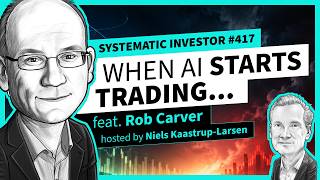
AI Could Change Markets Forever | Systematic Investor | Ep.417
Sep 13, 2026

AI, Higher Rates and the Next Big Economic Imbalance | Global Macro | Ep.107
Sep 10, 2026
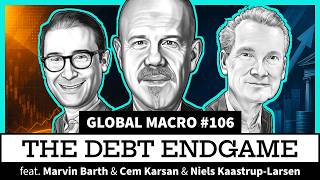
Inflation, Debt and the Fed: What Happens Next? | Global Macro | Ep.106
Sep 02, 2026