I Was Told I Might Never Run Again. 18 Months Later, I Ran the NYC Marathon
Audio Brief
Show transcript
How do you find out who you really are when you have absolutely nothing left in the tank? Double-amputee veteran Cedric King found his answer after a bomb in Afghanistan took both of his legs. In this episode, ultra-endurance athlete Rich Roll shares his journey of physical and spiritual rehabilitation alongside Cedric. You will learn how to turn physical suffering and past trauma into a powerful path of healing.
Healing your body requires you to rebuild your spirit.
Rich Roll experienced this firsthand while navigating his rehabilitation after undergoing major spinal fusion surgery. He transitioned from restricted mobility after spinal surgery to completing a 26.2-mile race, showing that physical healing is deeply connected to mental endurance. When you face a major physical setback, allow yourself to start small by celebrating minor milestones like walking a single mile before you build up to larger challenges.
True strength comes from helping others cross the finish line.
You might think of a marathon as an individual test, but it actually relies on a supportive team. Twelve-step recovery programs are built on three core principles, which are unity, recovery, and service. Rich Roll found these exact principles mirrored on the pavement of the marathon as he guided Cedric. If you are facing a motivational block, shift your focus from self-achievement to service to help someone else achieve their goals.
Pushing past exhaustion reveals your true character.
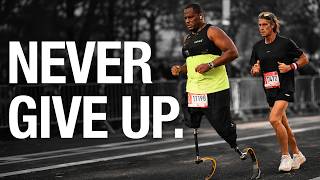
About 14 years ago, Cedric King stepped on a bomb in Afghanistan and lost both of his legs. Years later, he was pushing through extreme physical exhaustion during a marathon. Cedric believes that the moments when you have nothing left in the tank, and you still decide to keep moving, are when you figure out who you really are. This intense physical hardship strips away everything superficial.
You can reclaim the places that hold your darkest memories.
Returning to a city once associated with active addiction can become a healing experience when approached with sobriety and a supportive community. Rich Roll used to struggle with active addiction in New York City. By re-entering the city to guide Cedric in the marathon, he transformed those old streets into a space of healing. Reclaim an environment associated with your own past trauma or unhealthy habits by re-entering it alongside a supportive, healthy community to establish positive new memories.
Disabled athletes achieve the extraordinary through shared dedication.
Running a marathon is hard, but doing it as a double-amputee requires a unique community of support. Organizations like Achilles International, an adaptive sports group, connect disabled athletes with volunteer guides. This collaboration shows that major athletic achievements are made possible through collective dedication.
The path to overcoming your greatest struggles lies in connecting with others. When your own motivation fades, remember that the moments where you have nothing left and still keep moving are when you figure out who you really are.
Episode Overview
- Ultra-endurance athlete Rich Roll discusses his recovery from spinal fusion surgery, his history with addiction in New York City, and his experience guiding double-amputee veteran Cedric King through the New York City Marathon.
- The narrative details a journey of physical and spiritual rehabilitation, transitioning from restricted mobility after spinal surgery to completing a 26.2-mile race.
- It frames the concept of service in recovery, demonstrating how shifting one's focus from self-achievement to supporting others provides deep motivation.
- This content is highly relevant to anyone interested in athletic rehabilitation, overcoming addiction, and the impact of community-based sports organizations.
Key Concepts
- Recovery as a Multi-Dimensional Journey: Physical rehabilitation, such as recovering from major spinal fusion surgery, is deeply intertwined with mental endurance and spiritual growth.
- The Triad of Recovery: Twelve-step recovery programs rely on the core principles of unity, recovery, and service, which are perfectly mirrored in the collaborative environment of a major marathon.
- Suffering as a Tool for Self-Discovery: Pushing past physical exhaustion to run when there is "nothing left in the tank" strips away superficiality and reveals an individual's true character.
- Redefining Relationships with Places: Returning to a city once associated with active addiction can become a healing experience when approached with sobriety and a supportive community.
- Adaptive Athletics and Collective Support: Organizations like Achilles International show that athletic achievements for disabled individuals are made possible through shared dedication and volunteer guiding.
Quotes
- At 1:22 - "Recovery in 12-step is premised upon these three principles that form a triangle, and that is unity, recovery, and service." - Explaining the foundational framework that guides Rich's approach to both the marathon and his ongoing sobriety.
- At 9:25 - "About 14 years ago, I was in Afghanistan... I step on a bomb, it blows both my legs out." - Cedric King sharing the traumatic turning point of his life that eventually led him to discover marathon running.
- At 11:51 - "Those are the moments where you got nothing left and you make a decision to keep moving with nothing in the tank. And then you can figure out who you really are." - Cedric clarifying the profound spiritual value of enduring extreme physical hardship during a race.
Takeaways
- Shift your focus from self-achievement to service when facing motivational blocks, as helping someone else achieve their goals can renew your own sense of purpose.
- Allow yourself to start small after a major physical setback, celebrating minor milestones like walking or running a single mile before building up to larger challenges.
- Reclaim environments associated with past trauma or unhealthy habits by re-entering them alongside a supportive, healthy community to establish positive new memories.