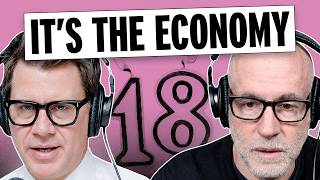
"I Think It Is a Bubble" — Kai Ryssdal on AI, Tariffs and the Split-Screen Economy
Audio Brief
Show transcript
SUMMARY:
SUMMARY:
Why is consumer confidence near historic lows when the stock market is booming? Kai Ryssdal raises this question to Scott Galloway. You will learn how to navigate a stagnant job market, understand the actual threat of artificial intelligence, and protect your personal finances.
Your wallet feels empty even when the stock market is booming. A strong gross domestic product, or GDP, masks severe individual affordability issues. You should monitor corporate price hiking strategies directly rather than relying solely on general inflation metrics.
The job market is stalling without a traditional recession. Employees are staying put out of fear, which completely halts career mobility. Prepare for long term white collar shifts by acquiring skills that complement automation.
The massive cash flow in artificial intelligence is a closed loop. Tech firms fund chip makers in a cycle of massive spending that does not yet translate to scalable, practical utility.
Businesses can only absorb these import taxes for so long before they are forced to pass them onto consumers, driving up retail prices.
Modern wealth is actively leaving workers behind. Wealth generation increasingly favors capital over labor, eroding middle class stability and widening inequality.
Online betting platforms are not reliable economic crystal balls. Platforms like Kalshi and Polymarket are opaque black boxes, so you should treat their speculative data with extreme caution.
Strong macroeconomic indicators can diverge from your daily reality. Navigate this split screen landscape by focusing on tangible skills, because so much of the wealth in this country is now going to capital as opposed to labor.
Episode Overview
- Kai Ryssdal tells Scott Galloway about the current state of the US economy, the realistic threat of AI to the labor market, rising affordability issues, and the impact of prediction markets.
- The discussion highlights the paradox of a strong stock market paired with low consumer sentiment and rising inequality.
- Ryssdal offers a skeptical view on the immediate impacts of both artificial intelligence and prediction markets, suggesting they are overhyped in the short term.
- The conversation explores how economic policy decisions, specifically tariffs and wealth distribution, are squeezing the middle class.
Key Concepts
- The Split-Screen Economy: A paradox exists where macroeconomic indicators like the stock market and GDP growth are exceptionally strong, yet individual consumer sentiment remains near historic lows due to affordability issues.
- The Low Hire, Low Fire Labor Market: Rather than a traditional recession, the current labor market is defined by uncertainty where people hold onto their current jobs out of fear of not finding another one, stagnating career mobility.
- Circular AI Hype: The current boom in AI spending resembles a circular bubble where tech firms fund chip makers, creating a loop of massive expenditures that does not yet translate to scalable, practical economic utility.
- Delayed Tariff Pass-Through: Businesses can only absorb the costs of tariffs for so long before they are forced to pass nearly all of those expenses onto consumers, driving up retail prices.
- Capital Over Labor: Modern wealth generation increasingly favors capital over labor, creating a wider gap of income inequality that erodes the middle-class stability seen in mid-20th-century America.
- Prediction Markets as Black Boxes: Platforms like Kalshi and Polymarket are gaining traction but remain highly opaque, making them unreliable indicators of true public sentiment despite their potential to influence trading.
Quotes
- At 0:58 - "I would say we're sort of in a labor market, not recession, but a labor market period of great, great uncertainty." - explaining the stagnation of job mobility and low quit rates in the current economic landscape.
- At 2:27 - "AI will be the future, it's just not there yet." - clarifying Ryssdal's skeptical stance on the immediate productivity gains and labor threats posed by artificial intelligence.
- At 5:41 - "So much of the wealth in this country is now going to capital as opposed to labor." - pointing out the structural shift that is actively driving wealth inequality and eroding middle-class stability.
Takeaways
- Monitor corporate price-hiking strategies rather than relying solely on overall inflation metrics when planning business budgets or personal spending.
- Prepare for long-term career shifts if you work in a white-collar role by acquiring skills that complement automation, rather than panicking about immediate AI displacement today.
- Exercise caution when using prediction markets like Kalshi or Polymarket as reliable economic indicators, treating their data as speculative rather than statistically sound.