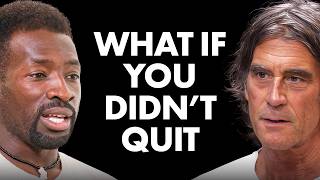
How to End the Addiction Cycle & Transform Your Life
Audio Brief
Show transcript
This episode covers the harrowing journey from generational addiction to lasting recovery by revealing how individuals can redirect compulsive energy into the uncharted world of ultra-endurance sports.
There are three key takeaways from this conversation. First, true willingness to change is a fleeting energy born from profound suffering that must be acted upon immediately. Second, extreme endurance sports offer a powerful channel to redirect obsessive tendencies into positive growth. Finally, conquering massive distances requires a complete surrender of ego and a commitment to continuous daily maintenance.
Breaking destructive cycles requires more than intellectual understanding. The willingness to pursue recovery is an unpredictable burst of energy that typically emerges only when the pain of staying the same outweighs the terror of change. Because these moments of clarity are brief, they demand immediate action before the deeply ingrained habits of addiction can pull a person back in.
The physical and mental extremes of running races beyond one hundred miles serve as a crucial outlet for those in early sobriety. Rather than suppressing intense and compulsive energy, athletes learn to channel it into a highly structured and demanding pursuit. This extreme physical effort acts as an emotional regulator, building a mental force field that helps maintain equilibrium in everyday life.
Tackling an ultramarathon is a severe physical test that strips away the illusion of human control. Athletes must embrace deep humility and surrender to uncontrollable variables like extreme weather and rugged terrain to survive the immense distance. Both ultra-running and personal recovery are built on the discipline of keeping promises to yourself, proving that genuine self-esteem must be continually earned through action.
By combining the grit to endure with the humility to surrender, individuals can treat personal growth not as a permanent fix, but as a daily practice of resilience.
Episode Overview
- Explores the harrowing journey from intergenerational addiction and the opioid-to-heroin pipeline to finding lasting recovery and purpose.
- Examines the elusive concept of "willingness" in sobriety, illustrating how profound suffering often serves as the mandatory catalyst for life-altering change.
- Reveals the powerful connection between addiction recovery and extreme endurance sports, showing how compulsive energy can be redirected into positive pursuits.
- Delves into the uncharted, rapidly evolving world of 200+ mile ultramarathons, emphasizing the need for profound humility, surrender, and continuous learning.
Key Concepts
- The Grip of Generational and Systemic Addiction: Addiction often stems from inherited familial traits and systemic societal failures—such as the sudden restriction of prescription opioids that drove a wave of users to heroin—acting as a misguided search for comfort rather than a simple moral failing.
- The Paradox of Willingness: Intellectual understanding of the need to change is rarely enough to break destructive cycles. True "willingness" to recover is a fleeting, unpredictable energy that usually only emerges when the pain of continuing the addiction finally outweighs the terror of changing.
- The Gradual Reality of Early Recovery: The transition out of addiction is not an overnight fix. Early sobriety often feels agonizingly repetitive and requires immense perseverance, community support, and the patient relearning of fundamental life skills.
- Endurance Sports as a Healthy Channel: The extreme physical and mental demands of ultrarunning frequently attract individuals in recovery because it provides a necessary, highly structured outlet for their intense, obsessive energy, turning a destructive compulsion into a tool for growth.
- Humility and Surrender in the Extreme: Conquering massive distances like the Moab 240 requires abandoning the illusion of control. Athletes must surrender to uncontrollable variables like weather and terrain, which strips away the ego and fosters deep spiritual resilience.
- The Frontier of 200+ Mile Races: The subculture of ultra-endurance running beyond 100 miles is still in its experimental infancy. This creates a highly collaborative community where elite athletes and amateurs alike continuously share knowledge, adapt strategies, and learn from shared failures.
Quotes
- At 0:02:45 - "Most of the time you're like out there by yourself. Like the field is so spread out. Yeah, you're on some kind of spiritual like vision quest." - Highlighting the isolating and transcendent nature of extreme endurance events.
- At 0:03:41 - "You could like find like dig that deep or suddenly, you know, find that like deeper reservoir of, you know, access like, you know, a capacity that, you know, no one would have thought possible." - Explaining the profound human capacity for resilience discovered in extreme situations.
- At 0:06:08 - "People ask me what is my heritage? And it's like alcoholism. It's not like English or European descent. It's like alcoholism is uh, just where I come from." - Illustrating the pervasive and defining impact of generational addiction.
- At 0:09:27 - "That was the first time in my life where I was like, okay, like I'm gonna be okay... I felt the relief for the first time." - Describing the powerful, immediate, and deceptive comfort provided by opioids.
- At 0:10:49 - "The government and uh people started to catch on that like these things are so highly addictive... they just pretty much overnight disappeared everywhere and all of these people who were addicted to uh these pills just immediately switched to heroin." - Outlining the systemic shift that pushed prescription pill users toward heroin.
- At 0:13:35 - "I believe that addicts are seekers on some level and they're seeking answers to their questions and they're seeking comfort to their discomfort in unhealthy ways." - Providing a compassionate perspective on the underlying motivations of addiction.
- At 0:14:15 - "You can't will somebody to be willing and you can't just decide to be willing. It's almost like this weird thing that that descends down on you when you're in enough pain and gives you this burst of energy that you didn't have five minutes prior to finally do that different thing." - Explaining the elusive and critical concept of "willingness" necessary for recovery.
- At 0:20:52 - "Did I just become like so desensitized to life just from all the shit that I've been through that ultra running is like the most extreme form of running and just an ability for me to like feel something." - Reflecting on the psychological connection between past trauma and the extreme demands of ultra-running.
- At 0:29:02 - "There is something very specific about pain and suffering that gives birth to the willingness. It's all about willingness. It's like it's you know what you need to do. Right. But are you willing?" - Highlighting the crucial role of pain in generating the motivation needed to initiate recovery.
- At 0:31:00 - "These fleeting moments. Cause you know if you don't act in that moment it will pass and you'll be back to your bullshit. You know." - Underscoring the urgency of acting upon the brief moments of clarity during addiction.
- At 0:31:52 - "But you're stuck in this cycle of, you know, compulsion and, you know, craving and reward that is so cunning, baffling, and powerful." - Capturing the overwhelming and cyclical nature of addiction.
- At 0:35:10 - "And like finally for the first time had like real men around me who were like solid role models and like learned valuable life skills and how to live a life." - Illustrating the importance of community and mentorship in the recovery process.
- At 0:48:30 - "And I think it's more so just all of us like learning together on this new thing, you know, like what's the what's the best way to handle sleep in a 200 mile race. You know, like no one's really cracked the code or figured it out." - Highlighting the experimental and evolving nature of ultra-running strategies.
- At 1:03:07 - "You have to be in a state of surrender. There's too many variables. It's too long... The only way you're going to be able to get from the starting line to, you know, 240 miles later is if you are, you know, in that, in that state of like surrender." - Explaining the necessary mindset shift required for extreme endurance events.
- At 1:06:55 - "When you start to see... people who are like in the top, top, top of the international marathon world decide to move into the ultra world, we're going to see a lot of innovation and a lot of records being broken." - Predicting the future trajectory of the sport as it attracts higher-tier athletic talent.
- At 1:21:26 - "This whole thing really is a daily reprieve. And if I, you know, slip up and make the mistake of putting something in my body that can cause the allergy and the craving of alcoholism, like I'm right back to square one..." - Connecting the daily discipline of recovery with the mindset required for continuous growth.
- At 1:25:38 - "Self-esteem is built on the shoulders of performing esteemable acts. And like going out and run... is an esteemable act on behalf of yourself." - Framing the physical effort of running as a vital tool for building psychological resilience and self-worth.
Takeaways
- Act immediately when brief moments of clarity or "willingness" strike, as these windows for life change are fleeting and easily lost to old habits.
- Seek out strong mentors and structured communities to learn the foundational life skills that may have been missed during periods of trauma or addiction.
- Redirect obsessive or compulsive energy into demanding, healthy physical pursuits rather than trying to simply suppress those intense tendencies entirely.
- Embrace a state of complete surrender when facing massive, long-term goals, accepting that you cannot control external variables or the environment.
- View the early struggles of any major life transformation (like early sobriety) as a necessary survival phase rather than an immediate failure.
- Utilize intense physical exercise as an emotional regulator and a "force field" to block out negativity and maintain mental equilibrium in daily life.
- Approach uncharted challenges with a beginner's mind, openly experimenting and sharing your failures with your peers to accelerate collective learning.
- Build genuine self-esteem by consistently performing "esteemable acts," such as completing difficult daily training sessions or keeping promises to yourself.
- Balance a gritty "never quit" mentality with the humility and self-awareness to listen to your body and step back when pushing forward becomes destructive.
- Treat personal growth and recovery as a daily reprieve that requires continuous, lifelong maintenance rather than a problem to be permanently solved.