Helen of Troy | The Queen of Greek Myths

Audio Brief
Show transcript
This episode traces the enduring legacy of Helen of Troy, exploring her transformation from a divine mythical figure to an object of historical inquiry, alongside the brutal family curse of the House of Atreus and modern archaeological attempts to validate ancient myths.
There are three key takeaways from this conversation. First, ancient Greek myths portrayed figures like Helen of Troy as powerful, semi-divine beings whose influence shaped human destiny, not mere mortals. Second, the Athenians later reinterpreted brutal myths, such as the cycle of revenge in the House of Atreus, into foundational stories for their society, illustrating the transition from chaotic blood feuds to organized, state-sanctioned justice. Third, modern archaeology, initially driven by a romantic obsession with proving Homer's epics were literal history, revealed a Bronze Age reality both surprisingly similar to and vastly different from mythical accounts.
Helen of Troy was seen not merely as a mortal woman but as a quasi-divine figure possessing supernatural powers. Her beauty inspired obsession, caused suffering, and ultimately led to her being granted immortality by the gods. The ancients clearly viewed her as an agent of destiny, capable of immense influence.
The brutal multi-generational curse on the House of Atreus details an inescapable cycle of betrayal, cannibalism, and murder, engulfing figures like Agamemnon and his family. However, the Greek playwright Aeschylus's Oresteia trilogy reimagined this cycle, dramatizing the crucial shift from personal revenge to a civilized system of justice administered by a court, a cornerstone of Athenian democracy.
The 19th-century archaeologist Heinrich Schliemann epitomized the quest to find physical evidence of the Trojan War at Troy and Mycenae, driven by a desire to prove Homeric epics as historical fact. His romantic endeavors contrasted the heroic world of Homer with the bureaucratic and violent reality suggested by archaeological findings and deciphered Linear B tablets. This tension between myth and historical reality became a central focus.
Archaeological discoveries from the Bronze Age world of Mycenae revealed a complex, highly organized, and often violent society. Massive "Cyclopean" fortifications were built out of necessity, not just for show, pointing to a militaristic culture. This evidence, alongside indications of powerful elite women, challenges simplistic interpretations of the era and enriches our understanding of the time before Homer.
Ultimately, these ancient narratives illuminate the foundational role of myth in Western civilization, explaining the evolution from personal retribution to the principles of civic law, while ongoing historical and archaeological inquiry continues to reshape our understanding of their literal truth.
Episode Overview
- The episode traces the legacy of Helen of Troy, exploring her evolution from a divine mythical figure to an object of historical and archaeological obsession.
- It delves into the horrific, multi-generational curse on the House of Atreus, detailing the cycle of betrayal, murder, and revenge that ensnares Agamemnon and his family.
- The discussion follows the 19th-century quest of archaeologist Heinrich Schliemann to find the physical evidence of the Trojan War at Troy and Mycenae.
- It contrasts the romantic, heroic world of Homer's epics with the bureaucratic and violent reality suggested by archaeological findings and the decipherment of Linear B tablets.
- The narrative connects these ancient myths to the foundations of Western civilization, showing how they were used to explain the transition from blood feuds to civic law in Athens.
Key Concepts
- Helen's Divine Status: Helen is portrayed not as a mere mortal but as a quasi-divine figure with supernatural powers to cause and soothe suffering, who inspires obsession and is ultimately granted immortality.
- The Curse of the House of Atreus: A central theme is the inescapable family curse defined by a gruesome cycle of betrayal, cannibalism, incest, and murder that cascades through generations, from Tantalus to Atreus and Agamemnon.
- Myth vs. Historical Reality: The podcast explores the tension between mythical accounts and later attempts at rationalization, from the historian Herodotus to the archaeological quests of Heinrich Schliemann, who sought to prove the myths were historical fact.
- Myth as a Foundation for Civic Law: The Greek playwright Aeschylus's Oresteia trilogy is presented as a foundational myth for Athenian democracy, dramatizing the shift from a primitive cycle of personal revenge to a civilized system of justice administered by a court.
- The Homeric World vs. Archaeology: The heroic age described by Homer is contrasted with the world revealed by archaeology, which shows a highly organized, violent, bureaucratic society with powerful women, creating a complex picture of the Bronze Age.
Quotes
- At 31:33 - "Terribly does she seem like the immortal goddesses to look on." - Dominic Sandbrook reads a line from Homer's Iliad, where the Trojan elders admit that Helen's divine beauty makes the decade of war and suffering understandable.
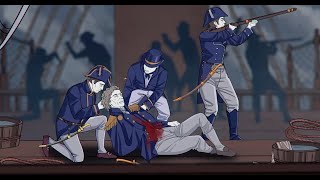
- At 60:28 - "cooks them, puts them in a dish, and gives them to Thyestes for dinner." - Tom Holland describes the horrific revenge Atreus takes on his brother Thyestes by feeding him his own children, perpetuating the family curse.
- At 69:39 - "Yes, this is my work and I claim it..." - Tom Holland quotes Clytemnestra from Aeschylus's play Agamemnon, as she stands over her husband's murdered body, defiantly taking credit for her act of vengeance.
- At 77:45 - "I have gazed upon the face of Agamemnon." - Dominic Sandbrook reads the famous telegram sent by archaeologist Heinrich Schliemann after discovering a golden death mask at Mycenae, believing he had found the Homeric king.
- At 84:38 - "You're not building those big walls just for fun. You're building them because there are some other people over on the other hill who want to kill you." - Dominic Sandbrook argues that the massive "Cyclopean" walls of Mycenae are clear evidence of a violent, militaristic Bronze Age society.
Takeaways
- The figures of Greek myth, particularly Helen of Troy, were viewed by the ancients as powerful, semi-divine beings whose influence shaped human destiny.
- The brutal myths of the House of Atreus were later reinterpreted by the Athenians as a foundational story for their society, illustrating the transition from chaotic blood feuds to organized, state-sanctioned justice.
- Modern archaeology was born from a romantic obsession with proving Homer's epics were literal history, a quest that revealed a reality both different from and surprisingly similar to the mythical accounts.
- The Bronze Age world of Mycenae was not just a land of heroes but a complex, bureaucratic, and violent society, where massive fortifications and evidence of elite women challenge simplistic interpretations of the era.