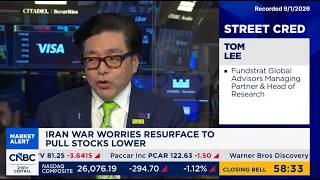
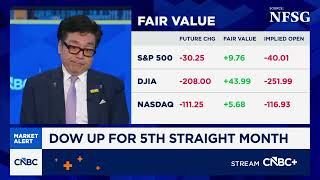
Fundstrat: No Evidence to Be Bearish Right Now
Audio Brief
Show transcript
This episode covers Mark Newton discussing the recent bullish reversal in the stock market. There are three key takeaways centering on market breadth, macroeconomic relationships, and tech sector concentration.
First, market breadth is a critical reversal signal. When fewer stocks hit new lows during an index struggle, it indicates a potential market bottom. Second, equities are moving inversely to macro indicators, rallying only after spikes in crude oil, the dollar, and treasury yields weakened. Finally, high concentration in top tech stocks does not automatically equal a bubble. Current valuations are firmly supported by strong earnings and massive investments in artificial intelligence.
Ultimately, evaluating these underlying fundamentals offers a reliable roadmap for current conditions. Tracking macro trends will help investors better time their entries and exits.
Episode Overview
- This episode of Milk Road Macro features Mark Newton, Head of Technical Strategy at Fundstrat Global Advisors, discussing the recent bullish reversal in the stock market.
- The conversation frames the market's recovery by analyzing technical indicators, macroeconomic factors, and sector-specific performance.
- It provides valuable insights for investors looking to understand the mechanics behind market bottoms and the ongoing strength in the technology sector.
Key Concepts
- Market Breadth as a Reversal Signal: A critical indicator of a market bottom is an improvement in market breadth. Specifically, when fewer stocks hit new lows even as the broader index struggles, it suggests underlying strength and a potential upcoming reversal.
- The Macroeconomic Inverse Relationship: The broader equity market often moves inversely to certain macroeconomic indicators. The sell-off early in the year was driven by spikes in crude oil, the US dollar, and treasury yields; conversely, the market rallied when these factors began to weaken.
- Concentration vs. Bubble: High concentration in the technology sector (like the "Mag 7") does not automatically indicate a market bubble. Historical context shows similar concentration in other eras, and current tech valuations are supported by strong earnings and massive capital expenditures in AI.
Quotes
- At 0:00 - "There literally is no evidence for why one would want to turn bearish here." - Sets a clear, definitive tone regarding the current technical and fundamental outlook for the market.
- At 1:49 - "We did see some evidence of breadth improvement right at the very lows where fewer stocks were hitting new low territory." - Explains a practical technical framework for identifying when a market trend is losing downward momentum.
- At 2:20 - "The entire macro reason for why stocks started to fall back in January/February was due to the fact that crude oil had started to spike rather dramatically." - Clarifies the cause-and-effect relationship between commodity price shocks and broad equity market sell-offs.
Takeaways
- Look beyond the major indices and track market breadth metrics, particularly the number of stocks making new lows, to better time potential market entries or exits.
- Incorporate intermarket analysis into your strategy by monitoring trends in crude oil, the US dollar, and treasury yields to anticipate equity market headwinds or tailwinds.
- Evaluate heavily concentrated sectors based on underlying fundamentals like earnings and capital expenditure rather than assuming concentration equals an impending crash.