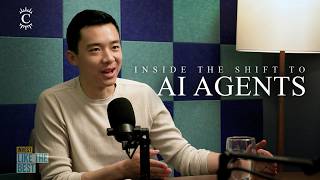
Finding the Next Figma, Wiz, & Stripe Before It's Obvious | Neil Mehta Interview

Audio Brief
Show transcript
This episode details Greenoaks founder Neil Mehta's investment philosophy, emphasizing craftsmanship, a Jaw Dropping Customer Experience, and a concentrated approach to identifying exceptional founders.
There are four key takeaways from this discussion.
First, prioritize creating a customer experience so exceptional it becomes your primary competitive moat. This often means appreciating craftsmanship over mere function.
Second, set unreasonable goals for your team and company. This mindset unlocks growth and performance that seems impossible by conventional standards.
Third, cultivate and trust your contrarian insights. Especially when met with strong disagreement, this is often where true outlier opportunities are found.
Fourth, view market crises and moments of extreme fear not as threats, but as rare opportunities to act on your highest conviction ideas.
A core tenet is the Jaw Dropping Customer Experience, or JDCE. This philosophy, inspired by a gunsmith grandfather, champions obsessive craftsmanship and quality, viewing company building as an artistic pursuit to create truly differentiated offerings.
Setting impossibly high standards and embracing a fast, occasionally chaotic pace is considered a competitive advantage. Greenoaks identifies founders with divergent thinking who see truths others miss, prioritizing those with a genuine belief their company's best days are still ahead.
The firm rejects broad coverage for a focused vital few strategy, developing deep prepared minds to act with speed and conviction. Their edge comes from differential insight, interpreting common information uniquely, especially during crises. This means recognizing value in traits like a founder's meticulous attention to detail, seeing them as signals of high standards.
This conviction based approach is tested and proven by making large, contrarian investments during extreme market stress. Examples include backing companies like Coupang, Navan, Rippling, and Carvana when facing severe challenges, trusting founder character and long term vision over immediate fear.
This unique investment discipline demonstrates the power of deep conviction, discerning founder traits, and acting decisively when others hesitate.
Episode Overview
- This episode details the investment philosophy of Greenoaks founder Neil Mehta, which centers on backing founders who are obsessed with craftsmanship and creating a "Jaw-Dropping Customer Experience" (JDCE).
- It explores Greenoaks' unique, concentrated investment strategy that rejects the broad-coverage, "private equity-ization" of venture capital in favor of developing deep conviction in a "vital few" companies.
- The discussion identifies the key traits of exceptional founders, such as divergent thinking, unreasonable expectations, and a team-wide belief that their best days are ahead.
- The power of this conviction-based approach is demonstrated through case studies of investing in companies like Coupang, Rippling, Navan, and Carvana during moments of extreme market crisis and fear.
Key Concepts
- Jaw-Dropping Customer Experience (JDCE): The core investment thesis is to find companies that create a customer experience so delightful and differentiated that it breaks conventional trade-offs and builds a durable competitive advantage.
- Craftsmanship Over Function: Inspired by his gunsmith grandfather, this principle involves appreciating and investing in the artistry, quality, and obsessive detail founders put into their products, viewing company-building as a creative act akin to an artist painting a masterpiece.
- Unreasonable Expectations as an Advantage: The belief that setting impossibly high standards and moving at a chaotic pace, where things occasionally break, is a necessary and healthy state for an ambitious, high-growth company.
- The "Vital Few" vs. The "Trivial Many": Greenoaks' strategy is to forgo the industry trend of broad coverage and instead focus intensely on a small number of opportunities, allowing them to build a deep "prepared mind" and act with speed and conviction.
- Differential Insight: The firm's competitive edge comes not from having more information, but from developing a unique perspective that allows them to interpret commonly available information differently from the market, especially during crises.
- The "Best Days Ahead" Metric: The single most important indicator of a company's health is the percentage of employees who genuinely believe the company's best days are in the future, a metric that surpasses traditional financial indicators.
- The Divergent Founder Archetype: Great founders are often contrarian thinkers who see something the world vehemently disagrees with but are ultimately right. They are often micromanagers, in the weeds, and quick to part with under-performers, traits that signal high standards.
- Conviction in Crisis: The philosophy is tested and proven by making large, contrarian investments when a company is under extreme stress (e.g., revenue dropping to zero, an industry-wide bank run, or a public stock collapse), based on a deep belief in the founder's character and long-term vision.
Quotes
Top 17 notable quotes with ABSOLUTE TIMESTAMPS and context from across the podcast. Each quote MUST be its own bullet point.
CRITICAL: Spread quotes across the ENTIRE video duration - select quotes from early segments, middle segments, and late segments to ensure comprehensive coverage of the full episode.
- At 0:05 - "Having unreasonable expectations is a competitive advantage." - Neil Mehta shares a core tenet of his investment philosophy.
- At 0:15 - "It is not complicated. It is the discipline of only looking for those types of businesses and those types of founders." - Mehta explains that his strategy is less about complex formulas and more about rigorous, consistent focus.
- At 3:15 - "It would be about the design and the craftsmanship that went into each parcel on the gun." - Mehta describes how his grandfather, a gunsmith, valued the artistry of his products over their function, instilling in Mehta an appreciation for craftsmanship.
- At 4:40 - "A company is... just an artist painting a painting." - Mehta draws a direct parallel between the creative, focused work of an artist and the process of building a truly great, generational company.
- At 5:34 - "JDCE stands for jaw-dropping customer experience." - Mehta introduces the core acronym that defines the type of company he looks to invest in.
- At 8:15 - "[Bom Kim's] view was actually it's consistent, reliable, fast delivery... You get the stuff you ordered on time, usually within 12 to 24 hours." - Mehta details the core insight behind Coupang's "Rocket" delivery service.
- At 11:31 - "If everything's under control, you're not going fast enough." - Mehta quotes Mario Andretti to explain why a state of high growth, even if it feels chaotic, is a healthy state for an ambitious company.
- At 28:13 - "Are your best days ahead of you or behind you? What would the proportion of people say?" - Mehta on the single most important question he tries to answer when evaluating a company's culture and momentum.
- At 29:04 - "Do they have divergent thinking that allows them to see something in the world and in their business that other people would vehemently disagree with but is right?" - On a key characteristic he looks for in exceptional founders.
- At 32:39 - "The private equity-ization of our industry." - Describing the trend in venture capital towards a large-scale, matrixed, coverage-based model that Greenoaks actively avoids.
- At 37:28 - "Some of those characteristics are exactly what we look for in a founder. We like micromanagers. We like people that are in the weeds. We like people that fire fast." - Explaining that traits often viewed as negative can be strong positive signals of a founder's high standards.
- At 62:58 - “We have got much better—not a little better, much better—at separating the vital few from the trivial many.” - Explaining the single biggest improvement in Greenoaks' investment craft.
- At 63:38 - “Our favorite combination is when you have the same speed and the same information, but you have differential insight.” - Describing Greenoaks' core competitive advantage in interpreting information.
- At 65:36 - “I think you should be aggressive in capturing flow share, and we’ll write an unlimited number up to $500 million.” - Recounting his offer to TripActions (Navan) just one week after their revenue went to zero during the COVID-19 pandemic.
- At 67:32 - “He called me because he wanted to make sure that on Monday morning all of his customers' money, his customers weren't in trouble.” - Highlighting Rippling CEO Parker Conrad's intense customer-centricity during the SVB crisis.
- At 74:27 - “He didn't talk at all about himself... He was talking about his team. He was talking about what it's like for employees... to have their kids go to school and hear that their parents' company's going bankrupt.” - Describing his conviction in Carvana's CEO, who was more concerned for his team than his own public image.
- At 1:03:36 - “Have some class. Know that you have teammates that helped you score that goal. Know that you have a coach that trained you. You're better than that.” - Recalling a powerful, lifelong lesson on humility he received as a teenager.
Takeaways
- Prioritize creating a customer experience so exceptional that it becomes your primary competitive moat.
- Set "unreasonable" goals for your team and company; this mindset can unlock growth and performance that seems impossible by conventional standards.
- Cultivate and trust your contrarian insights, especially when they are met with strong disagreement, as this is often where true outlier opportunities are found.
- Regularly assess your team's forward-looking optimism, as a genuine belief in the future is a more vital sign of company health than any short-term financial metric.
- View market crises and moments of extreme fear not as threats, but as rare opportunities to act on your highest-conviction ideas.
- Approach your work with the obsessive focus and attention to detail of a craftsman, aiming to create something of enduring quality and beauty.
- Concentrate your time and capital on the "vital few" opportunities where you can develop a unique edge, rather than spreading yourself thin by trying to track everything.
- Re-evaluate leadership traits often seen as negative, such as being a micromanager, as they can be indicators of exceptionally high standards and a deep commitment to excellence.
- When evaluating leaders or partners, prioritize character and how they treat their customers and team during hardship over their public image.
- Practice humility and consistently acknowledge the contributions of your team to foster a culture of mutual respect and long-term success.