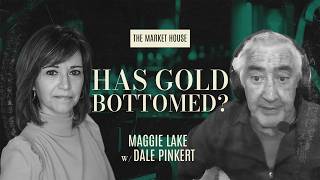
Fed Day Focus | With Dale Pinkert
Audio Brief
Show transcript
This episode covers the highly volatile, disorderly market conditions following the Federal Reserve's interest rate decision, alongside the systemic risks emerging from shifting currency and bond markets.
There are three key takeaways. First, central bank decisions are triggering extreme, two-sided price action designed to hunt stop-loss orders for both bulls and bears. Second, a spike in the ten-year treasury yield could force the Fed to implement yield curve control, effectively sacrificing the US dollar. Third, navigating this high-volatility environment requires transitioning from predictive forecasting to reactive execution while ruthlessly pruning watchlists.
The recent market action demonstrates how rapid, successive false moves can trap both buyers and short-sellers immediately after major announcements. Instead of chasing these volatile spikes, experienced traders wait for the stop-hunting phase to clear before taking action. Waiting for established market structures to form prevents unnecessary capital destruction during central bank events.
Macroeconomic pressures are also intensifying as a potential bond market disruption looms if the ten-year yield breaches critical thresholds. To keep government borrowing costs manageable, policymakers may peg interest rates, which would lead to significant dollar debasement. This risk is compounded by technical divergences in the currency space, where a sudden unwind of the Japanese Yen carry trade could drain global liquidity.
To manage risk in this environment, market participants should implement a strict strategy of probing positions, protecting capital at break-even, and systematically taking partial profits. Simplifying watchlists to a small number of key instruments ensures execution quality does not suffer from cognitive overload. Ultimately, profitability in a chaotic market relies on reacting to actual price movements rather than predicting macroeconomic outcomes.
Navigating today's disorderly markets requires extreme capital preservation, a simplified trading focus, and the discipline to react rather than forecast.
Episode Overview
- This episode examines the chaotic, "disorderly" market conditions following the Federal Reserve's interest rate decision, where highly volatile price action trapped both bulls and bears.
- The discussion highlights the rising risk of Yield Curve Control (YCC) and its implications for U.S. dollar debasement, as well as the systemic dangers tied to a potential unwind of the Japanese Yen carry trade.
- The narrative shifts from macroeconomic and currency divergences to practical technical setups in precious metals, agricultural commodities, and historical stock analogs.
- This episode serves as an essential guide for traders looking to navigate high-volatility regimes, manage psychological over-extension, and pivot from predictive forecasting to reactive execution.
Key Concepts
- Market Disorder and Stop Hunting: Central bank announcements frequently trigger extreme, two-sided volatility designed to run stop-loss orders on both long and short positions before a true direction is established.
- Yield Curve Control (YCC) and Dollar Debasement: If the 10-year Treasury yield spikes toward critical thresholds, the Fed may be forced to peg interest rates to keep government borrowing costs manageable, effectively sacrificing the purchasing power of the U.S. Dollar.
- The Yen Carry Trade Unwind: Sharp strengthening in the Japanese Yen (JPY) and technical divergences in USD/JPY can signal the unwind of global carry trades, historically leading to violent liquidity drains across risk assets.
- Macro vs. Corrective Currency Trends: Short-term pullbacks in the Dollar Index (DXY) must be distinguished from structural trend reversals; major support levels (such as 99) define whether the broader macro uptrend remains intact.
- Historical Chart Analogs: Parabolic price moves in modern sectors (like semiconductors) often replicate historical bubble-and-bust patterns seen in other asset classes, serving as a warning for mean-reversion.
- Alternative Cycle Timing: Utilizing non-traditional markers, such as seasonal patterns or cyclical turning points, can help traders identify when prolonged corrections in assets like Gold are nearing exhaustion.
- Agricultural "Rain Breaks": Weather-driven price dips in structurally supply-constrained agricultural commodities represent high-probability Fibonacci retracement setups rather than structural breakdowns.
- The Danger of Watchlist Overload: Tracking too many financial instruments dilutes execution quality. Effective risk management requires keeping a focused, memorable list of active positions.
Quotes
- At 0:41 - "What was hunted today are stops. Forex stop hunter. There were stops hunted on both sides of the market... Kids, don't try this at home." - Explaining the high-risk, volatile environment immediately following Fed announcements that regularly wipes out short-term retail traders.
- At 2:29 - "I would say that it's close to disorderly... Bears finally got their breakdown, and if they were brave enough to sit through this rally, this was one heck of a rip after a breakdown." - Describing how the market trapped both short-sellers and buyers with rapid, successive false moves.
- At 11:39 - "Some of my intelligence gathering is coming up with like a 5.13% number... on the 10-year yield... which means we could have like a bond market crash, a confidence crisis." - Warning of severe, systemic consequences if key Treasury yield levels are breached.
- At 12:54 - "How do people—what are the implications of that? It's inflationary, it's debasing the currency... the dollar will be the sacrificial lamb on yield curve control." - Outlining the long-term macroeconomic consequences of central bank intervention in the bond market.
- At 18:39 - "In '24 was when we had the last carry trade unwind and the Yen did this—US Dollar/Yen—and the market sold off. And that was in August, and we're only a few days away from August. So it's possible that we get a pretty good hit in the Yen along with Dollar weakness." - Highlighting the seasonal risk of carry trade liquidations and their correlation with broader market selloffs.
- At 20:34 - "If you can't remember the last trade of all the instruments that you are paying attention to, you're in too many instruments." - Emphasizing the cognitive limits of traders and the necessity of keeping a tight, highly manageable watchlist.
- At 22:07 - "They didn't book profits... they're breaking the Bible of partials: probe, protect, partials, persistence. And patience." - Outlining a disciplined risk-management framework based on scaling out of positions systematically.
- At 23:02 - "Why not just be able to react to the reaction, rather than trying to predict it like a carnival barker?" - Advocating for a reactive trading philosophy over speculative forecasting during highly volatile market events.
Takeaways
- React Instead of Predicting: Avoid chasing immediate breakout moves directly after major news events like Fed rate decisions; instead, wait for the initial volatility to settle and react to the established structure.
- Implement the "Probe, Protect, Partial" Rule: Manage risk in highly volatile regimes by establishing small initial positions, moving stops to break-even to protect capital, and systematically scaling out of profitable trades.
- Prune Your Watchlist for Execution Quality: Simplify your active monitors down to a small, highly trackable list of assets to ensure your psychological capacity is not overwhelmed.