Extended Cut: Carey Peak of South Florida's Alt-Rockers Dore Soul/C60s - Unfiltered

Audio Brief
Show transcript
In this conversation, Carey Peak chronicles his remarkable musical journey, from his family's direct connection to Buddy Holly's first recordings, through the South Florida music scene of the 1980s and 90s. The episode explores the formation and evolution of his alternative band Dori Soul, its complex rivalry with a rising Marilyn Manson, and the ultimate collapse of his next band The C-60s' major label deal, highlighting themes of artistic integrity and industry volatility.
There are three key takeaways from this discussion.
First, a unique family connection to Buddy Holly and the dramatic evolution of the South Florida music scene.
Second, Dori Soul's journey of artistic integrity, overcoming personal adversity, and navigating a contentious rivalry with Marilyn Manson.
Third, the extreme volatility of the music industry, where major label opportunities can emerge and vanish due to external forces.
Carey Peak's family history reveals a direct link to rock and roll’s origins, with Buddy Holly’s first recordings made in his grandfather’s living room. This early exposure shaped his unique artistic vision, which diverged sharply from the dominant 1980s hair metal scene in South Florida. The alternative explosion of the early 90s demanded evolution, and Carey embraced this shift, actively rejecting prevalent trends to forge an authentic new sound.
Dori Soul faced immense challenges, including a year-long search for a vocalist and Carey’s near-fatal car accident, which compelled him to become the frontman. The band’s complex relationship with Marilyn Manson, managed by John Tovar, led to suspicions of sabotage, with Dori Soul eventually employing provocative tactics to escape their contract. Their controversial debut album title and collaboration with Saigon Kick’s Matt Kramer highlighted their uncompromising artistic vision.
Carey’s next band, The C-60s, secured a major label deal with a DreamWorks imprint after their first show, recording at legendary Criteria Studios. Yet, corporate restructuring and the industry upheaval following Nirvana’s Nevermind caused their promising deal to collapse overnight. This experience highlights the extreme fragility of music careers, where external forces can abruptly derail years of effort, demanding immense resilience from artists.
Carey Peak’s story is a testament to perseverance, artistic integrity, and the lasting impact of the South Florida music scene amidst an ever-changing industry.
Episode Overview
- Carey Peak recounts his incredible musical journey, from his family's direct connection to Buddy Holly's first recordings to his formative years in the 1980s South Florida music scene.
- The episode details the formation and evolution of his influential alternative band, Dori Soul, including a near-fatal car accident, their complex rivalry with a rising Marilyn Manson, and navigating the industry's shift away from hair metal.
- Carey shares stories of his next band, The C-60s, getting signed to a major label imprint after their very first show, only to have the deal collapse due to industry politics.
- The conversation explores themes of artistic integrity, perseverance through severe adversity, the volatile nature of the music business, and the lasting impact of the South Florida scene.
Key Concepts
- Buddy Holly's First Recordings: Carey's father was best friends with Buddy Holly, and the rock and roll pioneer's very first recordings were made in Carey's grandfather's living room, featuring the two playing bluegrass.
- South Florida Music Scene Transition: The podcast chronicles the dramatic shift from the 1980s hair metal dominance to the alternative rock explosion of the early 1990s, where bands had to adapt or disappear.
- The Dori Soul (D'ginko) Saga: This includes the year-long, frustrating search for a non-hair metal singer; a life-altering car accident that forced Carey into the frontman role; and the band's reformation.
- Rivalry with Marilyn Manson: A significant portion of the narrative covers the band's relationship with Marilyn Manson and their shared manager, John Tovar, including suspicions of sabotage that culminated in the band creating provocative flyers to escape their contract.
- The "Blowjob" Album: The story behind the band's controversially titled first album, which was named after an ironically titled photograph, and the comically failed theatrical stunt at their release party.
- Saigon Kick Connection: An anecdote reveals how Matt Kramer, lead singer of Saigon Kick, quit his band at its peak out of frustration with their "ballad band" image and became an admirer and collaborator with Dori Soul.
- The C-60s' Major Label Deal: The experience of forming a new band, getting signed by Matt Mahaffey of Self to a DreamWorks Records imprint after their first gig, and recording their debut album live at the legendary Criteria Studios.
- Industry Volatility: The narrative highlights the fragility of a music career, showing how the C-60s' promising deal collapsed due to corporate restructuring and how Nirvana's Nevermind single-handedly caused other bands' albums to be shelved.
Quotes
- At 1:58 - "The very first recordings of Buddy Holly were in my grandfather's living room of my dad and Buddy Holly playing old bluegrass songs." - Carey reveals his family's direct connection to the earliest recordings of Buddy Holly.
- At 25:26 - "No guitar players wanted to play new wave... because you couldn't shred." - He describes the guitar culture of the 80s, where technical skill in the hair metal style was so dominant that other genres struggled to find musicians.
- At 30:35 - "I do not want to write hair metal songs. I don't want to do my hair that way." - After discovering bands like Jane's Addiction and the Pixies, Carey describes his definitive rejection of the hair metal aesthetic and sound.
- At 47:44 - "What's in the lunch pail?' And he's like, 'I don't know, let's see.' And he opens it up and he had cassettes." - Describing his first memorable encounter with a then-unknown Brian Warner (Marilyn Manson), who was carrying his band's demo tapes in a lunchbox.
- At 54:26 - "one whole year, 40 singers later, we still hadn't found a singer." - This quote emphasizes the immense difficulty the band faced in finding the right frontman in a scene dominated by a different style.
- At 1:00:21 - "I shattered my three lower vertebrae, I broke my pelvis, I broke my femur in two different spots." - Carey details the severe, life-threatening injuries he sustained in a car crash.
- At 1:05:01 - "'You know what? I'm just gonna keep writing on my four-track in my room. Fuck you, I'm gonna do it.'" - Carey expresses his defiant motivation to continue pursuing music on his own after his bandmates moved on while he was recovering.
- At 1:15:37 - "it was decided that we were going to find a bass player, and I was going to be the frontman." - Carey explains the pivotal decision that restructured the band after they reformed, moving him from musician to lead vocalist.
- At 84:24 - "You either adapted or or you were done." - Peak explains the stark reality for bands caught in the transition between hair metal and alternative rock in the late 1980s and early 1990s.
- At 87:00 - "We started to get the idea that Brian was controlling John Tovar in order to control the other bands so Manson could become like the big thing." - Peak describes his band's growing suspicion that Marilyn Manson was manipulating their mutual manager to hold back competing local acts.
- At 89:35 - "Carrie, this is not a Dori Soul showcase. Trent Reznor's not going to be there anyway... He's only coming to see Manson." - The band's manager confirms their fears by admitting he deliberately booked them so Trent Reznor wouldn't see them.
- At 97:57 - "She turned it over and it says 'Blowjob'. And we're like, 'That's it. That is gonna be the album cover. That's gonna be the name of the album.'" - Peak explains the origin of their first album's controversial title, which came from a photograph of an elderly woman under a hairdryer.
- At 101:21 - "He goes, 'I see you got stage dick.'" - Carey Peak recounts Marilyn Manson's blunt and humorous comment to him immediately after his band's ill-fated on-stage stunt at their album release party.
- At 113:00 - "Matt's mortified that his face and voice are now known as a ballad band." - Peak emphasizes Saigon Kick frontman Matt Kramer's frustration with the band's public image after the success of their ballad.
- At 113:57 - "See, I feel like Saigon Kick could have been more like this." - Matt Kramer expresses that Dory Soul's sound was closer to the musical direction he had envisioned for his own band, Saigon Kick.
- At 115:16 - "right before their album was supposed to be released, Nevermind came out. So Atlantic shelved their album, canceled their deal, sent 'em home." - Peak recounts how Nirvana's success caused another local band's major label debut to be abruptly cancelled.
- At 145:33 - "You guys are f---ing awesome." - Carey Peak quoting Matt Mahaffey of the band Self, who heard The C-60's during soundcheck at their first-ever show and immediately wanted to sign them.
- At 152:08 - "All of a sudden what was supposed to be a really good record deal was now like an, eh… it's not gonna be international distribution, the budget's not there." - Carey Peak on the collapse of their record deal due to industry shakeups, just as their album was being released.
- At 163:32 - "I crashed and burned. I went through a good four or five years of, um, like depression and medicating, shall we say, and a very hard time." - Carey Peak opening up about the difficult period he went through after his band's major label opportunity fell apart.
- At 172:48 - "December 8th at Tarpon River Brewing Company in downtown Fort Lauderdale, Dorisoul will be doing a reunion at the Dan Hosker Music Continuum." - Carey Peak announcing the official reunion of his first major band, Dorisoul.
Takeaways
- Embrace eclectic influences from your upbringing to cultivate a unique artistic identity that stands out.
- Rejecting popular trends to pursue an authentic vision may be difficult initially but can lead to creating more meaningful and enduring art.
- A severe crisis can serve as an unexpected catalyst for positive change, forcing you to re-evaluate your path and take on new roles.
- When faced with a roadblock, such as finding the right collaborator, take the initiative to develop the needed skills yourself.
- Be aware that in any competitive field, allies may have conflicting priorities; it's crucial to advocate for your own interests.
- Sometimes a bold, unconventional strategy is necessary to extract yourself from a situation that is holding you back.
- Massive commercial success can be a trap, potentially branding an artist with an image they do not want.
- The music industry is highly volatile; external forces entirely beyond an artist's control can make or break a career overnight.
- A seemingly perfect opportunity, like a major record deal, can dissolve in an instant due to corporate politics and business restructuring.
- Overcoming career-ending disappointment and personal struggles requires immense resilience, but finding a way back to your passion is possible.
- The local music community is an interconnected web where rivalries, friendships, and chance encounters can shape careers for years to come.
- Creative work from the past can have a lasting legacy, creating opportunities for reunion and reconnection decades later.
More from Florida Sound Archive

Dino’s Journey: Three Decades of Experimental Sounds and Visual Art
Oct 28, 2025
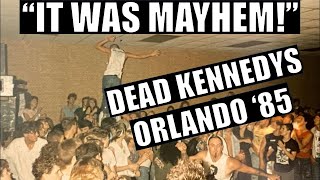
Jim Faherty on the Infamous Dead Kennedys 1985 Orlando Show
Feb 06, 2025

The untold story of Melbourne, FL 80s New Wave/Surf Punk band, Locals Only
Apr 03, 2024

Extended Cut! The untold story of 90s South Florida concert promoter, Rabbi
Mar 26, 2024