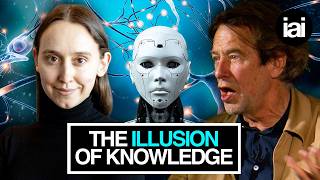
Evidence in the Dock | Nick Enfield, Timothy Williamson, Genia Schönbaumsfeld
Audio Brief
Show transcript
Svenja Schonbaumsfeld warns that if we abandon the objectivity of evidence, tyrants can easily use fabricated stories to substantiate show trials. On this episode, she joins philosophers Nick Enfield and Timothy Williamson to explore the complex relationship between objective truth, language, and evidence. By the end of this listen, you will learn how to protect democratic structures from manufactured narratives and why linguistic differences do not destroy objective facts.
Genuine evidence is much simpler than you think. We often imagine evidence as highly specialized scientific data or complex legal arguments. But Timothy Williamson demystifies this by explaining that evidence is really just any form of knowledge that bears on a relevant issue. It is a practical, everyday guide we use to navigate the world, establish objective reality, and make informed decisions.
You live in a physical world, but you speak in truth. It is easy to confuse the two, but reality refers to the physical world itself, like atoms, trees, and mountains. Truth, however, is a semantic property, meaning it is a quality of the linguistic propositions and sentences we use to describe that physical world. We do not walk around in a physical true world, but rather we make true and false statements about a real, physical world.
Your words filter reality without isolating you from it. Every time we communicate facts, we are forced to use language. Nick Enfield explains that this process acts as a filter, inherently selecting certain details while omitting others. Far from cutting us off from reality, this filtering is the primary conceptual tool that allows humans to structure and make sense of their subjective experiences.
Losing our grip on facts opens the door to authoritarian control. Denying the objectivity of evidence has severe political and social consequences. Without a shared standard of objective evidence, such as eyewitness testimony or physical proof, those in power can fabricate narratives completely unchallenged. This collapse of shared standards threatens democratic structures and leads directly to authoritarian control.
Conspiracy theories exploit the messy nature of real world evidence by prioritizing minor errant data. At the same time, they dismiss massive bodies of counter evidence as part of an official cover up. This allows theorists to foster radical skepticism toward institutional authority while remaining completely uncritical of their own claims.
Objective evidence does not require universal agreement. Many people believe a piece of information is only valid if everyone agrees on it. But Timothy Williamson emphasizes that you can possess genuine evidence of a fact even if others obstinately deny it. If we required absolute, universal agreement to establish something as evidence, it would be impossible to claim we have any evidence at all.
Power decides the boundary lines of our vague words. Vague terms, like deciding whether a group of people is a gathering or a festival, have borderline cases where simple true or false categories seem to blur. The resolution of these borderline cases in real life is rarely about pure linguistics. Instead, these boundaries are often decided by legal authority and power dynamics.
Remember that while an event can have multiple valid interpretations of its significance, this does not alter the fact that there is a real difference between true and false. Evaluate alternative claims by demanding they meet the same rigorous standards of proof they ask of everyone else.
Episode Overview
- Philosophers Nick Enfield, Timothy Williamson, and Svenja Schonbaumsfeld explore the complex relationship between objective truth, language, and evidence.
- The discussion covers how language acts as both a selective filter and a tool for structuring human experience, and why linguistic vagueness does not undermine the existence of objective reality.
- The panel analyzes the social dimensions of truth, the mechanics of conspiracy theories, and how the denial of objective standards of evidence threatens democratic structures.
- This conversation is ideal for anyone interested in epistemology, linguistics, political philosophy, and understanding how to navigate the post-truth era.
Key Concepts
- Evidence as a Guide to Truth: Evidence is not merely highly specialized scientific or legal data; it is any form of knowledge that bears on a relevant issue. It serves as a practical, everyday guide to establishing objective reality and making informed decisions.
- The Distinction Between Truth and Reality: Reality refers to the physical world itself (such as atoms, mountains, and trees), whereas truth is a semantic property of the linguistic propositions used to describe that world. We do not have a physical "true world," but rather true and false statements about a real world.
- Language as a Selective Filter and Conceptual Tool: When we communicate facts, we must use language. This process acts as a filter that inherently selects certain details while omitting others. Rather than isolating us from reality, language is the primary tool that allows us to conceptualize and make sense of subjective experiences.
- The Danger of Abandoning Objective Evidence: Denying the objectivity of evidence has severe political and social consequences. Without a shared standard of objective evidence (such as physical proof or eyewitness testimony), those in power can fabricate narratives unchallenged, leading to authoritarian control.
- The Epistemology of Conspiracy Theories: Conspiracy theories exploit the inherent messiness of evidence by prioritizing minor "errant data" while dismissing massive bodies of counter-evidence as part of an official cover-up. This allows them to foster radical skepticism toward institutional authority while remaining completely uncritical of their own claims.
- Objective Evidence vs. Universal Agreement: The validity of objective evidence does not require universal consensus. A person can possess genuine evidence of a fact even if others obstinately deny it; requiring absolute agreement to establish something as evidence would make it impossible to claim any evidence at all.
- The Logic of Vagueness: Vague terms (like "gathering" versus "festival") have borderline cases where standard true/false dichotomies seem to blur. The resolution of these borderline cases in real life is often decided by legal authority and power dynamics rather than pure linguistics.
Quotes
- At 3:59 - "My interest in all of this is the role of language as a kind of filter... Given the fact that when we are trying to explain why we think something is the case, we have to go through language to get there." - Nick Enfield, explaining why language cannot be separated from our pursuit of truth as it is the medium through which all shared facts must be processed.
- At 6:52 - "Evidence isn't something that's always very fancy, like scientific evidence or legal evidence. It's really just anything that you know that in some way bears on the relevant issue." - Timothy Williamson, demystifying the concept of evidence and framing it as a practical tool used constantly to navigate the world.
- At 9:04 - "I think it's a mistake to think that if facts are context-dependent... that it implies that we can't work out what the evidence is, or that it's not objective." - Svenja Schonbaumsfeld, defending the compatibility of objectivity and context.
- At 10:10 - "If we give up on the idea that there is something that it is for evidence to be objective, then tyrants could just use any fabricated story to basically substantiate their show trials." - Svenja Schonbaumsfeld, highlighting the critical political and ethical necessity of defending objective evidence against post-truth skepticism.
- At 12:18 - "If by interpretation you mean some kind of account of what the significance of this is, then for sure there are always many different interpretations... but that doesn't alter the fact that there really is a difference between true and false." - Timothy Williamson, distinguishing between having multiple valid perspectives on the meaning of an event and the objective reality of the event itself.
- At 19:49 - "We should not suppose that only if a view from nowhere is possible, can there be such a thing as truth." - Timothy Williamson, explaining that objective truth does not require us to achieve an impossible, entirely detached perspective outside of our human vantage point.
- At 31:02 - "You can't make it a condition on something being genuine evidence that you're always going to be able to secure agreement on it amongst everybody." - Timothy Williamson, emphasizing that the existence of objective evidence is independent of whether a committed skeptic can be persuaded to accept it.
Takeaways
- Distinguish between multiple valid interpretations of an event's meaning and the objective, factual reality of the event itself.
- Maintain a commitment to shared, objective standards of evidence to protect social and political institutions from manufactured narratives.
- Recognize that linguistic vagueness or context-dependence does not mean objective truth does not exist; avoid letting semantic differences slide into total skepticism.
- Evaluate conspiracy theories by assessing whether they apply the same rigorous standards of proof to their own alternative claims as they demand from official accounts.