EU Strikes Deal With India in Shift From U.S. | Prof G Markets
Audio Brief
Show transcript
This episode covers the shifting geopolitical landscape driven by new trade alliances, a significant regulatory shakeup in the healthcare sector, and the communication challenges facing AI safety advocates.
There are three key takeaways from this discussion. First, global trade is moving toward minilateralism as middle powers hedge against U.S. unpredictability. Second, a crackdown on Medicare Advantage rates highlights the extreme volatility of government dependent business models. Third, complex policy warnings regarding AI are failing to reach the public due to a disconnect in communication mediums.
Let’s look at these in more detail.
The global trade architecture is undergoing a fundamental rerouting. As nations like India and members of the EU finalize historic trade deals, they are effectively bypassing Washington. This trend, known as minilateralism, signals that middle powers are no longer waiting for U.S. leadership. Instead, they are actively securing supply chains and export markets through smaller, bilateral agreements to insulate themselves from American protectionism and tariff risks. Investors should monitor equities in these regions, as they may benefit from increased trade volume that specifically excludes U.S. friction.
In the healthcare sector, a massive sell-off in major stocks like UnitedHealth and CVS was triggered by the administration's decision to keep Medicare Advantage rates flat. With costs rising by four to six percent, a rate increase of less than one percent forces insurers to cut supplemental benefits to maintain margins. This regulatory squeeze is also a targeted attack on risk coding, where the government believes insurers have been aggressively up-coding healthy patients to extract higher payments. This illustrates the fragility of businesses reliant on government pricing, where stroke of the pen risks can instantly alter profitability.
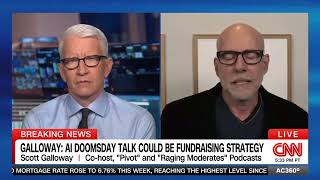
Finally, the discussion critiques the strategy of AI safety leaders like Anthropic CEO Dario Amodei. While attempting to warn against catastrophic risks like bio-weapons, Amodei relies on dense, academic essays that fail to penetrate the modern attention economy. This creates a dangerous asymmetry where thoughtful warnings are ignored by the general public, while sensationalist content dominates social media. For effective policy advocacy, the medium is as critical as the message, and leaders must prioritize accessible formats to ensure their warnings are actually heard.
This conversation underscores that whether in trade, healthcare, or technology, the ability to adapt to shifting regulatory and communication landscapes is the primary driver of success.
Episode Overview
- This episode examines the shifting geopolitical landscape as the EU and India finalize a historic trade deal, signaling a strategic move by "middle powers" to hedge against U.S. unpredictability and protectionism.
- It analyzes a massive sell-off in major healthcare stocks (UnitedHealth, CVS, Humana) triggered by the administration's surprise decision to keep Medicare Advantage rates flat despite rising costs.
- The discussion concludes with a critique of Anthropic CEO Dario Amodei’s recent 38-page essay on AI risks, debating whether his dense, academic approach is failing to reach the public effectively compared to social media-savvy alarmists.
Key Concepts
- The Rise of "Minilateralism": As global trust in U.S. economic leadership wanes due to protectionist policies, nations are shifting away from broad multilateralism (like the WTO) toward "minilateralism." This involves smaller, bilateral deals between middle powers—such as the EU and India or Canada and China—that deliberately bypass Washington to secure supply chains and export markets.
- The Medicare Pricing Squeeze: The stock crash in the healthcare sector illustrates the fragility of businesses dependent on government pricing. Medicare Advantage rates were increased by only 0.09% against an inflation/cost trend of 4-6%. When the government (the payer) refuses to match rising utilization costs, insurers are forced to cut supplemental benefits (dental, vision) to maintain margins, directly impacting consumer quality of care.
- Risk Adjustment Arbitrage: A critical but technical driver of the healthcare crackdown is "risk coding." Insurers use multipliers based on a patient's health status (e.g., diabetes increases the payout multiplier). The government believes insurers have been aggressively "up-coding" healthy patients to look sicker to extract higher payments; the flat rate increase is effectively a regulatory tool to squeeze out this perceived fraud.
- The "Medium is the Message" in AI Safety: While AI leaders like Anthropic’s CEO are calling for regulation to prevent catastrophic risks (bio-weapons, authoritarian control), they are communicating via dense, lengthy text essays. This creates an asymmetry where thoughtful warnings are ignored by the general public, while sensationalist "doomer" content wins the attention economy through short-form video and social media.
Quotes
- At 6:36 - "These big global trade webs that largely flowed through the United States... are being replaced by these more localized, more bilateral agreements and arrangements that increasingly are going to flow outside of Washington." - Explaining how the global trade architecture is fundamentally physically rerouting to exclude the U.S. due to tariff risks.
- At 11:38 - "If the health insurers are getting hit on rate and revenue, their levers are benefits. That's the main lever right there." - Clarifying the inevitable downstream effect of government rate suppression: insurers won't absorb the loss; they will pass it to the consumer by reducing coverage.
- At 16:58 - "You're seeing the most aggressive risk-coders, like UnitedHealth, seeing the biggest impact today... The most surprising impact is what it's done to risk adjustment and tightening it, making it less difficult to be aggressive." - Explaining that the market crash isn't just about inflation, but a targeted regulatory attack on how insurers calculate patient risk to maximize revenue.
- At 15:52 - "The problem isn't that people aren't listening to you. The problem is that people don't even hear you. You're not even in the same room as them." - Highlighting that effective leadership and policy advocacy require meeting the audience on their preferred platforms (video/social) rather than relying on traditional intellectual formats.
Takeaways
- Monitor "Middle Power" equities and trade indices (like Europe and India) as they may benefit from increased trade volume that specifically excludes U.S. tariff friction.
- Evaluate healthcare investments by their exposure to government pricing models; companies reliant on Medicare/Medicaid are subject to sudden political "stroke of the pen" risks that commercial insurers are not.
- When advocating for complex policy or regulation (like AI safety), prioritize accessible formats (video, visual data) over academic text to ensure your message competes effectively in the modern attention economy.