Episode 2.17.2: Supplemental-Paul Dirac, The Magician

Audio Brief
Show transcript
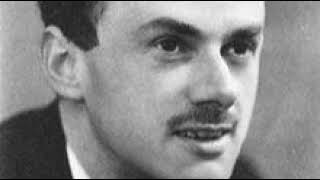
This episode covers theoretical physicist Paul Dirac, profiling his unique "magician" genius and his profound impact on modern physics.
There are four key takeaways from this conversation.
First, trust in mathematical elegance can lead to profound discoveries. Dirac's belief in his beautiful equation, which unified quantum mechanics and special relativity, led him to predict the existence of antimatter. Specifically, his relativistic equation for the electron naturally suggested negative energy states, from which he theorized the positron.
Second, purely theoretical work can have immense predictive power. Dirac proposed the positron in 1931. It was experimentally discovered by Carl Anderson in 1932, a remarkably swift validation known as a "miracle year" in physics.
Third, genius manifests in diverse forms. Dirac exemplified a "magician" type of genius, making creative leaps so profound that even his brilliant peers struggled to comprehend his intuitive thought process. His insights were often non-obvious and deeply original.
Finally, a great thinker's influence often extends in unexpected ways, planting seeds for future breakthroughs. Dirac's ideas on the least action principle directly inspired Richard Feynman's path integrals. He also proposed a nascent version of string theory in 1955, showcasing an enduring and often unforeseen legacy.
This episode highlights Dirac's singular intellect and his monumental, lasting contributions to our understanding of the universe.
Episode Overview
- The podcast profiles theoretical physicist Paul Dirac, framing his unique, counter-intuitive genius as that of a "magician" rather than an "ordinary" brilliant mind.
- It chronicles his rapid ascent in the 1920s and 30s, culminating in the development of the Dirac equation, which unified quantum mechanics and special relativity.
- A central focus is his stunningly accurate prediction of antimatter (the positron), which was derived from his elegant equation and experimentally confirmed within 18 months.
- The episode explores Dirac's intensely logical and literal personality through anecdotes, and touches on his personal beliefs, including his staunch atheism.
- It concludes by examining the limits of his creative peak and his lasting, often unforeseen, legacy on figures like Richard Feynman and the earliest concepts of string theory.
Key Concepts
- "Magician" Genius: The podcast categorizes Dirac as a rare "magician" genius, whose creative leaps were so profound and non-obvious that even his brilliant peers could not fathom his thought process.
- The Dirac Equation and Antimatter: Dirac's most famous achievement was his relativistic equation for the electron. To solve its prediction of negative energy states, he proposed the existence of a corresponding anti-particle, the "anti-electron" or positron.
- Rapid Theoretical Confirmation: A key theme is the incredibly fast validation of Dirac's work. He proposed the positron in 1931, and it was experimentally discovered by Carl Anderson in 1932, a period celebrated as a "miracle year" in physics.
- The Limits of a Golden Age: Despite his immense success, Dirac and his contemporaries became stuck on the problem of infinities in Quantum Field Theory, marking an end to this exceptionally productive era and highlighting that even the greatest minds face theoretical roadblocks.
- Enduring and Unforeseen Legacy: Dirac's influence extended far beyond his Nobel Prize-winning work. His ideas on the "least action principle" directly inspired Richard Feynman's path integrals, and he even proposed a nascent version of string theory in 1955.
Quotes
- At 0:46 - "Without question, Paul Dirac was a magician." - The narrator concludes the introductory analogy by categorizing Dirac as a "magician" whose genius was exceptionally rare.
- At 5:22 - "How can you do both physics and poetry? In physics, we try to explain in simple terms something that nobody knew before. In poetry, it is the exact opposite." - Dirac's famously literal question to J. Robert Oppenheimer, who was reading Dante.
- At 26:49 - "Well, our friend Dirac, too, has a religion, and its guiding principle is, 'There is no God, and Dirac is his prophet.'" - A witty and famous observation made by Wolfgang Pauli in response to Dirac's passionate denouncement of religion.
- At 28:04 - "In my case, this article of faith is that the human race will continue to live forever and will develop and progress without limit." - From personal notes where Dirac outlines his own secular, humanistic philosophy as a replacement for traditional religious faith.
- At 36:49 - "Feynman is a second Dirac, only this time, human." - A quote from Dirac's brother-in-law, Eugene Wigner, humorously comparing the brilliant but famously taciturn Dirac to the brilliant and famously effusive Richard Feynman.
Takeaways
- Trust in mathematical elegance can lead to profound discoveries; Dirac's belief in his beautiful equation led him to predict the existence of an entirely new form of matter.
- Genius manifests in different ways, and the "magician" type, like Dirac, can advance science through leaps of intuition that are not easily followed by others.
- Purely theoretical work can have immense predictive power, capable of describing parts of reality before they are ever observed.
- The influence of a great thinker often extends in unexpected ways, planting seeds for future generations to cultivate into major breakthroughs.