Ego and Math | Stanford Math Department Commencement Speech 2023

Audio Brief
Show transcript
This episode covers a commencement address from 3Blue1Brown's creator. He reflects on his evolving relationship with mathematics and the pursuit of meaningful work.
There are three key takeaways from this address. First, motivations for work naturally evolve from ego-driven pursuits to more other-centered goals. Second, prioritize creating work that is genuinely useful to others over merely novel or difficult challenges. Third, consciously shape your personal evaluation function to focus on the positive impact your work has.
Initially, academic and professional drives are often fueled by ego and the satisfaction of mastering difficult subjects. Over time, these motivations can fossilize, giving way to a deeper passion for a subject's intrinsic beauty or its utility to others. This natural evolution shifts focus from self-centered achievements.
The speaker distinguishes between problems that are "interesting" due to difficulty and prestige, and work that is "useful" because it directly serves others' needs. True fulfillment often stems not from personal achievement alone, but from the positive impact and gratitude derived from helping people.
Ultimately, a person's internal criteria for judging valuable work, their "evaluation function," is crucial. Shifting this function from self-centered metrics like originality to other-centered metrics like helpfulness leads to greater fulfillment and broader impact. This conscious re-calibration guides a more meaningful career.
This discussion emphasizes that consciously shaping your values and criteria for success is as crucial as developing your skills. It highlights the profound impact of aligning work with a broader purpose.
Episode Overview
- The speaker, a Stanford Math alumnus and creator of the YouTube channel 3Blue1Brown, delivers a commencement address reflecting on his evolving relationship with mathematics.
- He candidly discusses how his initial motivation for studying math was driven by ego and the satisfaction of being good at a difficult subject.
- The speech contrasts the pursuit of "interesting" but self-serving challenges with the deeper fulfillment found in creating work that is genuinely useful to others.
- He advises graduates to consciously examine their own "evaluation function" for what constitutes meaningful work as they move into their careers.
Key Concepts
- Ego as a Motivator: The speaker identifies ego and the desire for perceived success as a powerful, yet often unacknowledged, early driver for academic and professional pursuits.
- The Fossilization of Motivation: He uses the analogy of a fossil to describe how an initial, less-pure motivation (like ego) can eventually be replaced by a more mature and enduring passion for a subject's intrinsic beauty or its utility to others.
- "Interesting" vs. "Useful": The speech highlights a critical distinction between problems that are "interesting" because they are difficult and prestigious, and work that is "useful" because it directly serves the needs of others.
- The Evaluation Function: The central theme is the importance of a person's internal criteria for judging what work is valuable. The speaker argues that shifting this function from self-centered metrics (originality, difficulty) to other-centered metrics (helpfulness) leads to greater fulfillment and impact.
Quotes
- At 01:21 - "Ego." - After listing common reasons for loving math like its beauty and applicability, the speaker bluntly states the more awkward but influential motive that drove him early on.
- At 04:40 - "...it was that a problem seemed hard. It seemed recognizably hard, but not so hard that I couldn't sink my teeth into it a little bit." - Explaining what he and his peers often meant by the word "interesting," linking it to the prestige and challenge of tackling difficult problems.
- At 08:42 - "The future fulfillment that you derive from that work is going to have as much to do with how you evaluate what's worth working on as it does with the strengths that you're bringing to the table." - This is the core advice of the speech, emphasizing that one's personal values and criteria for success are as crucial as one's skills for finding a meaningful career.
Takeaways
- Reflect on the true motivations behind your work; it's natural for them to evolve from self-centered goals to other-centered ones over time.
- Prioritize creating work that is genuinely useful and helpful to others over work that is merely novel, difficult, or prestigious for its own sake.
- The deepest professional fulfillment often comes not from personal achievement alone, but from the gratitude and positive impact your work has on people.
- Consciously shape your personal "evaluation function" to focus on creating value for others, as this will guide you toward a more meaningful and enriching career.
More from Grant Sanderson

Visualizing transformers and attention | Talk for TNG Big Tech Day '24
Nov 19, 2024

Ain't No Twin Primes (live) | Bill Withers parody by 3Blue1Brown and Acapella Science
Apr 20, 2024
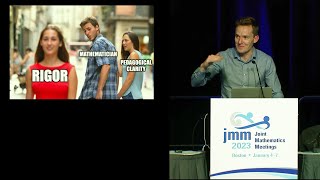
Math's pedagogical curse | Grant Sanderson JPBM Award Lecture, JMM 2023
Mar 30, 2023

Tai-Danae Bradley: Where math meets language | 3b1b Podcast #5
Sep 24, 2021