Earth to Mars in 10 Days

Audio Brief
Show transcript
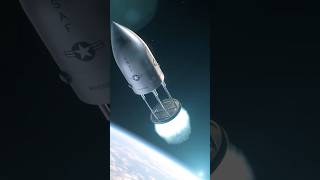
This episode covers the ambitious mid-20th-century Project Orion, a declassified proposal to propel spacecraft using controlled nuclear bomb detonations.
There are four key takeaways from this discussion.
First, Project Orion represented a radical leap in propulsion, with performance capabilities far exceeding any conventional chemical rocket system. Its proposed nuclear pulse propulsion offered an exhaust velocity ten times greater, aiming to overcome the fundamental inefficiencies of traditional rocket fuel.
Second, the primary obstacles to developing such advanced propulsion technologies are often political, social, and treaty-based, rather than purely technical. Project Orion was ultimately canceled due to the 1963 Partial Nuclear Test Ban Treaty and growing public concerns about radioactive fallout.
Third, Orion's legacy continues to inspire modern research into advanced concepts like micro-fission and magnetic nozzles. These updated ideas aim to achieve controlled, cleaner nuclear propulsion, keeping the dream of deep-space travel alive.
Finally, harnessing nuclear explosions for propulsion demanded ingenious engineering solutions. The concept relied on critical components like a robust pusher plate and sophisticated shock absorption systems to manage the intense blasts and ensure crew safety, demonstrating the feasibility of extreme engineering challenges.
Project Orion remains a fascinating glimpse into what advanced space exploration could achieve with unconventional propulsion.
Episode Overview
- Explores the declassified "Project Orion," a mid-20th-century proposal to build spaceships powered by a series of controlled nuclear bomb detonations.
- Details the scientific principles behind nuclear pulse propulsion, from harnessing the blast of an atomic bomb to absorbing the shock for crew safety.
- Covers the historical context of the project, including its origins in the Manhattan Project, its development during the Cold War Space Race, and its ultimate cancellation due to political and environmental concerns.
- Discusses modern advancements, like micro-fission and magnetic nozzles, that could make a revised version of Project Orion a viable and powerful technology for future space exploration.
Key Concepts
- Project Orion: A US government study in the late 1950s and 1960s to design a spacecraft propelled by a series of nuclear explosions.
- Nuclear Pulse Propulsion: The method of propulsion where a spacecraft is pushed forward by the shockwaves from detonating small nuclear bombs (or "pulse units") behind it.
- Rocket Equation Limitations: The video explains how conventional chemical rockets are inefficient, requiring massive amounts of fuel to lift small payloads, a problem Project Orion was designed to solve.
- Pusher Plate & Shock Absorbers: The critical components of the Orion spacecraft designed to withstand the nuclear blast and smooth out the intense acceleration, making the ride survivable for a crew.
- Political & Environmental Hurdles: The project was ultimately canceled due to the Partial Nuclear Test Ban Treaty of 1963, which banned nuclear explosions in the atmosphere and space, and growing public concern about radioactive fallout.
- Modern Concepts (Micro-fission & Mini-Mag Orion): Updated ideas that replace large, explosive-driven nuclear devices with tiny fuel pellets ignited by powerful magnetic fields, potentially offering a cleaner and more controlled version of the original concept.
Quotes
- At 00:34 - "Their plans would solve one of the greatest problems facing the rocket industry: the rocket equation." - The narrator explains the fundamental problem Project Orion aimed to overcome, which limits the efficiency of conventional chemical rockets.
- At 01:18 - "But the only way to get a vehicle moving with nuclear explosions was to place it inside the fireball of an atom bomb." - The narrator describes the seemingly impossible but foundational principle behind the Project Orion concept.
- At 09:24 - "With all inefficiencies accounted for, the pulse units would have an exhaust velocity of 36,000 meters per second, 10 times the exhaust velocity of a conventional chemical rocket." - The narrator quantifies the immense performance leap that nuclear pulse propulsion offered over traditional rocketry.
Takeaways
- Nuclear pulse propulsion represents a technology with performance capabilities that far exceed any existing or planned chemical rocket systems.
- The primary obstacles to developing radical propulsion technologies like Project Orion are often political, social, and treaty-based, not purely technical.
- The legacy of Project Orion continues to inspire modern research into advanced concepts like micro-fission, suggesting the dream of nuclear-powered deep space travel is not dead.
- Harnessing the power of nuclear explosions for propulsion required ingenious solutions, such as the pusher plate and shock absorption system, demonstrating that even the most extreme engineering challenges can have feasible solutions.