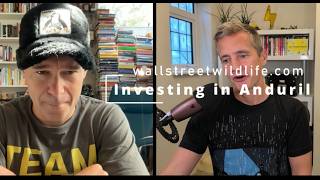
E91: King of the Jungle Portfolio Review (Part 2)

Audio Brief
Show transcript
This episode covers a deep dive into the top-performing half of a shared investment portfolio, analyzing investment theses and current conviction levels for fifteen different stocks.
There are three key takeaways from this discussion. First, a great company does not always make a great stock, especially when its valuation becomes disconnected from fundamental business performance. Second, developing and adhering to a clear, long-term investment thesis for each holding is crucial to guide decisions through market volatility and noise. Third, effective portfolio management necessitates trimming high-performing positions rather than trying to time the market, and thoroughly evaluating non-financial risks.
A central theme explored is the inherent tension between investing in high-quality, innovative companies—often leaders in AI, space, cybersecurity, and e-commerce—and their frequently "insane" or "egregious" valuations. The hosts, with their contrasting investment philosophies, extensively debate maintaining conviction in a company when its stock's valuation becomes extremely stretched. This prompts discussions on the optimal strategy for positions like CrowdStrike and Palantir, considering whether to hold, trim, or sell due to their high multiples.
The episode underscores the critical importance of a core thesis for each investment, providing a robust framework for decision-making. Examples include viewing Tesla not just as an automaker but as a leading AI company, IREN as a self-funding AI infrastructure provider, and AST SpaceMobile as a potentially paradigm-shifting force in global telecommunications. Such a well-defined thesis helps investors navigate short-term market fluctuations and remain disciplined.
Regarding portfolio management, the hosts advocate for a "dimmer switch" approach to risk. This strategy involves proactively trimming positions when valuations are high, rather than attempting to sell out completely or time the market's peak. This method allows for risk management while crucially retaining long-term upside. Discussions also highlight the profound significance of non-financial risks, such as potential impacts from CEO behavior, exemplified by Elon Musk's political activities affecting Tesla sales, and the significant engineering and execution hurdles faced by pre-revenue companies like AST SpaceMobile and Rocket Lab. These non-financial factors can dramatically influence an investment's outcome.
Finally, a crucial lesson in investor psychology distinguishes between truly believing in a company's business model and becoming emotionally attached to its stock. Becoming emotionally invested in a stock can cloud judgment and lead to poor decision-decision-making, whereas a disciplined focus on the underlying business allows for more rational and objective portfolio adjustments based on evolving fundamentals and valuations.
These insights offer valuable lessons on balancing deep conviction, realistic valuation assessments, and disciplined risk management, all essential for navigating today's complex and dynamic investment landscapes.
Episode Overview
- The hosts review the top-performing half of their "King of the Jungle" shared portfolio, analyzing their investment theses and current conviction levels for 15 different stocks.
- A central theme is the tension between investing in high-quality, innovative companies (in AI, space, cybersecurity, and e-commerce) and their often "insane" or "egregious" valuations.
- The episode highlights the hosts' contrasting investment philosophies: one focuses on long-term, buy-and-hold strategies, while the other is more driven by catalysts and inflection points in high-risk ventures.
- Discussions frequently address the challenges of portfolio management, including CEO risk, execution risk for pre-revenue companies, and the discipline required to trim positions rather than trying to time the market.
Key Concepts
- Contrasting Investment Styles: The hosts showcase different approaches, with Luke favoring long-term holding of well-understood businesses and Christoph focusing on catalyst-driven, high-risk opportunities like pre-revenue tech and biotech companies.
- Valuation vs. Conviction: A recurring conflict is maintaining conviction in a great company when its stock valuation becomes extremely high. The hosts debate whether to hold, trim, or sell stocks like CrowdStrike and Palantir due to stretched multiples.
- Thesis-Driven Investing: The analysis emphasizes the importance of a core thesis for each investment, such as viewing Tesla as a leading AI company, IREN as a self-funding AI infrastructure provider, or AST SpaceMobile as a paradigm shift in telecommunications.
- Portfolio Management Strategy: The hosts discuss the difficulty of market timing, advocating for a "dimmer switch" approach—trimming positions when valuations are high rather than selling out completely—to manage risk while retaining long-term upside.
- Execution and CEO Risk: Several discussions highlight non-financial risks, including the potential for Elon Musk's political activities to harm Tesla's sales and the significant engineering hurdles faced by pre-revenue companies like AST SpaceMobile and Rocket Lab.
- Investor Psychology: A key theme is the distinction between loving a company's business model and becoming emotionally attached to its stock, which can lead to poor decision-making.
Quotes
- At 0:01 - "It's a great way to navigate companies like this, if you really truly believe in the long term, which I do, because you were trying to time your way back in at the bottom. And if you miss the bottom... you kind of never get back in." - Luke explains his philosophy of holding on to long-term conviction stocks rather than trying to time the market.
- At 26:28 - "Maybe the world's leading producer of taking data and using it to make actual objects that run on AI." - He elaborates on his AI thesis for Tesla, highlighting its unique ability to apply its data and AI development to physical products like cars and robots.
- At 65:41 - "It's like the Latin America version of Amazon, there's bits of like PayPal, there's bits of eBay... all these different things wrapped into this one incredible self-reinforcing ecosystem." - Summarizing the multifaceted and powerful business model of MercadoLibre.
- At 90:27 - "I am as excited about this company, I think as any company I've ever been as an investor." - The host compares his excitement for AST SpaceMobile to his early enthusiasm for transformative companies like Apple, Tesla, and Netflix.
- At 103:16 - "It's really good as an investor to love a company... It's really bad as an investor to love a stock." - Badger makes a crucial distinction between believing in a business and becoming emotionally attached to its stock price, which can lead to poor decisions.
Takeaways
- A great company does not always make a great stock, especially when its valuation becomes disconnected from fundamentals.
- Develop a clear, long-term investment thesis for each holding to guide decisions through market volatility and short-term noise.
- Manage risk in high-performing positions by trimming, rather than selling completely, to avoid missing out on future upside if you still believe in the company.
- Acknowledge and evaluate non-financial risks, such as CEO behavior and technological execution hurdles, as they can significantly impact an investment's outcome.