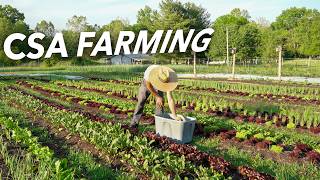
Compost Over the Cover Crops + Watermelons (With or Without Seeds)
Audio Brief
Show transcript
This episode covers the practical logistics and financial realities of growing watermelons on a market garden scale, alongside strategies for cold-climate spring soil management.
There are three key takeaways from this discussion. First, maximizing watermelon profitability requires managing high space demands and complex pollination requirements. Second, cold-climate spring cover crops can be accelerated through specialized pre-sprouting techniques. Third, protecting sensitive root systems and recognizing precise harvest indicators are critical for crop success.
Watermelons pose a significant financial challenge for small-scale growers due to their long seventy-to-ninety-day growth cycles and low yields. To justify the space over quick-rotation crops like salad greens, growers must charge premium prices. Additionally, raising seedless triploid varieties requires interplanting them with seeded diploid pollinizers at a one-to-three ratio to ensure successful fruit set.
Managing cover crops in cold, wet climates requires selecting fast-growing, cold-hardy species like peas or lacy phacelia. Growers can jumpstart the season by soaking pea seeds overnight and letting them sprout slightly before sowing. This process accelerates soil establishment and protects the seeds from pests in slow, cold soils.
Watermelons also have highly sensitive lateral root systems that do not tolerate transplant shock. Using specialized cell trays prevents root-bound tangling and ensures clean extraction during planting. Finally, the most reliable indicator of peak watermelon ripeness is checking the closest vine tendril, which must be dead or dying before harvest.
By combining careful genetic planning with precise propagation and harvesting techniques, market gardeners can successfully navigate the unique challenges of specialty fruit production.
Episode Overview
- This episode dives deep into the logistics of growing watermelons on a market garden scale, covering profitability challenges, seedless triploid genetics, and optimal planting and harvesting techniques.
- It features a detailed Patreon Q&A addressing the challenges of managing spring cover crops and compost applications in cold, wet climates (specifically Zone 4b).
- The episode offers highly practical tips for small-scale growers, including a foolproof method for identifying perfectly ripe watermelons using the vine's tendrils.
Key Concepts
- Watermelon Profitability vs. Space/Time: Watermelons are slow-growing (70-90 days) and yield low quantities (typically only 2 to 4 melons per plant) compared to quick-rotation crops like radishes or salad greens. This makes them difficult to justify financially in small market gardens unless you can charge a premium price.
- The Genetics of Seedless Watermelons: Seedless watermelons are triploid plants, created naturally by crossing normal diploid melons with chemically induced tetraploid parent plants. Because triploids are sterile, they require interplanting with seeded diploid pollinizer varieties at a 1:3 ratio to successfully set fruit.
- Cold-Climate Spring Cover Cropping: In cold zones with tight windows between workable soil and the last frost, choosing fast, cold-hardy cover crops like peas or lacy phacelia is critical. Grains and buckwheat should be avoided in cold soils due to slow growth and difficult termination.
- Watermelon Root Sensitivity: Cucurbits, including watermelons, have highly sensitive lateral root systems that do not tolerate disturbance. Transplanting must be done with extreme care using specialized cell trays (like Winstrip trays) to keep soil blocks intact.
Quotes
- At 3:20 - "You have to charge like $50 to $75 per melon to match what you would make in lettuce or radishes or whatever in that same space." - Explaining the stark economic reality of growing watermelons in a space-constrained market garden.
- At 9:17 - "Soak the seed, if not bring it all the way to germination, before sowing... that will get a jump on any pests that may find that seed and also just get a jump on the growing season." - Offering a highly practical tip for accelerating spring cover crops like peas in cold soils.
- At 16:41 - "To me, there really is only one surefire way to know when a melon is ripe: the tendril will be dead or dying." - Explaining the definitive physical marker used to harvest watermelons at peak ripeness.
Takeaways
- When planting seedless watermelons, use an interplanting pattern of one seeded diploid (pollinizer) melon for every three seedless triploid melons to ensure successful pollination and fruit set.
- Accelerate pea cover crop establishment in early spring by soaking seeds overnight, draining them, rinsing/draining them over the next 24 hours until tiny sprouts appear, and then immediately sowing.
- Avoid disturbing watermelon roots during transplanting by using Winstrip trays, which prevent root-bound tangling and allow clean extraction of individual soil blocks.