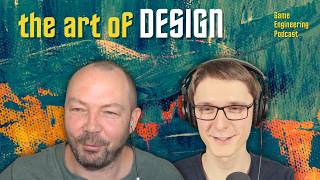
Casey Muratori on his work experience

Audio Brief
Show transcript
This episode features Casey Muratori discussing his non-traditional career, challenging Object-Oriented Programming principles, advocating for data-oriented design, and critiquing the traditional conference model for education.
There are four key takeaways from this conversation. First, effective library design prioritizes exposing stable data structures over strict encapsulation to empower users and simplify integration. Second, language features should be adopted pragmatically, based on provable benefits for code simplicity and readability, rather than programming dogma. Third, unlearning bad programming habits involves consciously deciding to cease applying flawed patterns, rather than learning complex new systems. Finally, creating accessible, affordable online educational resources is crucial to maximize reach and impact, as physical conferences inherently exclude many potential learners.
Muratori contends that Object-Oriented Programming's encapsulation principle, often touted for third-party integration, is fundamentally flawed. He argues it prevents users from solving unforeseen problems. Instead, he advocates for a data-oriented design philosophy, where libraries expose well-defined, stable data structures along with optimized routines, granting users maximum flexibility.
The discussion emphasizes pragmatic adoption of language features. Features should only be used when they offer clear, provable benefits such as saving code or improving readability. Muratori suggests that many complex features, especially in languages like C++, often provide little utility, with exceptions like operator overloading for mathematical contexts.
Unlearning deeply ingrained programming habits is presented as surprisingly straightforward. Muratori states the difficulty lies not in acquiring new knowledge, but in the conscious decision to stop applying old, unhelpful organizational patterns. This approach simplifies the transition away from less efficient paradigms.
A significant critique is leveled against physical conferences, branding them as an inefficient, expensive, and exclusionary model for education. Muratori argues these events primarily benefit a privileged few, while accessible online content has the potential to reach a far larger, global audience. Prioritizing online resources ensures broader educational equity.
This conversation offers a sharp re-evaluation of conventional software development practices and educational models, advocating for more pragmatic, accessible, and data-centric approaches.
Episode Overview
- Casey Muratori discusses his non-traditional career path, revealing he started programming professionally right after high school without attending university.
- He presents a sharp critique of Object-Oriented Programming (OOP), arguing its principles like encapsulation are fundamentally flawed for creating easy-to-integrate libraries.
- Muratori advocates for a data-oriented design philosophy, emphasizing the importance of exposing stable data structures rather than hiding them.
- The conversation covers the origins of the Handmade Hero stream and leads to a broader critique of physical conferences as an exclusionary and outdated model for education.
Key Concepts
- Critique of OOP for Integration: The principle of encapsulation is described as a "lie" for third-party developers, as it prevents them from solving problems the library author didn't foresee, rendering them powerless.
- Data-Oriented Design Philosophy: The ideal library design involves exposing well-defined, stable data structures and providing optimized routines that operate on that data, giving users maximum power and flexibility.
- Pragmatic Language Feature Adoption: Language features should be used only when they provide a clear, provable benefit, such as saving code or improving readability. Muratori concludes 99% of C++ features are not useful, with operator overloading being a notable exception for math code.
- Development as Exploration then Execution: A successful development process involves an initial experimental phase to find a solid working paradigm, followed by a "direct march" to apply that paradigm across the product.
- High-Trust Environment: Success is fostered by a management style that sets a clear high-level goal but trusts the developer to determine the best implementation, allowing for iteration and even complete rewrites.
- Critique of Physical Conferences: Physical conferences are an inefficient, expensive, and exclusionary model for education that primarily benefits a privileged few, whereas accessible online content can reach a much larger global audience.
- Homogenization of Game Design: The widespread use of game engines like Unity and Unreal has led to a decline in mechanical creativity, as developers are pushed toward making the types of games the tools are designed for.
Quotes
- At 1:46 - "I didn't go to university." - Casey Muratori's direct and unexpected answer to the question about his university experience, revealing his self-taught path into programming.
- At 27:51 - "The whole paradigm is a lie. The lie is that if something's object-oriented, it will be easier for someone else to integrate because it's all encapsulated." - He directly challenges the core promise of encapsulation in OOP.
- At 38:08 - "Your goal is not to hide everything. It's for you to do the work up front to figure out what you can promise, and then promise that. That is what makes a library good." - He summarizes his new philosophy of library design, focusing on providing stable, exposed primitives instead of black-box objects.
- At 77:47 - "It's very easy to unlearn these bad habits. Just stop thinking about X and you're good." - Muratori explaining that the difficulty in moving away from paradigms like OOP isn't in learning something new, but in consciously deciding to stop applying old, unhelpful organizational patterns.
- At 102:08 - "Is this the future of education? A conference is just a bad thing. It's just another way that poor people don't get to experience something." - Summarizing his core philosophical opposition to the conference model as a means of education.
Takeaways
- When designing libraries, prioritize exposing stable data structures over enforcing strict encapsulation to empower users and simplify integration.
- Adopt language features pragmatically based on proven benefits for code simplicity and readability, rather than following programming dogma.
- Unlearning bad programming habits is primarily about consciously deciding to stop applying flawed patterns, not about learning a complex new system.
- Prioritize creating accessible, affordable online educational resources to maximize reach and impact, as physical conferences inherently exclude many potential learners.