Carrie, Cult Classics & Chaos: A Sit Down with Matthew Lillard

Audio Brief
Show transcript
How much money does an actor actually take home from starring in a classic horror movie? According to Matthew Lillard, for the original Scream, he netted about twenty two hundred dollars a week. Lillard joins cohosts Ash and Alaina, a former autopsy technician, on their podcast to explore his thirty plus year Hollywood career. By the end, you will know the gruesome truths of autopsies, the hidden prep behind film sets, and how downsizing saved Lillard's career.
First, step inside the autopsy room, where nothing looks like a textbook. Nearly all human internal organs are the same muddy, ugly eggplant color, except for the green gallbladder.
That macabre curiosity also drives how the hosts uncover surprising history. You might think the word slut was always a sexual insult, but historically, the Puritans used it simply to mean a woman with an untidy house. Ash and Alaina dig up facts like this across their three shows, once compiling seventy two pages of notes for an eight hour series on Jack the Ripper.
From the precision of the morgue, the conversation turns to the hidden precision of Hollywood sets. That preparation peaks with director Mike Flanagan, who bans phones, lateness, and script pages on set, forcing Lillard to deliver a speech before four hundred extras completely from memory. Try adopting this no script pages philosophy by mastering your own material weeks in advance so you can ditch your safety net and stay fully present.
All that preparation frees actors to stop overthinking and enter a state of pure flow. To cast the lead in Carrie, production auditioned fourteen hundred girls and women before hiring Summer H. Howell, whom Flanagan called back twenty minutes after her audition to redo a scene with more emotion.
Finding that flow took Lillard decades of overcoming early struggles and professional jealousy. After living with theater school classmate Paul Rudd for two years, Lillard admits that intense jealousy over Rudd's early success hindered his own joy and mental health. Avoid measuring your timeline against your peers and stop using self deprecation as a crutch, because comparison and negative self talk only rob you of your joy.
While industry jealousy can isolate you, thirty five year friendships keep you grounded. At age twenty one, Lillard and his theater school classmates played Dungeons and Dragons in the lobby from nine at night to six in the morning, and now fifty six, he still plays with that exact group.
Those grounded friendships outlasted the chaotic birth of Lillard's most famous role. Lillard originally auditioned for Billy Loomis in Scream, but the casting director told him to read for Stu Macher when Wes Craven returned two hours later, and Craven cast him in the room.
Iconic roles do not always equal instant wealth, which makes long term vision vital. He nearly turned down a five line role in Five Nights at Freddy's until his twenty one year old middle child, Ace, screamed upon hearing the name William Afton, and director Emma Tammi explained Afton was the universe's Voldemort across a planned three movie arc. Before turning down a small opportunity, ask about the broader vision and consult younger generations who may understand its cultural weight.
The one lesson to remember is that dropping the smoke and mirrors during hard times restores your power. During a career dry spell, Lillard fired his team, traded his house and cars for a Prius and a sixteen hundred dollar monthly mortgage, and openly admitted he was not working, which erased his shame right before he booked The Descendants opposite George Clooney.
Episode Overview
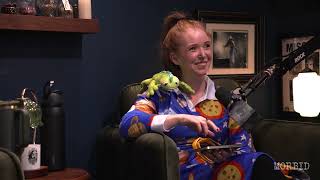
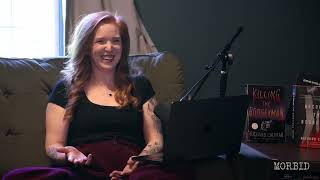
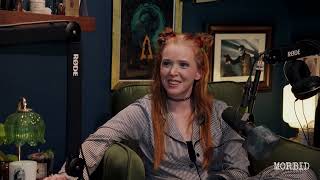
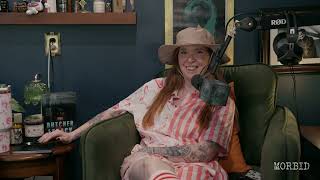
- Actor Matthew Lillard (who jokingly introduces himself as Josh Hartnett at 0:00:02) joins co-hosts Ash (30, born in 1996) and Alaina (40, a published author and former autopsy technician) to explore his 30+ year Hollywood career, while SiriusXM branding is visible on the microphones and a "SUP" sticker is on Ash's laptop with no formal ad reads spoken.
- The conversation bridges macabre anatomical realities—such as autopsy procedures and mortician anecdotes—with behind-the-scenes insights into Lillard's early filmography (Serial Mom, Scream, Summer Catch, Thirteen Ghosts, Wicker Park, and The Curve) and the podcasts Ash and Alaina co-host (Morbid, Scream!, and The Rewatcher).
- Lillard provides a transparent look at the financial and emotional realities of acting, detailing his meager net pay from the original Scream, his early jealousy of former roommate Paul Rudd, and how downsizing his lifestyle during a career dry spell restored his artistic confidence.
- The episode highlights Lillard's modern career resurgence and business ventures, covering his co-founding of Find Familiar Spirits (which produces Macabre Spirits whiskey paired with original novellas and art), his multi-film arc in the Five Nights at Freddy's franchise, and his collaborations with director Mike Flanagan on The Life of Chuck and Amazon's Carrie series, alongside promoting Scream 7.
Key Concepts
- Anatomical Realities of Autopsies: Unlike brightly colored anatomy textbooks, human internal organs are all roughly the same "putrid, mauvey," "muddy," or "ugly eggplant" color, except for the gallbladder, which is green. Smoker's lungs look visibly "rotted," "shriveled," and "like shit" (though lungs can regenerate over time if you quit, which convinced Ash to stop smoking as a teenager). Most people release their bowels when they die, though not always completely. During an autopsy, the first step is removing the "organ block" in one piece, taking spinal fluid and muscle samples for toxicology, running through the bowel/intestine, and even cutting into anatomically "very delicate" testicles and penises to check for conditions like testicular cancer. Cutting open a human head leaves a lingering smell in the throat that tastes "chemically" and "sewery," a sensation Alaina managed better because a deviated septum dulled her sense of smell.
- Historical Etymology and True Crime Research: Historically, the Puritans used the word "slut" simply to mean a woman who was "untidy" or had a messy house rather than as a sexualized insult. In their podcasting work across 3 shows, Ash and Alaina conduct deep research—such as compiling 72 pages of notes for an 8-hour series on Jack the Ripper—and bond over macabre aesthetics, having gotten matching-trip tattoos 6 months ago (a ghost on Alaina's arm and a perfume bottle for Ash) from identical twin tattoo artists in Salem, Massachusetts. Lillard shares his own brushes with the death industry, noting a friend in Pasadena who is a family-business mortician and has picked up dead bodies via beeper since high school, as well as being picked up at the Oklahoma City airport in a funeral limousine by a driver whose main job was being a mortician.
- The Myth of Improvisation and Mike Flanagan's Precision: Lillard explains that nothing in Hollywood is truly improvised; for instance, his famous dance scene in Summer Catch required weeks of choreography practice and 45 minutes to set up each shot. This level of preparation peaks on Mike Flanagan's sets. For the Carrie series, the cast received all 8 scripts upfront and had 3.5 to 4 weeks (a month) of rehearsal. Flanagan mapped out the entire shoot a month in advance—down to the day, time window, and camera angles for specific lines—and published a custom app for the cast and crew to track the shoot. Flanagan enforces three strict on-set rules: no phones, don't be late, and "no sides" (no script pages brought onto set as a safety net), requiring Lillard to deliver a speech in front of 400 extras completely memorized.
- Modernizing Carrie and Casting for Flow: To cast the lead in Carrie, the production auditioned 1,400 girls and women; Summer H. Howell submitted 3 tapes over roughly 3 months, was called back by Flanagan 20 minutes after her audition to redo a scene with more emotion, and was hired on April 1st. Lillard notes that brilliant actors in a state of "flow" aren't overthinking—they are just listening and responding. Stephen King initially questioned why Carrie needed a remake after five iterations, but approved it after Flanagan pitched an 8-episode format pivoting on an anonymous social media account (inspired by a real-life California town incident where an anonymous account outed students, caused a riot, and nearly destroyed the high school). Lillard hedges on King's personal feelings toward Flanagan ("He loves Mike, I think. I don't know, but it seems like it"), noting King watched the finished series twice and loved it.
- Early Struggles, Coping Mechanisms, and Industry Jealousy: Born 2 days apart from his father, Lillard grew up working-class poor on fast food with obese parents from Detroit, Michigan, before moving to Orange County, California. Acting since age 14, he was an obese teenager with braces, glasses, and a severe learning disability who took drama in the mid-1980s, using humor and charm to pass classes and avoid getting beat up. After his first movie, Serial Mom, he used to walk past the theater hoping exiting audiences would recognize him, and later filmed Wicker Park in Montreal with Josh Hartnett, Rose Byrne, and Diane Kruger. An alumnus and vocal supporter of Circle in the Square Theatre School at 50th and Broadway in NYC, Lillard lived with classmate Paul Rudd (and Dalton Grant) for 2 years; he admits that intense jealousy over Rudd's early success hindered his own joy and mental health. Lillard also theorizes that people don't acquire true wisdom until age 50, though he hedges on this claim ("Maybe you do. Who am I to say when people find wisdom or own their own wisdom? ... It sounds arrogant").
- Long-Term Community and Misunderstandings: At age 21, after a Super Bowl, Lillard and his Circle in the Square classmates played Dungeons & Dragons in the theater lobby from 9:00 PM to 6:00 AM; now 56, he has played D&D with that same group for 35 years, with their longest campaign lasting 7 years. He also roomed with author Christopher Buehlman (The Blacktongue Thief, The Daughters' War) while working at a Renaissance Faire in Oswego, upstate New York. In conversation, Lillard notes he is "almost deaf," which leads to a comedic misunderstanding when Ash self-deprecatingly calls herself "trash" for liking a "Captain Crunch Slurpee," and Lillard thinks she told him he looks like a Captain Crunch Slurpee.
- Behind the Scenes of Scream and Fictional Psychology: Lillard originally auditioned for Billy Loomis in Scream (1996), but the casting director had him read for Stu Macher when Wes Craven returned 2 hours later, and Craven gave him the part in the room. While filming in Santa Rosa, Miramax nearly shut the movie down because they didn't think it worked, until Craven rushed a cut of Drew Barrymore's opening sequence to save the production. Lillard explicitly doubts the industry legend that the Ghostface mask was found on a tech scout, remembering instead that it was found in a house in North Carolina. When Alaina asks about Stu's psychological motives toward Billy 30 years ago (while also discussing Thirteen Ghosts and expressing uncertainty with the hosts about whether The Curve came out around 1998), Lillard hedges ("I don't really think—I mean, maybe in the moment I did...") before deadpanning that the characters aren't real, sparking a mock fight with Alaina over whether a fictional glass house portal to hell is scary. However, while Stu and Billy weren't written as gay, Lillard and Skeet Ulrich enthusiastically embrace the title "the first husbands of horror" today to empower queer kids who identify with them.
- The Financial Reality of Hollywood and Five Nights at Freddy's: While stars like Keanu Reeves famously give a portion of their salary to character actors so they don't have to work for "scale plus 10%," early-career actors often net very little. For Scream, Lillard worked for 4 weeks at $5,000 a week ($20,000 gross); after top-bracket taxes, a 10% agent fee, and a 10% manager fee (both off gross), he netted about $2,200 a week, and earned minimal residuals because they are tied to initial pay. Decades later, Lillard nearly turned down "The Yellow Rabbit" in Five Nights at Freddy's because the part was only on 5 pages with 5 lines, until his middle child (Ace, a 21-year-old non-binary child, between his 24-year-old daughter and 18-year-old son, while Alaina notes she has 10-year-old twins and a 7-year-old) screamed from upstairs upon hearing the name William Afton, and director Emma Tammi explained Afton is the "Voldemort of this universe" across a planned 3-movie arc. The film was made on a $30 million budget and grossed $300 million.
Quotes
- At 0:02:56 - "She was an autopsy tech and she's creepy, and I needed a job." - Ash explaining to Lillard how she and Alaina originally started their podcasting career.
- At 0:04:43 - "That everything looks the same color, for the most part. Except your gallbladder, it's green." - Alaina describing the counterintuitive visual reality inside a human body during an autopsy.
- At 0:08:16 - "Yeah, nothing in Hollywood's improv'd. Like, that whole thing took, you know, weeks to practice, and then every one of those shots takes like, you know, 45 minutes to set up." - Lillard debunking the myth of on-set improvisation regarding his dance scene in Summer Catch.
- At 0:12:00 - "An actor in flow, an actor who's a really brilliant actor, has zero consideration of what's happening. They're just like, they're just responding. They're listening and responding, and the energy is contagious, right?" - Lillard explaining what separates great acting performances, such as Summer H. Howell's audition for Carrie.
- At 0:15:49 - "So he already knows where it lives in the cut, at what time he's going to shoot it, on what day, five months—before we shoot a—a month before we shoot a single frame." - Lillard detailing director Mike Flanagan's meticulous pre-production preparation for the Carrie series.
- At 0:17:11 - "The rules are: no phones on set, don't be late, and no sides. A lot of times actors come to set and they'll have their sides, so there's like this safety net. He's like, 'That's not what we do here.'" - Lillard outlining Mike Flanagan's three strict rules for actors on set.
- At 0:19:57 - "How do you pass a class if you can't do it? You charm the shit out of everyone. You know, you make—how do you not get your ass kicked? You're funnier than the guy next to you who's getting his ass kicked." - Lillard reflecting on how growing up with a severe learning disability shaped his personality and comedic timing.
- At 0:23:17 - "I was, for the longest time, so jealous of his success that it really was hard—it really hindered my own appreciation or joy of my own success, that I always compared myself." - Lillard candidly admitting how comparing his career to his former roommate Paul Rudd's harmed his mental health.
- At 0:26:25 - "I am self-deprecating to a fault. Yeah. And I want to say to you and to me, that so does not serve you. It doesn't serve you at all, 'cause the bullshit you say to yourself sticks." - Lillard advising Ash and himself on the psychological damage of habitual self-deprecation.
- At 0:34:39 - "I have a spirit company called Find Familiar Spirits. We produce a product called Macabre Spirits, and we have a novella—we develop a novella with writers." - Lillard disclosing his business ownership and how his company pairs spirits with original fiction.
- At 0:37:50 - "And Mike was like, 'Here's my pitch: social media.' And when you wrote this back in the '70s, and De Palma shot it in the '70s, nobody could know what the scourge of social media would be." - Lillard explaining how Mike Flanagan convinced Stephen King to approve a new adaptation of Carrie.
- At 0:53:12 - "And we have been playing since I was 21, and I'm 56 years old. The longest campaign we ever played was seven years." - Lillard discussing his 35-year Dungeons & Dragons group formed with his Circle in the Square Theatre School classmates.
- At 0:58:38 - "The crazy thing about it, I think if you take any of those people out in terms of the casting, that movie may not work." - Lillard reflecting on the irreplaceable chemistry of the original Scream ensemble cast.
- At 1:00:09 - "They rushed and shot that sequence, the opening sequence, and then sent it to Miramax, and they kept the movie alive. Because they were going to shut it down, 'cause they were like, 'We don't think this works.'" - Lillard revealing how Wes Craven saved Scream from being shut down by the studio mid-production.
- At 1:09:34 - "And if some kid out there is struggling with their own identity and who they are, and if for some reason us calling ourselves the first husbands of horror makes an impact and makes them feel seen and empowers them, then we're the fucking first husbands of horror." - Lillard explaining why he and Skeet Ulrich embrace queer interpretations of Stu Macher and Billy Loomis.
- At 1:17:11 - "And she's like, 'Well, he's five lines in this, um, but he is the Voldemort of this universe. And we want to make three movies, and so by the time you get to the third movie, you're a big part.' I'm like, 'You have my attention.'" - Lillard recounting how director Emma Tammi convinced him not to pass on playing William Afton in Five Nights at Freddy's.
- At 1:27:33 - "And I just didn't pop. And everyone's like, 'Scream changed your life.' I'm like, 'It didn't.' It didn't. It didn't change my life at all. Nothing changed my life for the longest time." - Lillard correcting the misconception that starring in a cult classic immediately guarantees Hollywood stardom.
- At 1:37:14 - "But Scream, like, we worked for four weeks, I got paid $5,000 a week... So you're making, at $5,000 an episode, you're probably making 2,200 bucks." - Lillard breaking down the actual net pay he took home per week after taxes, agent fees, and manager fees on Scream.
Takeaways
- Drop the "smoke and mirrors" when struggling financially: During a career dry spell when his father-in-law suggested he sell pharmaceuticals, Lillard fired his agent, lawyer, and manager in three consecutive phone calls, sold his house and cars, drove a Prius for 10 years, and moved into a house with a $1,600/month mortgage while his wife went back to work and he taught acting. Openly telling people he downsized because he wasn't working eliminated his shame, restored his confidence, and shortly preceded him booking The Descendants opposite George Clooney.
- Eliminate self-deprecating self-talk: Stop using self-deprecation as a conversational crutch or defense mechanism, because the negative things you repeatedly say about yourself eventually stick and erode your self-worth.
- Stop comparing your timeline to your peers: Avoid measuring your success against friends or colleagues in your industry (as Lillard did with Paul Rudd), as comparison only robs you of the ability to appreciate and enjoy your own milestones.
- Over-prepare so you can abandon safety nets: Adopt Mike Flanagan's "no sides on set" philosophy by mastering your material weeks in advance; removing your safety net forces you to be fully present and operate in a state of responsive flow.
- Evaluate small opportunities by their long-term trajectory: Before turning down a project that seems beneath your goals (like a 5-page role with 5 lines), ask the creators about the broader vision and consult younger generations who may understand the cultural weight of the IP better than you do.
- Set clear boundaries to protect personal and family time: Even in high-pressure public environments—such as the Scream 7 premiere where Lillard was swarmed by influencers, repeatedly said he was done with interviews so he could celebrate with family and friends, and was called an asshole online after snapping at a young woman—prioritize real-life relationships over endless professional demands.
- Foster financial independence in your children: If you have the means, support your children's education (Lillard pays for college for his 3 kids, two of whom are artists), but require them to be financially on their own afterward with only a safety net, encouraging the grit seen in his oldest daughter working 3 jobs in LA to pursue art.
- Invest in lifelong, low-stakes friendships: Maintain consistent rituals with people who knew you before your career success, such as Lillard's 35-year Dungeons & Dragons group from acting school, to stay grounded across decades of life changes.
- Use your platform to validate and empower others: Even if a creative work wasn't originally intended for a specific demographic, lean into fan interpretations if doing so helps marginalized or struggling people feel seen and supported.
- Account for gross deductions in contract work: When calculating earnings in commission-based industries, remember that taxes and multiple 10% representation fees taken off the gross can reduce a $5,000 weekly paycheck to $2,200 net, requiring conservative lifestyle budgeting.