Can I Just Plant Garlic in the Spring? Well…
Audio Brief
Show transcript
This episode covers critical ecological farming strategies for small-scale growers, focusing on daily operational efficiency, garlic cultivation biology, and successful meadow establishment.
There are three key takeaways from this discussion. First, optimizing daily farm movement requires matching footwear to specific tasks, balancing the speed of slip-on clogs with the safety of tall rubber boots. Second, successful garlic production relies on autumn planting for winter vernalization, using organic seed to avoid sterile, irradiated grocery store varieties. Third, establishing wildflower meadows requires treating the ground with the same rigorous weed management used for cash crops to deplete the soil seed bank.
In farm operations, minor transitions accumulate into significant lost time and physical fatigue. Utilizing high-utility, slip-on clogs for dry paths drastically reduces transition times and prevents back strain associated with constantly tying laces. However, heavy morning dew and potential field hazards require tall rubber boots, making footwear selection a critical daily decision.
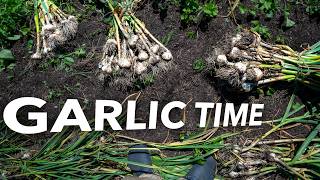
For garlic cultivation, understanding crop biology is essential for a successful harvest. Garlic cloves require a minimum of forty days below forty degrees Fahrenheit to undergo vernalization, which triggers bulb division. Planting in the spring fails to meet this requirement, resulting only in green garlic, while conventional store-bought cloves often rot because they are treated with ionizing radiation to prevent sprouting.
Establishing a wildflower meadow is a long-term investment that fails without proper site preparation. Soil disturbance naturally triggers a rapid flush of weed seeds to cover bare earth. Successful establishment requires the stale seedbed technique, where growers cultivate the soil, allow weeds to germinate, destroy them with tarps or shallow cultivation, and then sow the wildflower seed into clean ground.
By implementing these targeted management practices, growers can streamline their daily routines, secure a successful garlic crop, and ensure long-term meadow viability.
Episode Overview
- This episode of Growers Daily features host Farmer Jesse answering various ecological farming questions sourced from the Patreon community.
- The discussion spans a wide range of practical farm management topics, including seasonal footwear selection, the science behind garlic planting times, and meadow preparation.
- It provides valuable advice for small-scale growers, homesteaders, and gardeners looking to optimize their workflow and soil management.
Key Concepts
- Efficiency of Slip-On Farm Footwear: Choosing slip-on footwear like non-slip work clogs (such as hole-free Crocs) drastically reduces transition times when moving in and out of the house, saves energy, and prevents back strain associated with constantly tying laces.
- Safety vs. Comfort in Footwear: While clogs offer high utility and comfort on dry, clear paths, tall rubber boots (like Xtratuf or Hisea) are essential for pasture work in heavy dew to keep pants dry, and for safety in tall grass where venomous snakes are active.
- The Vernalization and Lifecycle of Garlic: Garlic is a crop designed to overwinter. It requires at least 40 days below 40°F (vernalization) and a long vegetative growth period to build a robust root system before day lengths increase; spring-planted garlic will result in green garlic or grass but cannot produce divided bulbs.
- Sterility of Irradiated Store-Bought Garlic: Conventional garlic sold in grocery stores is often treated with ionizing radiation (gamma rays or X-rays) to stop germination and extend shelf life, meaning these cloves will rot instead of grow if planted.
- Managing Soil "Recovery Species" (Weeds): Disturbed soil naturally triggers weed seed germination to protect and cover bare earth. Preparing a field for a wildflower meadow requires treating the soil with the same rigor as crop ground to systematically deplete the weed seed bank before sowing.
Quotes
- At 1:29 - "I wear basically one thing year-round, and I love them: clogs." - explaining his preference for easy, slip-on shoes over traditional lace-up work boots to save time and prevent back strain.
- At 6:26 - "The short answer is no, not really. It is not viable to plant garlic in March and get a bulb." - explaining a major limitation of spring garlic planting and the biological necessity of overwintering.
- At 12:19 - "The biggest thing with sowing anything like this is that you will want to treat that area like it's a crop ground." - clarifying that wildflower meadows require rigorous weed management rather than just throwing seeds down on freshly plowed dirt.
Takeaways
- Choose organic or local farmers' market garlic for seed to guarantee the cloves have not been irradiated, and plant them in late autumn (around Thanksgiving in the Northern Hemisphere) to secure a healthy, divided harvest.
- Employ the "stale seedbed" technique when establishing a meadow: till or plow the soil, let the initial flush of weeds germinate, destroy them using a tarp or shallow cultivation, and then sow your wildflower seeds into the clean bed.
- Hand-pick and remove weed roots (like Johnson grass) immediately after plowing a field to prevent aggressive perennial species from quickly overtaking newly planted flowers.