ATC 214
Audio Brief
Show transcript
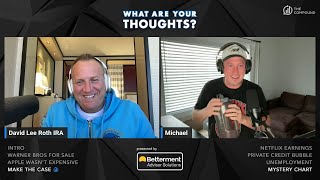
This episode covers a financial debate on the five year outlook for housing versus private assets alongside strategies for navigating unique retirement plans and college savings in the artificial intelligence era.
There are three key takeaways. First, private assets face greater near term vulnerability compared to residential real estate. Second, unusually high guaranteed returns in retirement plans require strict due diligence. Third, traditional college experiences and college savings plans retain their value despite the rapid advancement of artificial intelligence.
When comparing asset classes, private markets are currently experiencing a liquidity logjam with limited exits through public offerings or sales. This environment masks potentially inflated valuations that have not been correctly marked to market. Conversely, while the housing market struggles with affordability issues, it remains structurally supported by demographic trends and a persistent lack of inventory. For individuals navigating real estate decisions, local rent versus buy calculations remain the most effective tool to gauge financial viability.
Turning to retirement strategies, some specialized plans offer guaranteed returns exceeding seven percent. While a risk free yield of this magnitude over a thirty year horizon is highly attractive, it carries hidden institutional risks. Investors must rigorously verify the long term solvency of the plan sponsor and carefully weigh the opportunity cost of missing out on higher yielding equity markets.
Finally, the rise of artificial intelligence has sparked questions about the future utility of education savings plans. Although artificial intelligence democratizes access to academic knowledge, the traditional college experience delivers irreplaceable value. Networking, socialization, and the development of soft skills ensure that funding a university education remains a prudent long term strategy.
That concludes this brief look at the latest market insights and wealth planning strategies.
Episode Overview
- The podcast tackles an array of financial questions, specifically focusing on whether housing or private assets will perform worse over the next five years.
- The hosts and their guest, Nick Maggiulli, engage in a debate on the current state of private equity versus residential real estate, exploring the specific vulnerabilities of both asset classes.
- Additional listener questions cover topics such as the "Buy, Borrow, Die" wealth strategy, the decision to invest in a unique 401(a) plan offering a guaranteed return versus a standard brokerage account, and whether 529 plans are still viable given the rise of AI.
- The episode offers a mix of market analysis, personal finance strategies, and philosophical considerations about the future of education and work.
Key Concepts
- The debate over housing vs. private assets centers on liquidity and market mechanisms. Private assets are currently facing a logjam with few exits (IPOs or sales), leading to potentially inflated valuations that haven't been marked to market. In contrast, the housing market suffers from affordability issues but is supported by demographic trends and a lack of inventory.
- The "Buy, Borrow, Die" strategy involves wealthy individuals buying appreciating assets, borrowing against them to fund their lifestyle without triggering capital gains taxes, and then passing those assets to heirs with a stepped-up basis, effectively eliminating capital gains tax liability on the appreciation up to the time of death.
- Guaranteed high-yield retirement plans (like the 7.25% 401(a) discussed) offer an attractive risk-free return, but investors must consider the long-term solvency of the plan sponsor and the opportunity cost of not being invested in potentially higher-yielding, albeit riskier, equities, especially when they have a long time horizon.
- The future of education and the utility of 529 plans in the AI era. While AI might democratize knowledge, the traditional college experience still offers significant value in terms of networking, socialization, and soft skill development, suggesting that saving for college via a 529 plan remains a prudent strategy.
Quotes
- At 4:41 - "I have to lean more against private assets... we're already starting to see kind of some of this unravel." - Nick Maggiulli explaining why he thinks private assets face greater risks than housing in the near term.
- At 8:30 - "I think people will just decide to rent... there's no way that someone's going to sell an apartment for 650 [thousand] in an area that's very close to Manhattan." - Nick Maggiulli discussing the financial impracticality of buying versus renting in high-cost areas.
- At 12:43 - "It's just a way to defer taxes basically forever... when those assets get passed on to the next generation, they get the step-up basis." - Duncan explaining the mechanics and appeal of the "Buy, Borrow, Die" strategy for the wealthy.
- At 18:13 - "7.25 guaranteed for almost 30 years is unheard of... I would want a ton of assurances that this is legit." - Duncan reacting to a listener's unusually high guaranteed return retirement option.
- At 28:46 - "If you live off campus and just go to class and then go straight back home, you're really robbing yourself of the true college experience." - Duncan emphasizing the non-academic value of attending college, which he believes AI cannot replace.
Takeaways
- When evaluating the housing market versus renting, use a rent-versus-buy calculator to understand the specific dynamics of your local market, as the math can vary significantly depending on the area.
- Before committing a large portion of retirement savings to a plan offering an unusually high guaranteed return, thoroughly research the plan's solvency, the entity backing the guarantee, and the specific terms and conditions.
- Even with the advent of AI, continue to value and save for the holistic college experience (networking, social skills, independence) rather than just the acquisition of academic knowledge.