ATC 200
Audio Brief
Show transcript
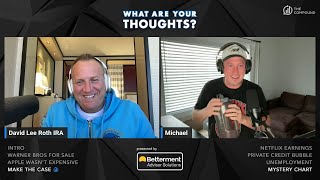
This episode explores the severe affordability crisis in the U.S. housing market, examines modern investment habits among younger generations, and discusses the psychological challenges retirees face when transitioning from saving to spending.
There are four key takeaways from this conversation.
First, younger generations, particularly Gen Z, demonstrate improved investing behavior with a near-exclusive preference for Roth accounts. This trend is driven by increased financial literacy, long-term tax advantages, and social media promotion highlighting Roth accounts as a wealth hack. Prioritizing Roth contributions, especially when young and in a lower tax bracket, builds a source of tax-free income for the long term.
Second, a common psychological challenge for retirees is shifting from a lifelong saver's mindset of accumulation to a spender's mindset of decumulation. People who have been savers their entire lives often struggle to pivot to spending their wealth. Actively working to shift this mindset is a necessary adjustment to enjoy the wealth built over decades.
Third, the principle of "good enough" is crucial in financial planning to avoid "paralysis by analysis." Striving for a perfectly optimized, but often unattainable, strategy can lead to inaction and unnecessary stress. Embracing a good enough financial plan is more effective than endlessly seeking an unobtainable ideal.
Finally, the primary value of a financial planner in retirement is often qualitative. Planners provide the confidence, trust, and permission for clients to spend their money without fear. This qualitative assurance, rather than just quantitative optimization, allows individuals to feel secure in their retirement spending.
Ultimately, enjoying life in retirement often means running out of time faster than running out of money, emphasizing the importance of confidence in your financial plan.
Episode Overview
- The episode analyzes the severe affordability crisis in the U.S. housing market, questioning whether record-high prices can sustain or if a correction is coming by 2026.
- The hosts explore the modern investment habits of younger generations, specifically why Gen Z overwhelmingly prefers contributing to Roth accounts.
- A significant portion of the discussion focuses on the psychological difficulty lifelong savers face when transitioning to spending their money in retirement.
- The conversation highlights the value of financial planning not just for quantitative optimization, but for providing the qualitative confidence to enjoy one's wealth.
Key Concepts
- The U.S. housing market is experiencing its worst affordability on record, characterized by all-time high prices coexisting with high mortgage rates and slowing buyer activity.
- Younger generations, particularly Gen Z, are demonstrating improved investing behavior, with a near-exclusive preference (95%) for Roth accounts.
- The popularity of Roth accounts is driven by increased financial literacy, their simplicity, long-term tax advantages, contribution flexibility, and heavy promotion on social media as a wealth "hack."
- A common psychological challenge for retirees is shifting from a lifelong saver's mindset of accumulation to a spender's mindset of decumulation.
- The principle of "good enough" is crucial in financial planning to avoid "paralysis by analysis" that comes from seeking a perfectly optimized, but often unattainable, strategy.
- The primary value of a financial planner in retirement is often qualitative—providing the confidence, trust, and "permission" for clients to spend their money without fear.
Quotes
- At 0:15 - "You could make the case, and I would make the case, this is the worst housing affordability we've ever seen in this country." - Ben Carlson emphasizes the extreme difficulty for new buyers in the current market.
- At 17:32 - "I've been saying for years that investing behavior is improving. Like, I can see it. And I think young people are so much more informed about this stuff than previous generations." - Ben Carlson explains why he is not surprised by the trend of younger generations favoring Roth accounts.
- At 22:51 - "People who have been savers their entire lives have a difficult time turning around and being spenders." - Ben Carlson introduces the common psychological challenge retirees face in shifting their financial mindset from accumulation to decumulation.
- At 24:58 - "I think it's that you're going to be okay... It's not quantitative, it's qualitative. And ultimately, at the end of the day, you need to have trust and faith that your plan is going to survive the ups and downs of the market." - Bill Sweet explains that a key value of a financial planner is providing the qualitative confidence for clients to feel secure in their retirement spending.
- At 26:10 - "I think perfect is the enemy of good in these conversations and these decisions." - Ben Carlson argues against "paralysis by analysis," suggesting that having a "good enough" financial plan is more effective than endlessly seeking an unobtainable perfect one.
- At 27:30 - "You run out of time faster than you run out of money." - Bill Sweet delivers a poignant line about the importance of enjoying life in retirement rather than focusing solely on preserving wealth.
Takeaways
- Prioritize contributions to Roth accounts, especially when you are young and in a lower tax bracket, to build a source of tax-free income for the long term.
- Actively work to shift your mindset from accumulation to spending as you approach and enter retirement; it's a necessary psychological adjustment to enjoy the wealth you've built.
- Embrace a "good enough" financial plan rather than striving for perfection, as the pursuit of an ideal strategy can lead to inaction and unnecessary stress.
- Recognize that a financial advisor can provide immense value beyond simple numbers by offering the qualitative assurance and permission to confidently spend your money in retirement.