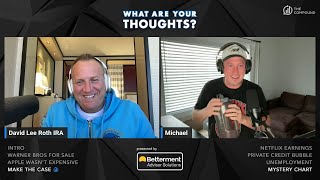
Ask The Compound 223
Audio Brief
Show transcript
This episode covers audience questions regarding investing strategies, asset allocation, and balancing career choices with financial goals. There are three key takeaways from this discussion. First, energy stocks have historically demonstrated extreme volatility and surprising underperformance compared to the broader market. Second, emotional discipline in asset allocation is far more valuable than theoretical optimization. Third, transitioning portfolios or careers requires careful planning to balance financial gains with psychological well being.
Looking closer at the first point, energy stocks have experienced massive volatility over the past two decades. Investors might be surprised to learn that the energy sector only outperformed the S and P 500 about fifteen percent of the time over rolling two year periods since 1999. When evaluating sector specific investments, market participants must be prepared for extreme turbulence. Ensure any concentrated position fits comfortably within your overall risk tolerance.
On the second point of risk tolerance, conventional wisdom suggests young investors should maximize equity exposure for long term growth. However, an investor's emotional disposition and ability to handle volatility are crucial factors that cannot be ignored in portfolio construction. The strategy you can stick with during market downturns is vastly superior to a perfect 100 percent equity portfolio that you abandon during a panic. If a 60 40 portfolio prevents you from selling at the bottom, it is the absolute right choice.
Regarding the third takeaway, financial decisions often intersect heavily with psychology and personal satisfaction. When choosing between a job you genuinely love and a higher paying career move that accelerates financial independence, the mental health benefits of job satisfaction require careful consideration. Wealth is not just a spreadsheet exercise, and the toll of taking on unwanted stress can easily outweigh an accelerated path to retirement.
This psychological element also applies to managing money as you navigate different life stages. Moving from an all equity portfolio to including bonds can feel like sacrificing potential gains, making it a difficult mental transition. Establishing clear rules for raising cash and reinvesting during market downturns can help manage the emotional difficulty of market timing. For hands off investors, target date funds offer an excellent automated solution to manage these allocations and remove the stress of constant monitoring.
Ultimately, successful wealth building requires a strategy that aligns your financial mechanics with your personal capacity for risk and stress.
Episode Overview
- In this episode of Ask The Compound, the hosts answer audience questions regarding various investing strategies and scenarios.
- The discussion covers the performance of energy stocks versus the S&P 500 over the past two decades.
- The hosts offer advice on managing asset allocation for young investors hesitant to take on risk.
- They debate the trade-offs between joining a family business for more money versus staying in a job one genuinely loves.
- The episode also touches on the psychological challenges of transitioning from a 100% equity portfolio to including bonds, especially when approaching retirement.
Key Concepts
- Energy Stocks vs. S&P 500: Energy stocks have experienced massive volatility over the past two decades, with periods of extreme outperformance and significant underperformance. Historically, energy only outperformed the S&P 500 about 15% of the time over rolling two-year periods since 1999.
- Risk Tolerance and Asset Allocation: For young investors with a long time horizon, a high allocation to equities is generally recommended to maximize growth. However, a person's emotional disposition and ability to handle volatility are crucial factors. If a 60/40 portfolio helps an investor stay the course during market downturns, it is superior to a 100% equity portfolio that they abandon during a panic.
- Career Choices and Wealth: Choosing a career is not just a financial decision; it also involves personal satisfaction and mental health. While switching to a higher-paying job (like a family business) might accelerate financial independence (FIRE), the toll of leaving a loved job and taking on potentially unwanted stress needs careful consideration.
- Target-Date Funds: These funds offer a diversified, automatically rebalancing portfolio that becomes more conservative as the investor nears retirement. They are an excellent option for hands-off investors, even if their asset allocation may not perfectly align with an individual's specific risk tolerance.
- Transitioning to Bonds: Moving from an all-equity portfolio to including bonds can be psychologically difficult, as it feels like sacrificing potential gains. However, establishing clear, pre-defined rules for raising cash and reinvesting during market downturns can help manage the emotional difficulty of market timing.
Quotes
- At 6:56 - "15%. 50? Since 1999. It's very surprising." - Highlighting the surprisingly low percentage of time energy stocks have outperformed the S&P 500 over rolling two-year periods.
- At 10:16 - "If you're young in your twenties, you need to be as risk-on as you can." - Emphasizing the conventional wisdom that young investors should maximize equity exposure for long-term growth.
- At 11:34 - "The strategy you can stick with... is way better than the perfect strategy you can't stick with." - Explaining that an investor's ability to maintain their strategy during volatility is more important than theoretical optimization.
- At 15:35 - "I don't want to talk about my job with my friends because most of them actually hate their jobs... You love what you do... Don't you're gonna sound like a jerk if you talk about it." - Underscoring the rare value of genuinely loving one's job and the potential downside of leaving it purely for money.
- At 28:54 - "You better have a plan of attack. You better know what you're gonna do next because the second... the first move is the easy one. The second move is the hard one." - Pointing out the difficulty of market timing; selling is easy, but knowing when to buy back in is incredibly challenging.
Takeaways
- When evaluating sector-specific investments like energy, be prepared for extreme volatility and ensure the position fits within your overall risk tolerance.
- If you struggle with the volatility of a 100% stock portfolio, adopt a more conservative allocation (like 60/40) that you can stick with during market downturns, rather than aiming for theoretical perfection.
- When facing a career change that offers significantly more money but requires leaving a job you love, weigh the non-financial benefits of job satisfaction against the accelerated path to financial independence.
- For hands-off investors, consider using Target-Date Funds to automatically manage asset allocation and rebalancing, freeing you from the stress of constant portfolio monitoring.
- Before making significant changes to your asset allocation, such as raising cash to avoid a market crash, establish clear, pre-defined rules for when and how you will reinvest that cash to avoid the pitfalls of market timing.