30 Years of Diet Trials: What Matters Most in Keto, Vegan & Mediterranean Diet | Christopher Gardner

Audio Brief
Show transcript
In this conversation, Stanford Professor Christopher Gardner and host Simon Hill examine how to balance strict scientific rigor with real-world application in human nutrition research.
There are four key takeaways from the discussion. First, reductionist supplement trials often fail due to biological complexity and poor participant adherence. Second, polarized diets actually agree on four foundational eating habits, proving diet quality matters more than macronutrient ratios. Third, physiological states like active weight loss and resistance training heavily influence how the body responds to ketogenic and vegan diets. Finally, sustainable public health shifts require culinary innovation in institutional food systems rather than individual calorie tracking.
On the challenges of reductionist science, isolated cell studies rarely translate directly to human physiology. Although garlic compounds stop cholesterol synthesis in liver cells, Gardner's six-month clinical trial using 35,000 fresh garlic sandwiches and enteric-coated pills failed to lower LDL cholesterol in 200 adults. Furthermore, public health interventions often fail simply because people do not adhere to them. In the massive Women's Health Initiative, calcium supplements showed no overall effect on bone fractures, yet a subgroup analysis revealed a 30 percent fracture reduction among women who actually took at least 80 percent of their pills.
Regarding diet quality, Gardner's research shows that food sources matter far more than simple macronutrient targets. In a one-month feeding trial comparing two low-fat diets with identical total fat, saturated fat, and cholesterol, a whole-food, plant-rich diet doubled LDL cholesterol reduction compared to a convenience-food diet. When evaluating ten popular diets against American Heart Association guidelines, Gardner found that even opposing diets like keto and low-fat vegan agree on the Big Four: eating whole foods, eating more vegetables, consuming less added sugar, and reducing refined grains. Near-universal agreement also exists for the Solid Six: legumes, fruit, nuts and seeds, eggs, fish, and yogurt. Additionally, incorporating fermented foods like yogurt, kimchi, and unpasteurized kombucha increases microbiome diversity and lowers 20 distinct inflammatory markers.
Looking at metabolic and muscle studies, physiological context is critical when interpreting results. In Gardner's crossover trial, both ketogenic and Mediterranean diets improved blood sugar and reduced body weight, though the keto diet raised LDL cholesterol while the Mediterranean diet lowered it. However, when another six-month feeding trial showed no LDL increase on a high-saturated-fat ketogenic diet, Gardner noted that an active catabolic state from losing 10 percent of body weight temporarily suppresses cholesterol, meaning lipids must be re-evaluated once weight stabilizes. Similarly, in adults over 70, transitioning to a self-selected vegan diet caused an unintentional 20 to 30 gram drop in daily protein and reduced muscle protein synthesis. Pairing that vegan diet with twice-weekly resistance training successfully rescued muscle protein synthesis and increased strength, though omnivores maintained better overall thigh muscle volume.
Finally, long-term dietary adherence requires culinary skill rather than constant tracking. A study of 430,000 food-tracking app users revealed that 99 percent of people cannot sustain logging even once a month for a year. To drive real-world change without relying on individual willpower, Stanford partnered with 70 universities to use dining halls as living laboratories. By replacing a portion of meat and dairy with flavorful legume dishes, 35 universities achieved a 25 percent reduction in food-related greenhouse gas emissions in just four years, proving that institutional culinary innovation can seamlessly shift populations toward healthier, sustainable eating.
Ultimately, translating nutrition science into lasting health requires moving past macronutrient wars to embrace whole, plant-forward foods that are both scientifically sound and delicious enough to sustain for life.
Episode Overview
- Stanford Professor of Medicine Christopher Gardner, PhD, and host Simon Hill explore how to balance strict scientific rigor with real-world generalizability in human nutrition research, examining why reductionist trials often fail to translate into practical dietary advice.
- The conversation traces Gardner's unconventional path—from majoring in philosophy at Colgate University and working in restaurants for 6 years, to becoming a vegetarian after a vegetarian girlfriend dumped him, pursuing a nutrition master's to open a vegetarian restaurant and answer protein questions, and getting a PhD and Stanford faculty position "by mistake"—into designing large-scale human feeding trials on garlic, low-fat diets, fermented foods, and ketogenic vs. Mediterranean patterns.
- Through case studies including the Women's Health Initiative, the PREDIMED trial, and recent ketogenic and vegan protein trials, the speakers dissect how study design flaws, participant adherence, active weight loss (catabolic states), and exploratory data analysis shape nutrition headlines.
- Finally, the discussion moves beyond diet wars to identify universal dietary commonalities ("The Big 4" and "Solid 6") and illustrates how institutional food systems are successfully shifting populations toward sustainable, plant-forward eating through culinary innovation.
Key Concepts
- Speaker Backgrounds, Disclosures, and Sponsors: Christopher Gardner is the author of the upcoming book Food Sense: What to Eat and Why (releasing October 13th), served on the Dietary Guidelines Advisory Committee and the American Heart Association (AHA) committee evaluating popular diets against 2021 dietary guidance, received a $1.4 million NIH grant for his garlic clinical trial, and received a new grant at Stanford to work with institutional food settings (universities, hospitals, prisons, military, and worksites). Host Simon Hill is the author of a #1 health diet book in Australia, co-founder/owner of 38TERA (which sells science-backed gut health products), and a member of the Scientific Advisory Board for IM8 (a supplement company). Episode sponsors include Function Health (lab testing service offering 160+ lab tests for $1/day or $365/year, code
SIMON25for a $25 credit atfunctionhealth.com/simonhill), IM8 (Daily Ultimate Essentials multinutrient supplement with 90 ingredients in 1 sachet, codeSIMONfor 10% off plus a free welcome kit atim8health.com), and Shopify (e-commerce platform used by 38TERA, offering a free trial atshopify.com/proof). - Reductionism vs. Biological Complexity (The Garlic Trials): Cell culture studies showed that pipetting allicin (garlic's active compound) directly onto liver cells acted as an HMG-CoA reductase inhibitor to stop cholesterol synthesis. After Gardner's first double-blind placebo-controlled garlic supplement trial (which used garlic oil on cotton swabs inside placebo bottles for smell blinding) yielded a null finding for lowering cholesterol, biochemist Larry Lawson critiqued the lack of an enterically coated tablet, explaining that garlic's alliin only converts to allicin via the enzyme alliinase when mashed or blended, and low-pH stomach acid denatures alliinase if powder solubilizes in the stomach. Lawson also used an artificial human digestive tract in his Utah lab (simulating stomach acid, neutral small intestine, and colon) to show that some commercial enteric-coated garlic pills are excreted completely intact with the company's name still readable on the pill. In a subsequent $1.4 million NIH-funded, 6-month, 4-arm randomized controlled trial in 200 adults with modestly/moderately elevated LDL cholesterol, Gardner and Lawson bought 4 cases of fresh Gilroy garlic, had 8 people peel and mash it for 2 days to place 1 clove (~4.2 g) into 10,000 containers, published a sub-study on allicin stability in yogurt, oil, and salsa condiments refrigerated for 3 days (tossing out condiments that inactivated allicin), and made ~35,000 sandwiches comparing: (1) real garlic in sandwich condiments + placebo pill, (2) placebo condiment + enteric-coated garlic supplement, (3) placebo condiment + aged garlic extract supplement, and (4) double placebo. The result was a total null finding—neither real garlic nor supplements lowered average LDL cholesterol (in raw numbers, the placebo group went down slightly)—which 400 media outlets covered, including a distorted headline claiming Stanford found garlic isn't good for you.
- Evolutionary Diets and Clinical Trial Retention: Gardner holds the highest conviction in whole foods, seasonal, local, and fiber-rich diets. He notes that while Paleolithic humans died around age 30 from infections, saber-toothed tigers, or mastodons, hunter-gatherers who survive to 70 or 80 lack heart disease, cancer, or diabetes, eating a mix of hunted animals and gathered plants (almost never vegan or vegetarian). Hill cites a paper by Paleo diet founder Loren Cordain showing that wild game meat consumed by ancestors was far leaner and much lower in saturated fat than modern hamburgers and sausages. In modern research, long trials like PREDIMED and CORDIOPREV (lasting 5 to 7 years) face adherence issues; Gardner notes that in PREDIMED, the control diet failed to be low-fat, 7 of 13 dietary components were identical between arms, and the main difference was simply handing out free nuts and olive oil to the intervention group. Across more than 24 clinical trials, Gardner's group achieves ~90% participant retention by telling recruits to walk away before randomization if they won't adhere to their least-preferred diet arm—a recruitment tactic that made microbiome researcher Justin Sonnenburg "lose his shit" watching until he understood its role in retention.
- Public Health Efficacy vs. Adherence (The Calcium Trials): The Women's Health Initiative (WHI)—the largest NIH study ever funded, featuring a triple randomization of estrogen/hormone replacement therapy vs. placebo for cardiovascular events, low-fat diet for breast cancer, and calcium supplementation for bone fractures—failed to ask women to stop their personal calcium supplements before randomization. While the overall calcium result was null, a subgroup analysis ("data dredging") of older women not taking prior calcium who had >=80% adherence to the study pills showed a 30% reduction in bone fractures. A follow-up calcium trial published ~2 months after WHI in older, at-risk women showed a 13% overall fracture reduction (non-significant in the primary intention-to-treat analysis), but a statistically significant reduction among women taking >=80% of their pills, demonstrating that making supplements available fails as a general public health intervention due to non-adherence, even when the pills work if taken.
- Exploratory Outcomes and Microbiome Science (The FeFiFo Study): In the randomized FeFiFo trial by Gardner, Justin Sonnenburg, Mark Davis, and Holden Maecker comparing fermented foods vs. fiber-rich foods, the primary registered outcome—a 14-marker composite "cytokine response score" developed by Davis and Maecker—was null. However, in secondary/exploratory analyses of 90 inflammatory markers, 20 pro-inflammatory markers went down in the fermented food group, 0 went up, and 70 stayed the same, while microbiome diversity increased (leading to ~1,000 citations). Both speakers include important hedges: Gardner notes there is no single clinically validated measure of inflammation and admits they do not know if yogurt has distinct health effects beyond other fermented foods since they haven't separated individual foods in trials yet; Hill questions whether lowering inflammatory markers in already-healthy people is clinically meaningful and notes that while microbiome diversity associates with good health, no one has experimentally proven that increasing diversity directly causes better health outcomes (with Gardner hedging that pathogenic bacteria increasing diversity would be counterproductive). Related microbiome research includes gnotobiotic (germ-free) mice studies by Turnbaugh, Knight, and Lawrence showing that introducing bacteria from obese vs. lean phenotypes into mice fed the exact same diet causes different weight gain; Stanford researcher Sean Spencer developing oral "poop pills" (fecal microbiota transplants) to test GI tract survival and replace invasive delivery ("turkey baster up your butt"); Prof. Maria Marco's research showing dead bacterial skeletons in fermented foods may interact with live microbes in the colon; Costco pasteurizing large bottles of kombucha (killing all bacteria) and adding commercial bacteria back in afterward to claim a specific billion-microbe count on the label; and Stanford bioengineer and former chef Vayu Hill-Maini bringing two Spanish "chefs in residence" to Stanford for a year and using fungi to ferment soy milk waste (okara) and beer brewing waste (spent grains) into tasty, edible foods.
- Diet Quality, Botanical Definitions, and Universal Agreement: In a 1-month feeding trial (all food provided) in people with elevated LDL cholesterol comparing a convenience-based low-fat diet to a plant-rich low-fat diet (more fiber, antioxidants, garlic, soy) matched for total fat, saturated fat, and cholesterol per AHA guidelines, both groups lowered LDL, but the plant-rich group doubled the LDL reduction—though participants told Gardner afterward they wouldn't keep eating that way unless he kept cooking for them. When Gardner and 9 co-authors evaluated 10 popular diets against 10 domains of the 2021 AHA dietary guidelines, the top-aligned diets were DASH, Mediterranean, Pescatarian, and Ovo-lacto vegetarian; the middle tier included low-fat vegan, high-fat vegan, regular low-carb, and regular low-fat; and the bottom tier included Keto and Paleo. Despite polarized diet wars, every diet (even Keto and Low-Fat Vegan) agreed on the "Big 4" (whole foods, more vegetables—above-ground for keto—less added sugar, and less processed food and refined grain), with near-universal agreement on the "Solid 6" (beans/legumes, fruit, nuts and seeds, eggs, fish, and yogurt). Regarding eggs, Gardner hedges that dietary cholesterol is handled fine by most healthy people eating few eggs, but is "probably not good for you" if you are sick and already eat a lot of animal products. Botanically, "legumes" is the overarching term for nitrogen-fixing cover crops encompassing fresh peas, fresh beans, all soy products, all peanut products, and pulses, whereas "pulses" specifically refers to dried beans, dried peas, lentils, and chickpeas.
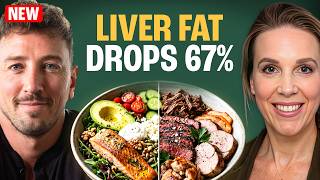
- Ketogenic vs. Mediterranean Trials and Catabolic States: In Gardner's 24-week crossover trial (12 weeks per diet, no washout) in adults with pre-diabetes or type 2 diabetes comparing a Well-Formulated Ketogenic Diet (high fat, not high meat, following Phinney and Volek) to a Mediterranean-Plus diet (eliminating added sugars and refined grains, and increasing fat to 50–60% via avocados, olive oil, and fatty fish), both groups lost ~6 kg (5–10% of body weight, despite not being a weight-loss trial) and lowered HbA1c (which requires 12 weeks due to red blood cell lifespan); Keto lowered triglycerides more, while Keto raised LDL cholesterol and Mediterranean lowered LDL. Conversely, in Sam Klein's 6-month randomized feeding trial at WashU (all food provided) in people with obesity and pre-diabetes comparing Ketogenic (highest protein and saturated fat), Mediterranean, and Plant-forward low-fat diets, all groups lost ~10% of body weight, liver fat dropped significantly more in the Keto group (which also had higher pre-diabetes remission), and LDL cholesterol and ApoB did not go up in the Keto group despite high saturated fat intake. Gardner interprets this by noting that an active catabolic state (10% weight loss) keeps LDL and ApoB down, and the true test is what happens once weight restabilizes at maintenance (similar to David Ludwig's weight-maintenance study design), though both Hill and Gardner hedge their interpretations of Klein's study because they haven't seen the exact food lists/pictures or done a forensic analysis yet.
- Muscle Protein Synthesis in Older Adults (Plant vs. Animal Protein): Hill reviews two studies by Luc van Loon in elderly subjects. In a 10-day crossover trial where all meals were provided at 1.2–1.3 g/kg/day of protein, there was no difference in daily muscle protein synthesis between omnivorous and vegan diets. However, in a 12-week free-living RCT in older adults (70+) randomized to self-selected Omnivorous, Vegan, or Vegan + Resistance Training (twice a week) with dietitian guidance, daily protein intake dropped by 20–30 g/day in both vegan groups (from ~100 g/day in omnivores down to ~70 g/day). Muscle protein synthesis dropped in the vegan-only group but was rescued (matching omnivores) in the vegan + resistance training group, which also gained strength; however, thigh muscle volume/size decreased in the vegan + resistance training group while the omnivorous group (without resistance training) maintained muscle size. Both Hill and Gardner hedge their interpretation of van Loon's trial because they haven't seen the exact food lists/pictures or done a forensic analysis yet, and Gardner notes the study lacked a 4th arm (omnivore + resistance training).
- Institutional Food Systems (Menus of Change): Led by Michael Bakker (new President of the Culinary Institute of America, formerly head of Google's food program for 12 years) and Stanford, the Menus of Change University Research Collaborative brought together 70 universities pledging to use dining halls as living laboratories. Within this initiative, 35 universities pledged to reduce greenhouse gas emissions from food procurement by 25% over 10 years by replacing some meat and dairy with legumes; they hit the 25% reduction in year 4 and increased their pledge to a 40% reduction.
Quotes
- At 3:38 - "You can't just be right, you have to have a compelling argument, and the next person can have a different compelling argument, and you can both get an A in class." - Christopher Gardner explaining how his undergraduate philosophy degree shaped his approach to evaluating competing scientific perspectives.
- At 6:06 - "I was juggling between the rigor of science and the generalizability of here's what somebody should do with it, thinking that it doesn't actually have to be one or the other. You could try to maximize rigor and maximize generalizability." - Christopher Gardner describing the core tension in designing human nutrition trials.
- At 6:41 - "If you were to distill nutrition science down into a single phrase or sentence, you'd refer to or defer to Michael Pollan." - Simon Hill introducing the foundational summary of evidence-based eating.
- At 6:50 - "Eat food, not too much, mostly plants." - Simon Hill and Christopher Gardner stating Michael Pollan's seven-word distillation of nutrition science.
- At 9:10 - "He said, 'Oh, that conversion from alliin to allicin doesn't take place until you solubilize the garlic powder, which happens in your gut, and at a low pH, it would inactivate the enzyme and you'd never get the conversion and you'd never get the allicin, and that might be why your trial didn't work.'" - Christopher Gardner recounting garlic biochemist Larry Lawson's critique of his first null garlic supplement study.
- At 11:24 - "I think we made like 35,000 sandwiches, recruited 200 people, fed them for six months, and at the end of the day, the average LDL cholesterol in these adults with modestly elevated LDL did not lower their LDL cholesterol." - Christopher Gardner summarizing the null results of his $1.4 million NIH-funded fresh garlic and supplement trial.
- At 14:00 - "One of them said, the headline was: 'Stanford,' not Gardner, 'finds garlic,' not the specific kinds, just garlic, 'isn't good for you.'" - Christopher Gardner illustrating how media headlines distort specific, narrow clinical trial endpoints into broad, inaccurate dietary claims.
- At 17:58 - "I would say whole foods, seasonal, local, fiber-rich." - Christopher Gardner identifying the dietary principles in which he holds the highest conviction.
- At 23:30 - "As I recall, there were 13 different components of the two diets, and seven of them were identical." - Christopher Gardner critiquing the PREDIMED trial's comparison between the Mediterranean diet and its control arm.
- At 24:00 - "Keto was never meant to be a high-meat diet, it's supposed to be a high-fat diet, and if you just have meat, there's so much protein you can't get enough fat." - Christopher Gardner clarifying the formulation of a well-formulated ketogenic diet.
- At 33:41 - "As a general public health intervention, calcium supplements don't work; however, among those who are adherent, they work." - Christopher Gardner explaining the difference between intention-to-treat public health outcomes and per-protocol adherence in calcium fracture trials.
- At 33:54 - "If you take them, they work, and if you don't take them, they don't work." - Christopher Gardner distilling the core lesson of adherence from the Women's Health Initiative and follow-up calcium trials.
- At 38:02 - "Because we had 90 other ones, we looked, and 20 went down and none went up and 70 stayed the same." - Christopher Gardner explaining how exploratory analysis of secondary inflammatory markers revealed the anti-inflammatory signal in the FeFiFo fermented foods study after the primary composite score was null.
- At 57:20 - "Both groups lowered LDL cholesterol, it's just one month and we fed them all the food, but the one on the plant-rich doubled the LDL cholesterol lowering." - Christopher Gardner demonstrating that diet quality (whole plant foods vs. convenience foods) doubles LDL reduction even when total fat, saturated fat, and cholesterol are identical.
- At 57:50 - "I said, 'Isn't this great? We found this! Go do this!' And the participants looked at me and said, 'Are you going to keep cooking for us?'" - Christopher Gardner highlighting the real-world limitation of metabolic feeding trials when participants do not know how to shop for or prepare the study foods themselves.
- At 1:04:53 - "And the cool thing was there were four things that everybody agreed on, even keto and low-fat vegan, and it was: whole foods, and more vegetables, and less added sugar, and less processed food and refined grain." - Christopher Gardner defining the "Big 4" foundational dietary habits shared across all popular dietary patterns.
- At 1:06:48 - "Botanically, legumes is the overarching term, and it means fresh peas, fresh beans, soy, all soy products, and all peanut products, and pulses. And then pulses is dried beans, dried peas, lentils, and chickpeas." - Christopher Gardner clarifying the botanical definitions of legumes and pulses.
- At 1:07:59 - "Damn it, I found the peanuts and the soybeans and the chickpeas and lentils, I couldn't find the damn legumes anywhere!" - Christopher Gardner joking about how consumers get confused by botanical terminology in the grocery store.
- At 1:13:33 - "It's only 1% of the population. They excluded 99% of the population who can't track even once a month for a year." - Christopher Gardner pointing out the massive selection bias in a study of 430,000 food tracking app users that only analyzed the 5,000 users who maintained tracking.
Takeaways
- Prioritize the "Big 4" dietary habits—eating whole foods, eating more vegetables, consuming less added sugar, and eating fewer processed foods and refined grains—before worrying about macronutrient wars between keto and vegan diets.
- Build your diet around the "Solid 6" food groups with near-universal scientific agreement: beans/legumes, fruit, nuts and seeds, eggs (if healthy and not already eating excessive animal products), fish, and yogurt.
- Incorporate low-calorie fermented foods such as yogurt, kefir, sauerkraut, kimchi, and kombucha into your daily routine; in the FeFiFo trial, participants increased from a baseline of 0.5 servings/day to 6 servings/day (~300 calories total, at ~50 calories per bottle of kombucha or serving of kimchi/sauerkraut) and sustainably maintained an average of 3 servings/day on their own after the study ended.
- Check labels on commercial fermented products like kombucha, as some large retail brands (such as at Costco) pasteurize the product—killing the natural fermentation microbes—and add commercial bacteria back in afterward just to make a label claim.
- When lowering fat intake to reduce LDL cholesterol, focus on whole, plant-rich foods high in fiber, antioxidants, and soy rather than low-fat convenience foods, as plant-rich quality doubles LDL cholesterol reduction at the exact same saturated fat and cholesterol intake.
- If you are an older adult (70+) transitioning to a self-selected vegan diet, actively monitor your daily protein intake to avoid an unintentional 20–30 g/day drop (e.g., falling from ~100 g/day to ~70 g/day) and pair the diet with resistance training at least twice a week to maintain muscle protein synthesis and strength.
- Do not rely exclusively on daily calorie-tracking apps for long-term weight management unless you are in the 1% of users (5,000 out of 430,000 new users) who can sustain tracking over a year; instead, build sustainable, whole-food culinary habits that do not require constant logging.
- If taking garlic for culinary or health purposes, mash, chop, or blend fresh garlic before eating or exposing it to acid so the enzyme alliinase can convert alliin into allicin, and be skeptical of commercial enteric-coated garlic pills, which may fail to lower LDL cholesterol or pass through the digestive tract completely intact.
- When evaluating lipid panels during a dietary change, wait until your body weight restabilizes at maintenance to judge how a high-saturated-fat or ketogenic diet affects your LDL cholesterol and ApoB, as an active catabolic state (such as losing 10% of body weight) can temporarily keep LDL and ApoB from rising.
- Prioritize culinary joy and cultural flavor traditions when shifting toward plant-forward eating, as long-term health outcomes depend entirely on dietary adherence after a structured program or clinical trial ends.
- In institutional food settings (such as universities, hospitals, and worksites), replace a portion of meat and dairy procurement with culinary legume dishes to achieve rapid reductions in greenhouse gas emissions (25% to 40%) while improving nutritional quality.
More from The Proof with Simon Hill
It Wasn’t the Ketones: What Really Cut Liver Fat in the New Keto Study | Nicola Guess
Oct 19, 2026

I Thought I Reversed My Artery Plaque by 48%. Here’s What Really Happened | Simon Hill | EP#439
Oct 05, 2026

Orthopedic Surgeon Explains Joint Pain, Arthritis, MRI Tears & When Surgery Is Needed | Howard Luks
Sep 28, 2026

How Pregnancy, Breastfeeding & Baby Food Shape Lifelong Health | Dr Federica Amati | EP#437
Sep 21, 2026